

By Steven Muskal, Ph.D. | The Renaissance Circle | July 8, 2026 | stevenmuskal.com

I was home for a few days last summer when I found my daughter at the kitchen table surrounded by study cards. Not a stack. A landscape. She was drilling herself on nephron physiology at eleven at night, the way she has been drilling herself since she was seventeen and somehow already had two associate’s degrees to her name. What stopped me wasn’t the studying. Studying is just what Hannah does. What stopped me was a number she mentioned almost in passing, the way you’d mention the weather: sixty-two thousand.
Two degrees before she could vote
Hannah has been collecting credentials since before most of her peers had a driver’s license. While still in high school, she took classes at MiraCosta Community College and walked across the stage with two associate’s degrees, one in French and one in psychology, the same year she got her high school diploma. She went on to Cal State University San Marcos for a bachelor’s in psychology, loading up on pre-med coursework along the way.
Then came the part of the story every pre-med family knows too well: the U.S. medical school application gauntlet, a process that can run a year and a half to two years from application to a seat in a lecture hall, most of it spent waiting. Hannah didn’t wait. While her U.S. applications were still crawling through committees, she applied to Semmelweis University in Budapest on a whim, on a friend’s suggestion, with rolling admissions. She heard back in about a month. By the time most of her original applicant pool was scheduling interviews, she had already finished her first year of medical school in Hungary.
She’s now in her fourth of six years at Semmelweis, a very rigorous program - one in which she earned competition exemptions in physiology, biochemistry, pathology, pathophysiology, genetics, immunology, and cardiology. Somewhere in the middle of all that, she sat for United States Medical Licensing Examination (USMLE) Step 1, the licensing exam that lets her eventually practice in the United States, and passed it before her fourth year even started, well ahead of her own class and ahead of most students at her stage anywhere. She’s now prepping for USMLE Step 2, early again, because apparently that’s just the cruising speed she operates at. And that head start matters more than it used to: since Step 1 went pass/fail in early 2022, Step 2 is now the scored exam that residency programs actually see, which makes both her early start and the mountain of Step 2 material she’s building worth that much more.
The number that stopped me
Here’s what I didn’t know until that night at the kitchen table: while doing all of this, Hannah had been quietly building one of the more remarkable personal knowledge bases I’ve ever seen. Her digital study card collection, the record of everything she’s had to learn to get this far, had grown past sixty-two thousand cards. Closing in on sixty-three thousand. Spanning both her Step 1 prep and her Step 2 prep, organized into distinct collections, backed by tens of thousands of her own annotated medical images: histology slides, radiographs, diagrams she’d built or curated herself.
I’ve spent forty years building databases for a living. I know what a well-curated, tens-of-thousands-of-records knowledge base is worth, and I know how rare it is for one person to build something that size, alone, as a side effect of just trying to survive their own coursework. I was floored. Then she told me the second half of the story, and floored turned into something closer to stunned.
Classmates had been using her cards. For free. She’d been handing over her personal study platform, the fruit of years of nights like the one I’d just watched, to anyone in her cohort who asked. No compensation, no credit tracking, nothing. People were passing her exams on the back of material she’d built, and she hadn’t seen a cent, a coffee, or even much of a thank-you for it. “What do you mean, giving it away?” I asked her. “There are people benefiting from your hard work who haven’t paid you anything for it. That makes no sense.”
A one-day project, a mini Khan Academy
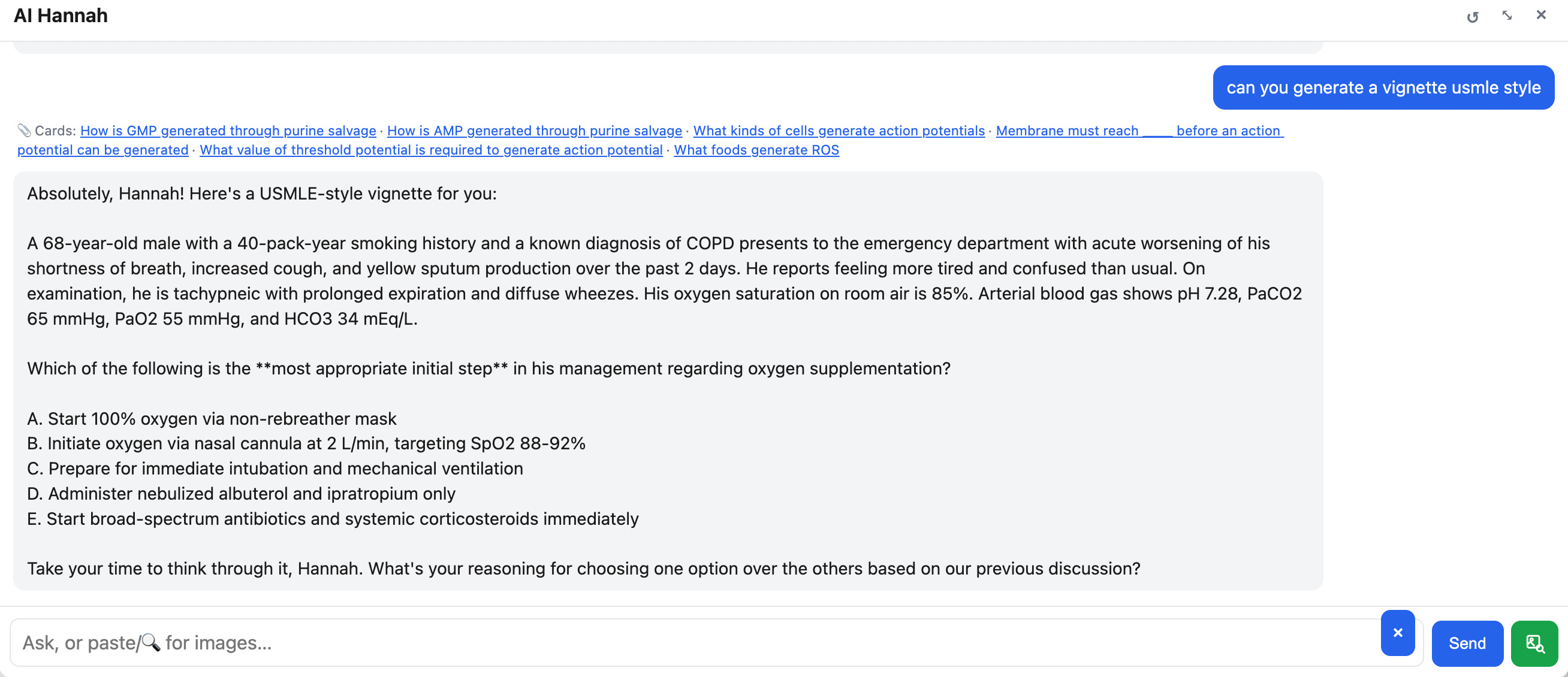
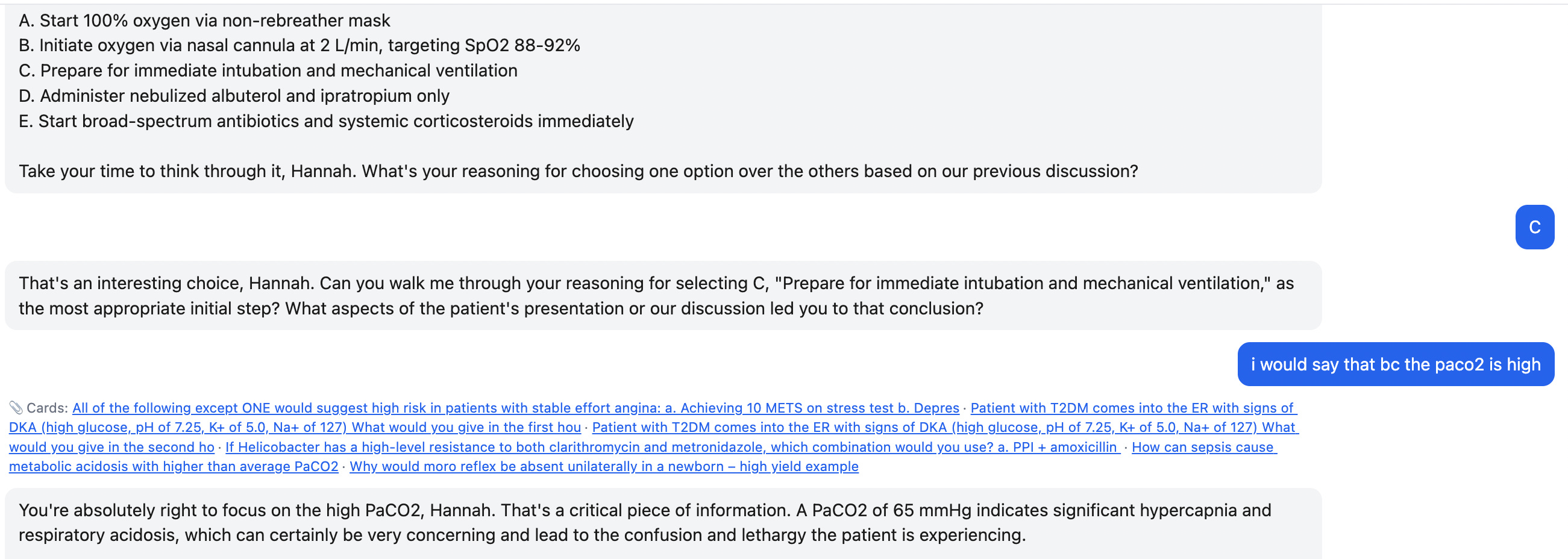
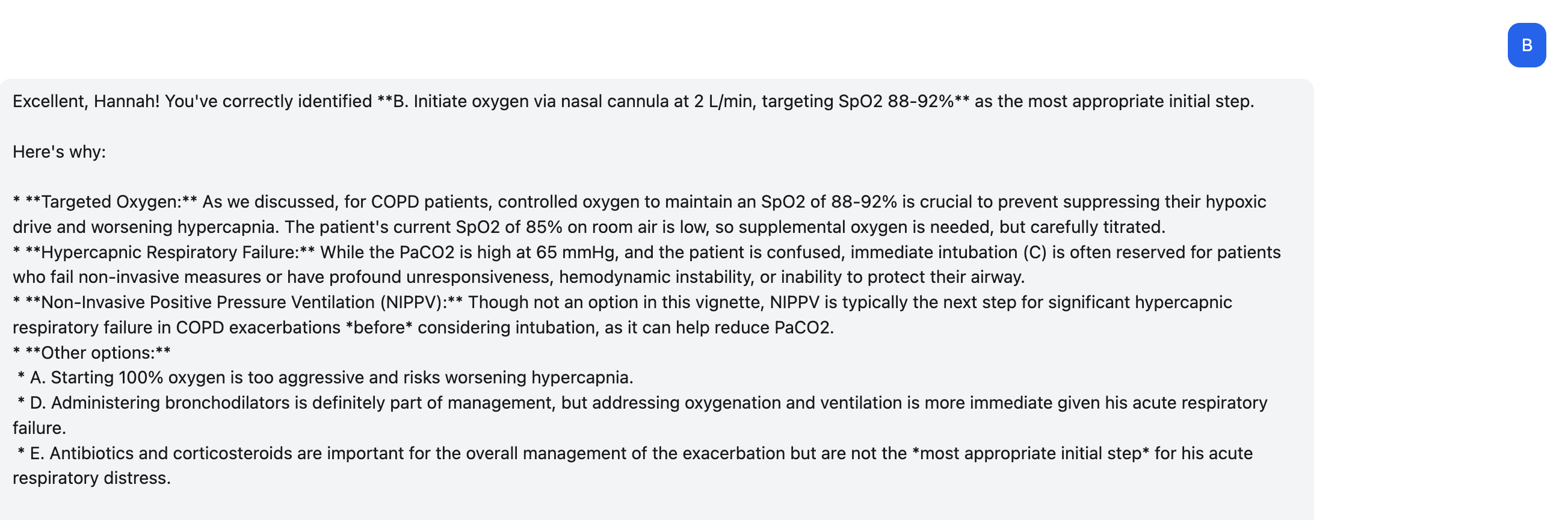
That conversation turned into a project. Within about a day, I’d built what’s now StudyWithHannah.com, a searchable home for the archive: keyword search across her notes and cards, semantic image search so you can find visually similar histology slides instead of scrolling forever, and a conversational AI tutor that can quiz you, hint at answers, and ask Socratic follow-up questions pulled straight from her own material instead of generic textbook filler.
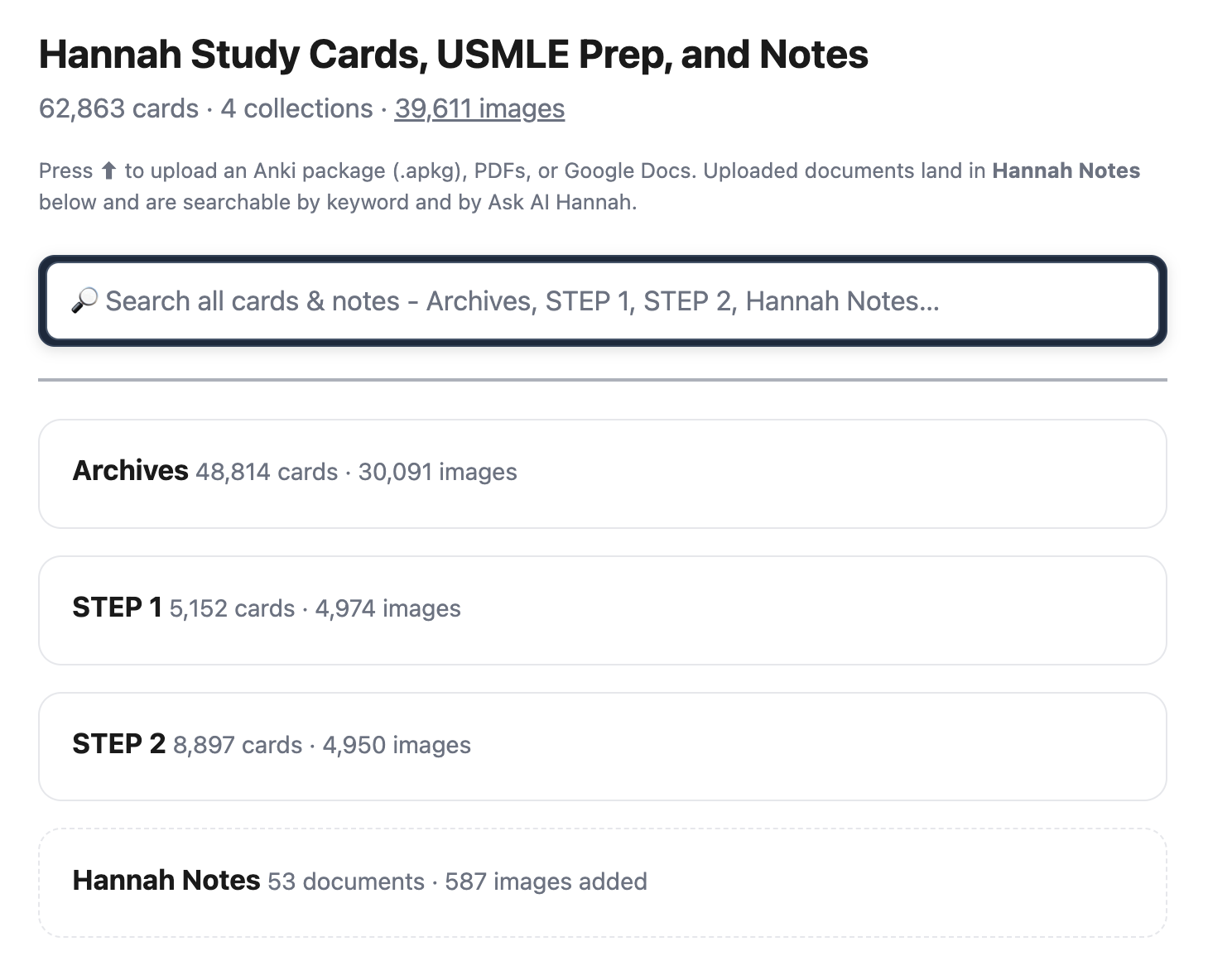
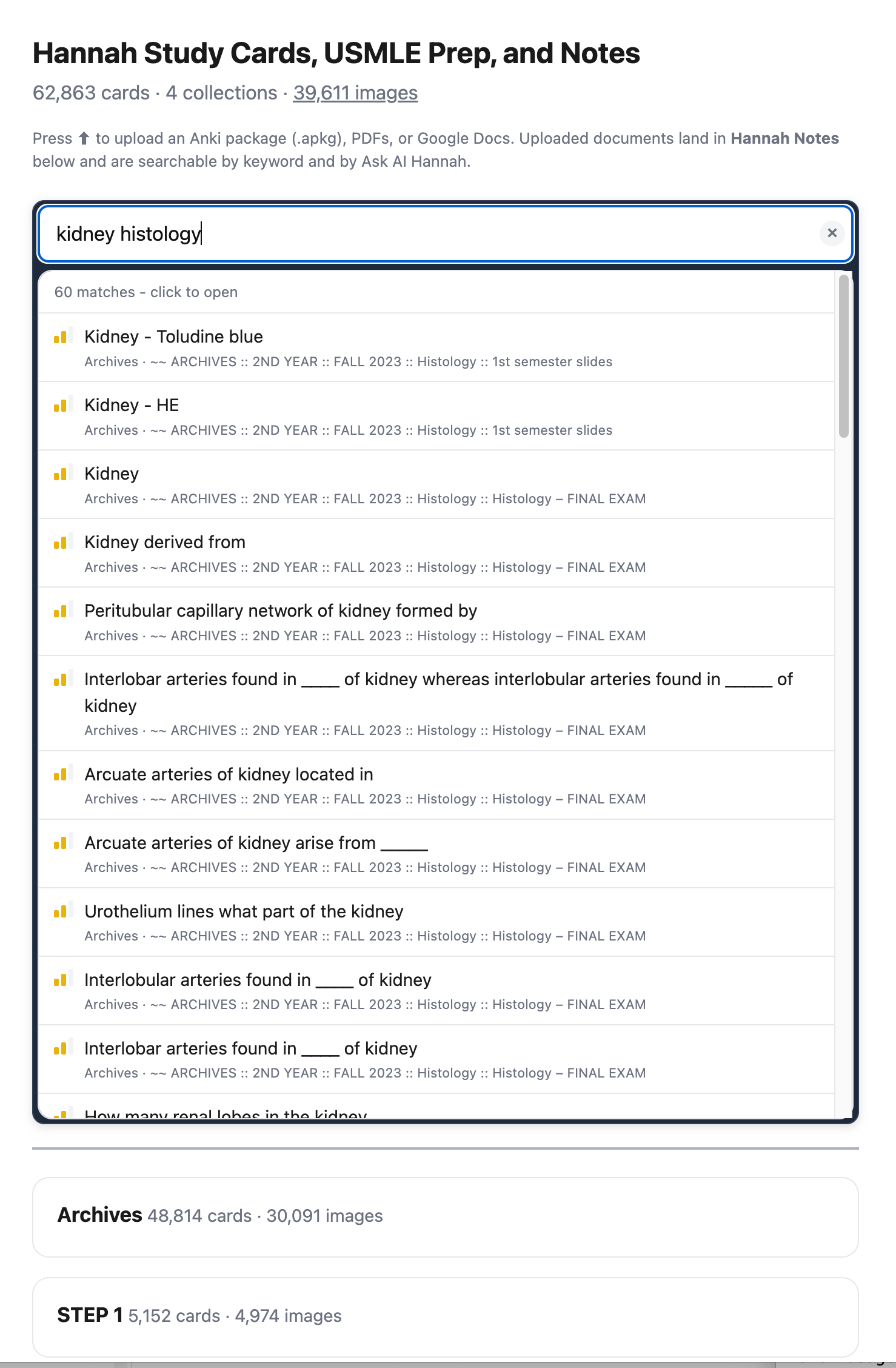
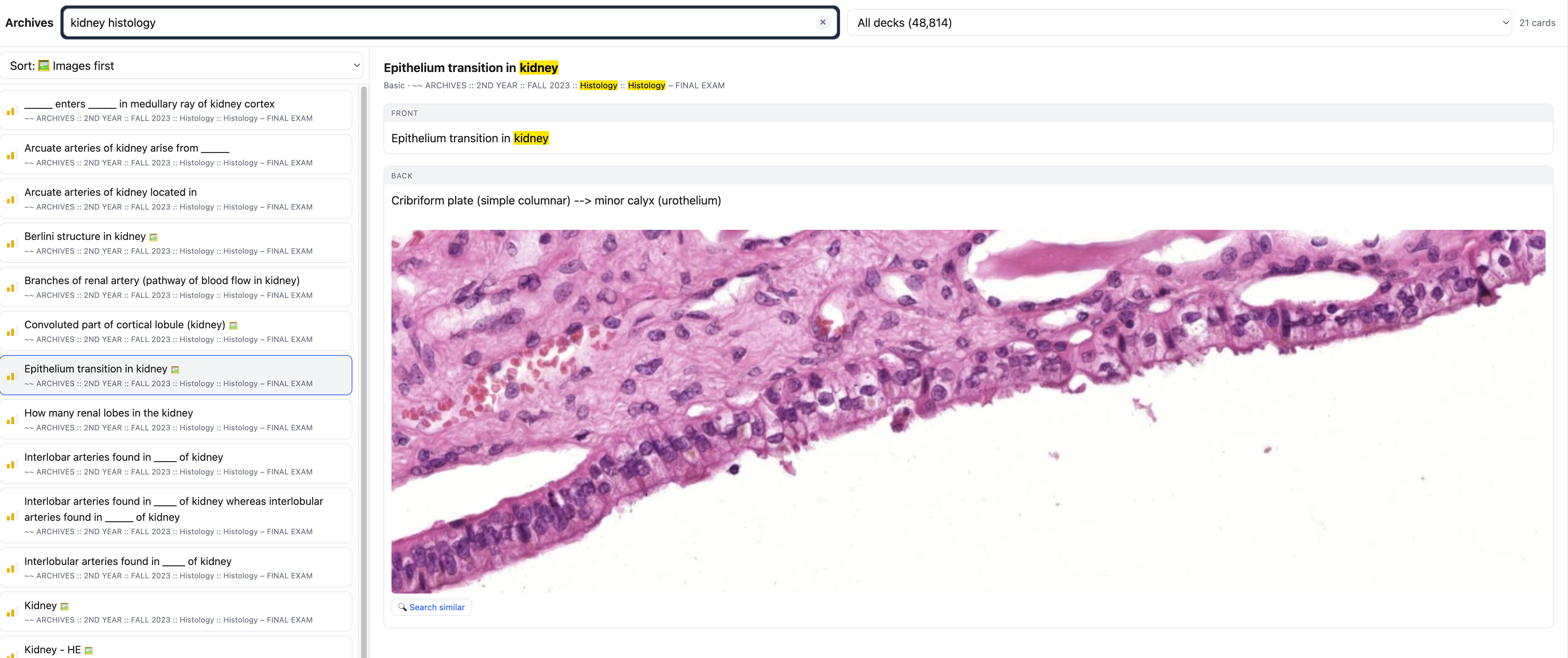
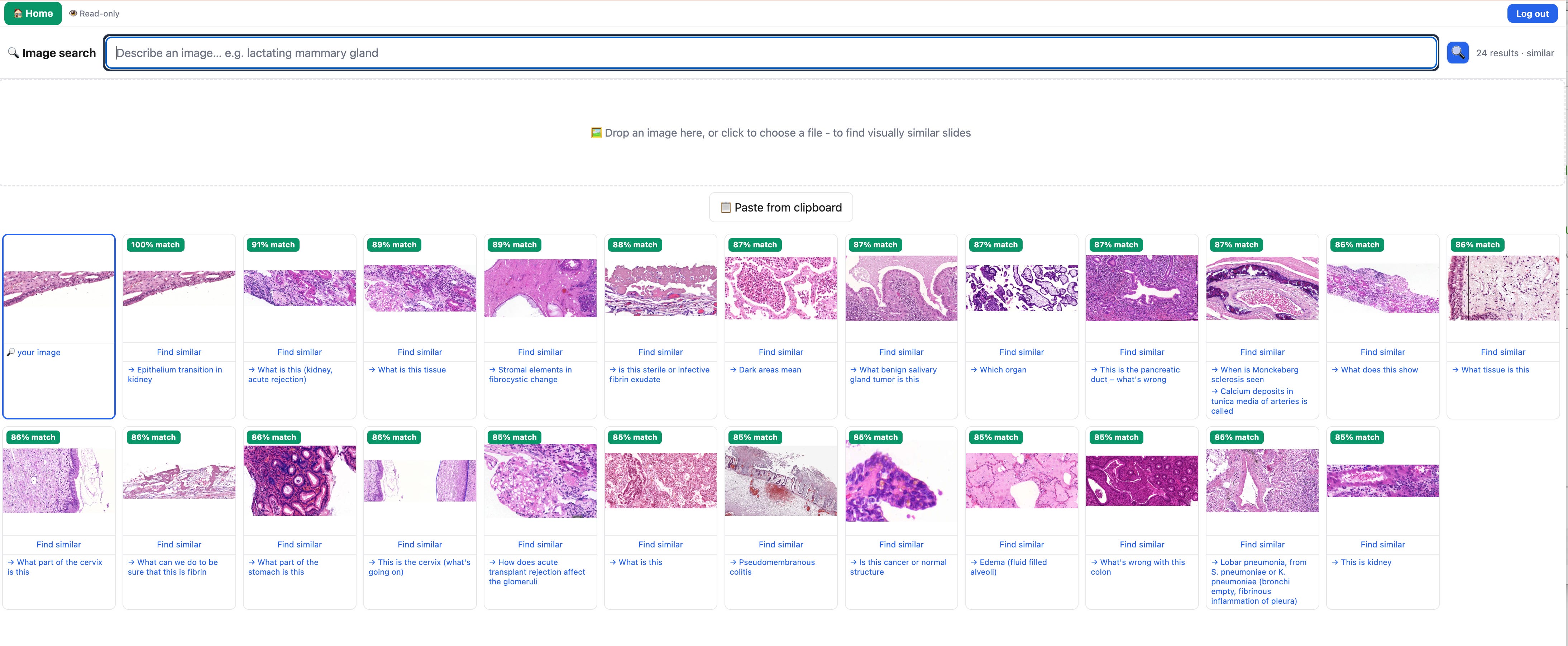
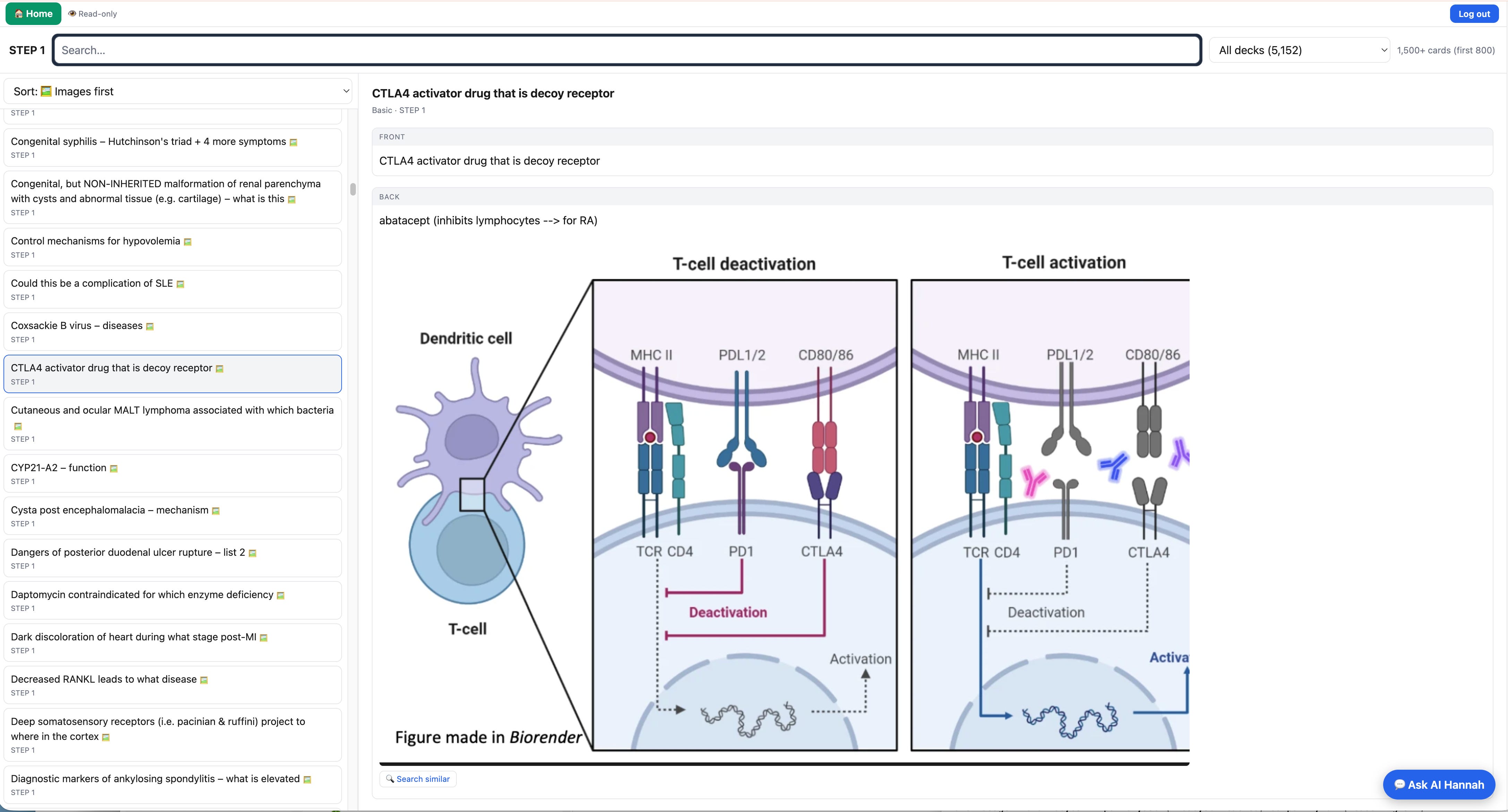
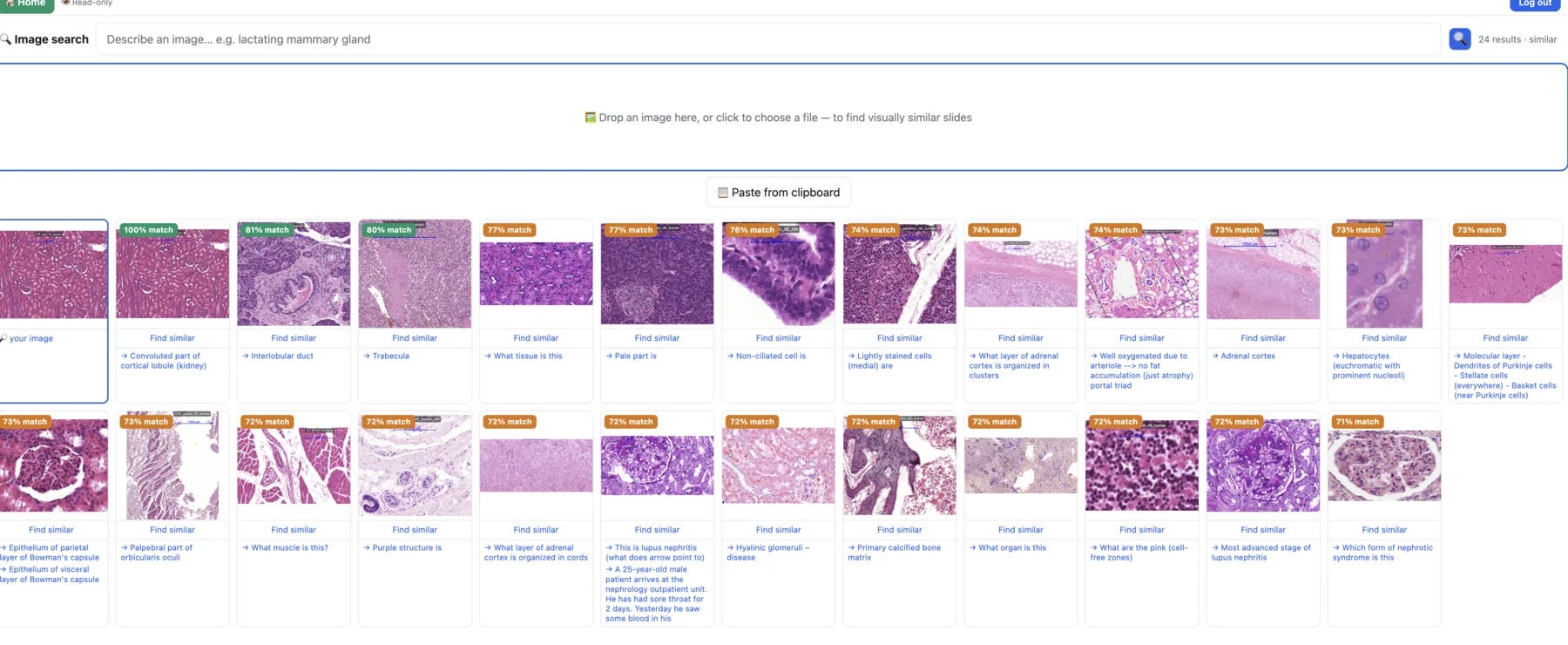
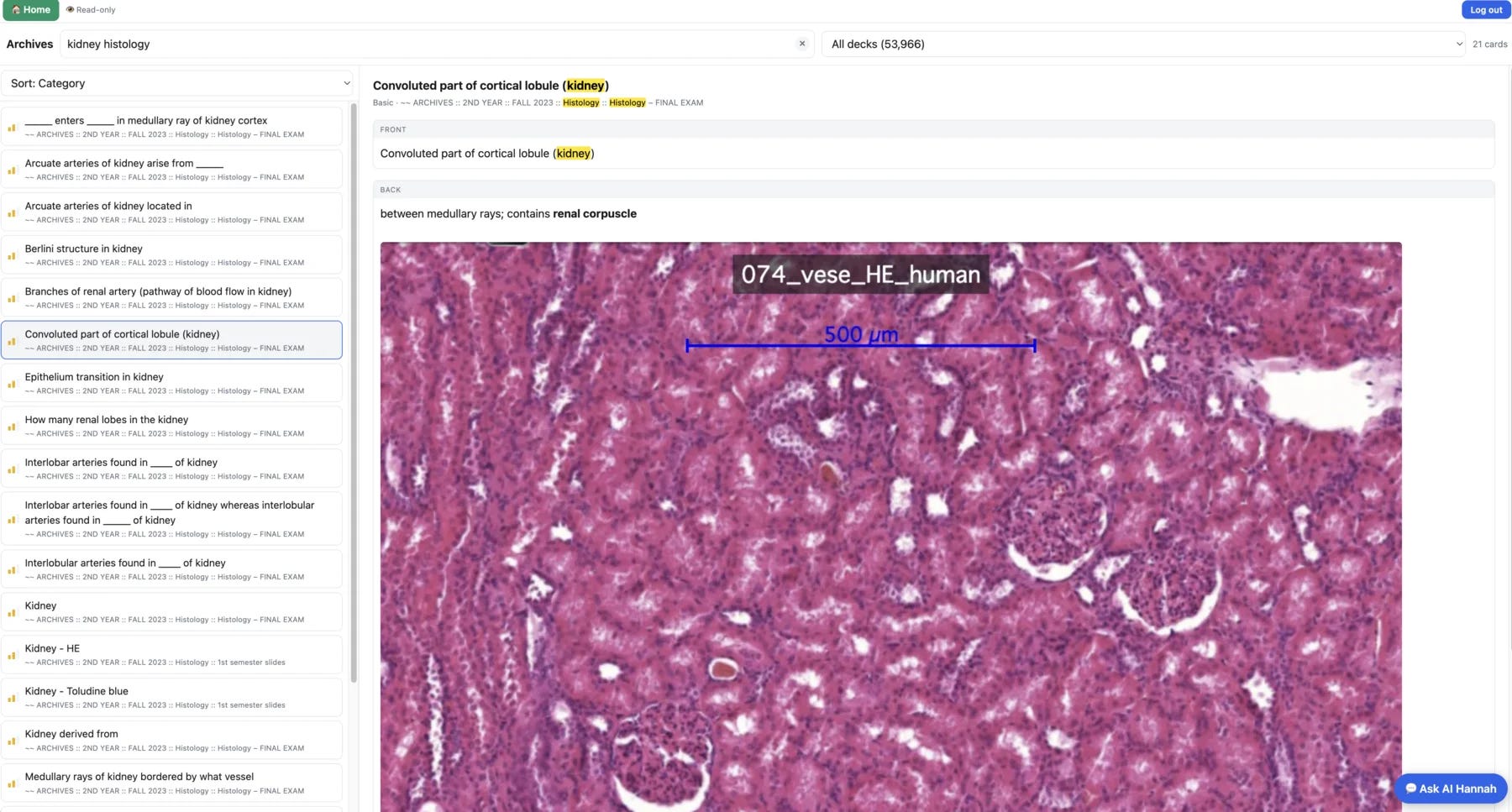
Call it a mini Khan Academy, built for one student who happened to also want to help herself study better while she was at it. The idea from day one was practical, not grand: if there’s already a real audience of med students who want this material, and Hannah is the one who built it, why shouldn’t access to it help pay for something while she’s living and studying in Budapest? Not a windfall. A better dinner some nights. A cup of coffee that isn’t the school cafeteria’s version of one.
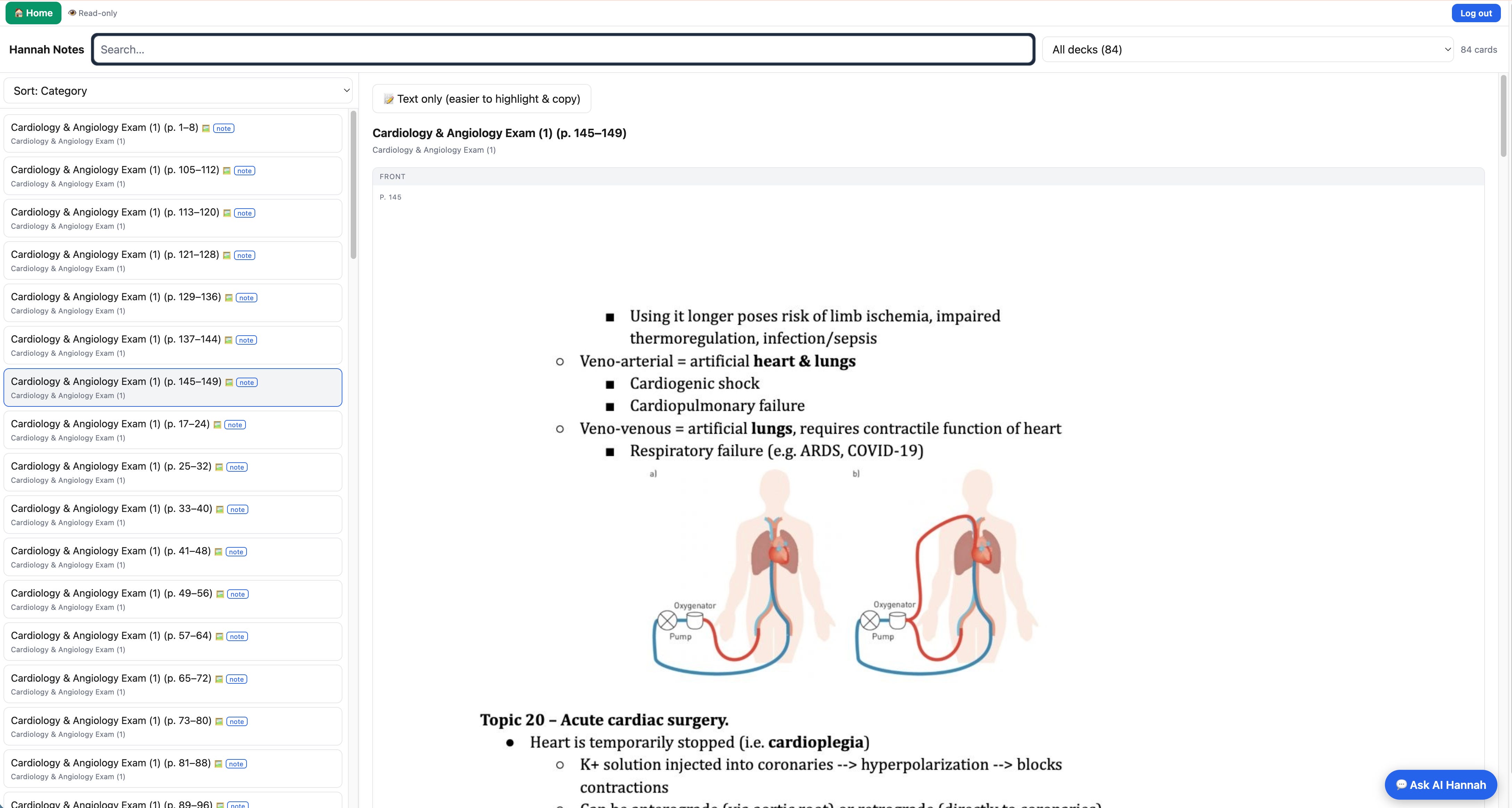
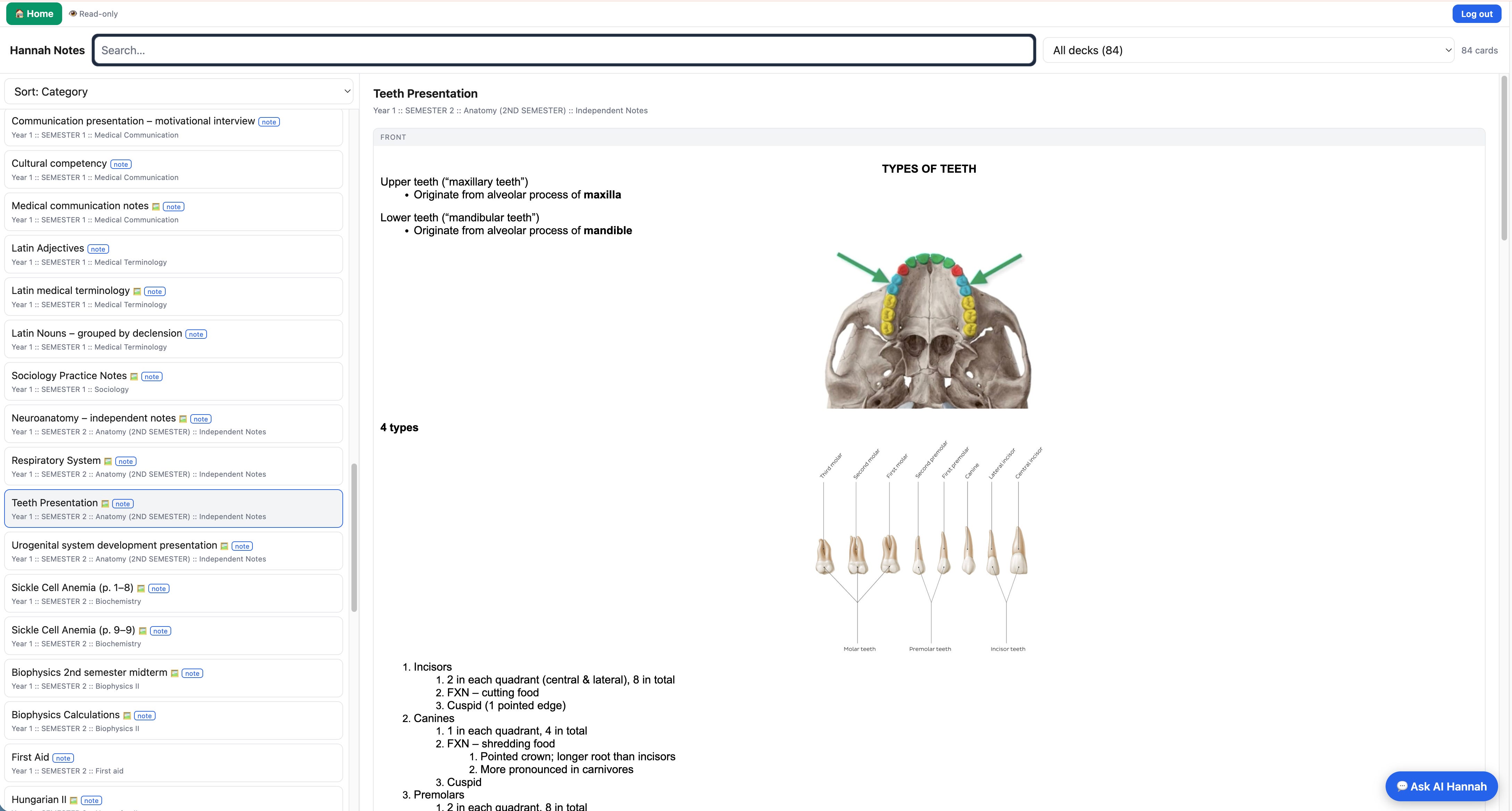
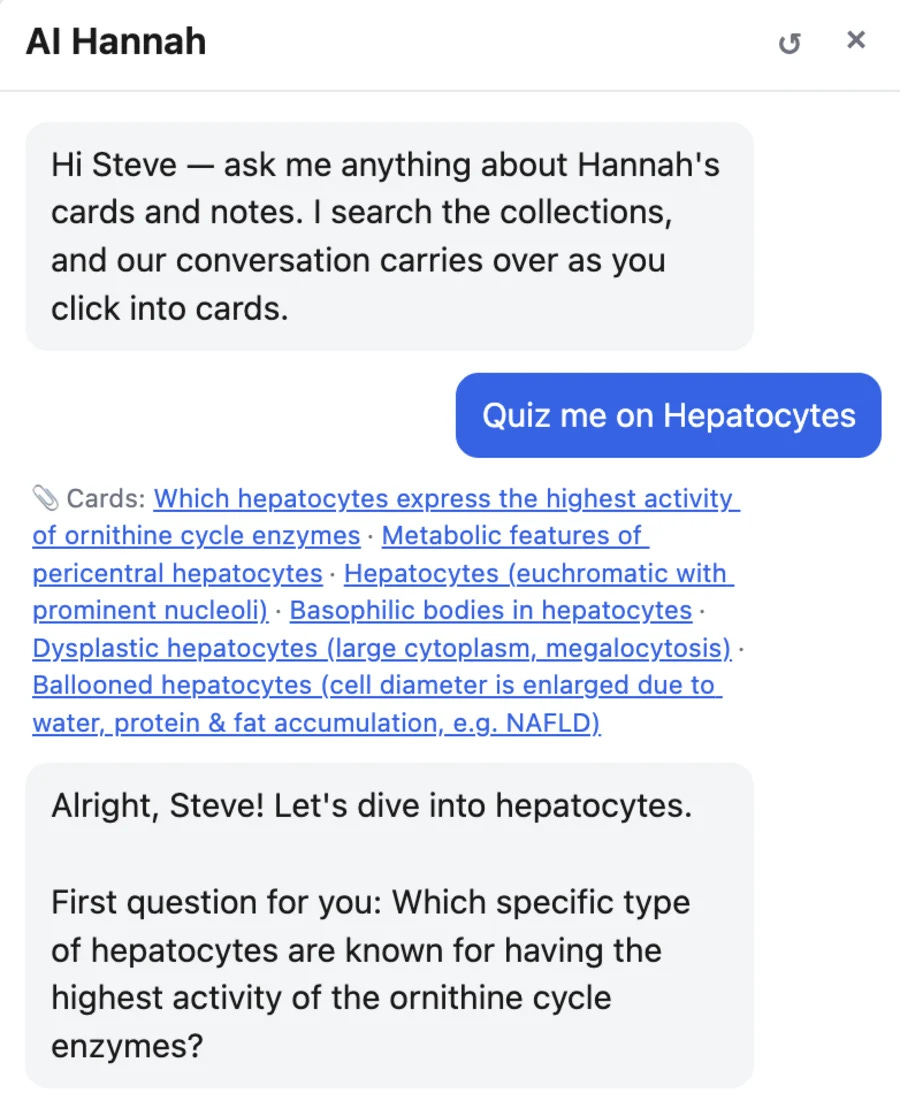
The AI tutor retrieves relevant cards, cites them, and asks focused questions instead of just handing you the answer.
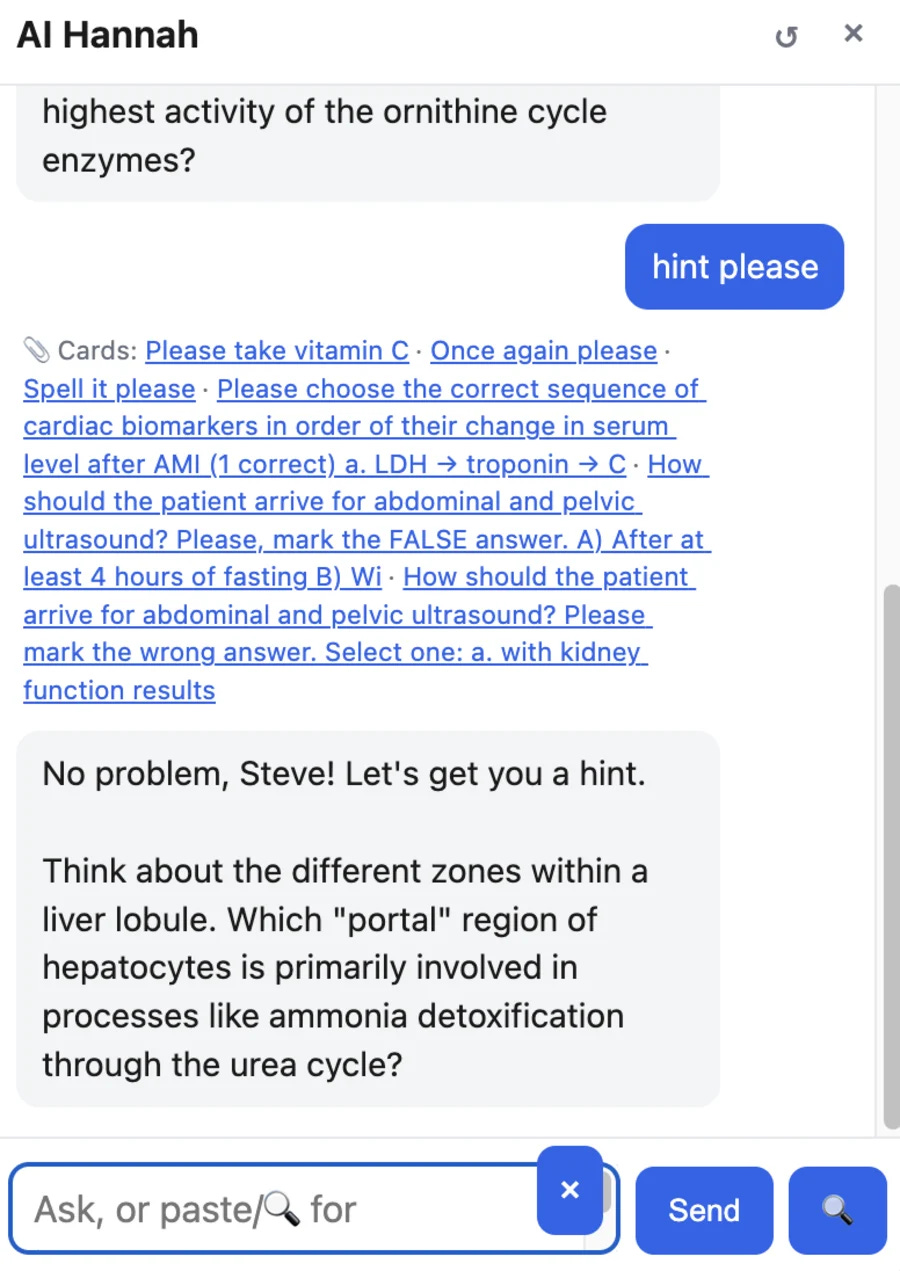
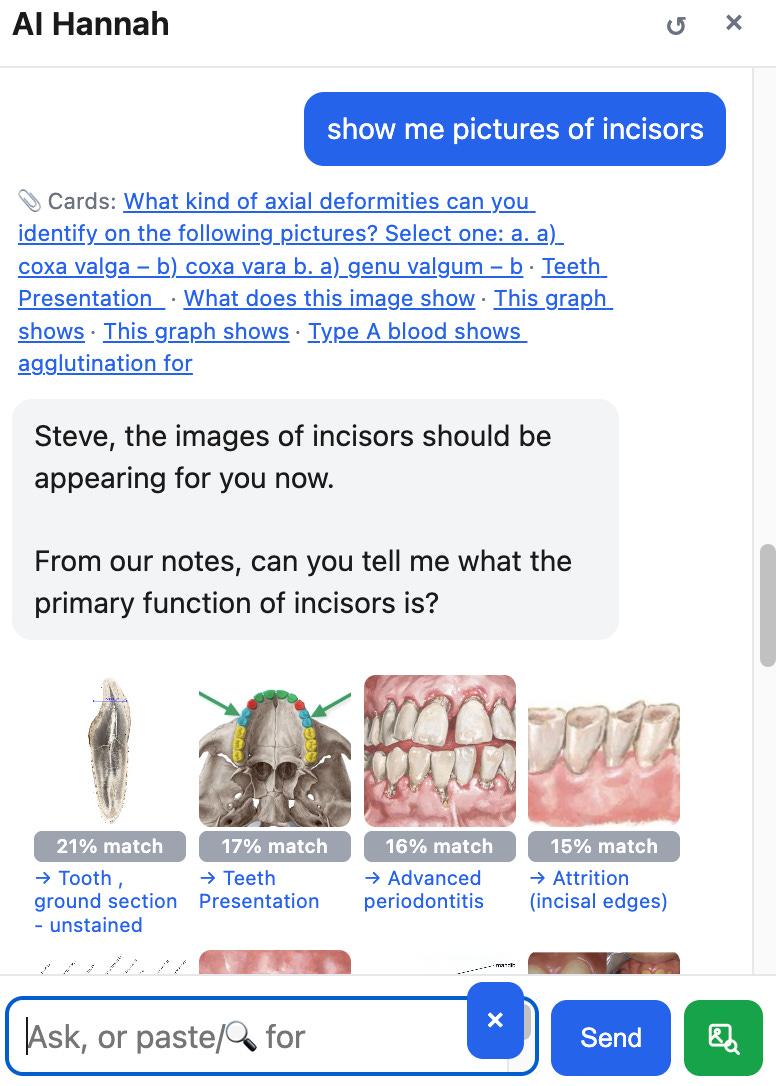
The public site introduces the project. Reader access is still being rolled out carefully, curated around Hannah’s own notes and material rather than anything borrowed. But the archive itself is real, it’s growing every week she’s in school, and it already runs to four major collections and counting.
Someone’s been monetizing her since she was four
Here’s the part of this story that made the whole thing click into place for me. Search “Hannah Muskal” on Google Images and, alongside the search results for her own sites, you’ll find a photo of her as a small child, making a Halloween decoration at the Cole Library in Carlsbad, taken for a local newspaper feature back in 2004. It’s a sweet, ordinary photo. It’s also, right now, sitting behind a stock-photo paywall on Alamy, watermarked, labeled “licensable,” available for a stranger to purchase the rights to a picture of my four-year-old daughter that neither of us has ever seen a dollar from.
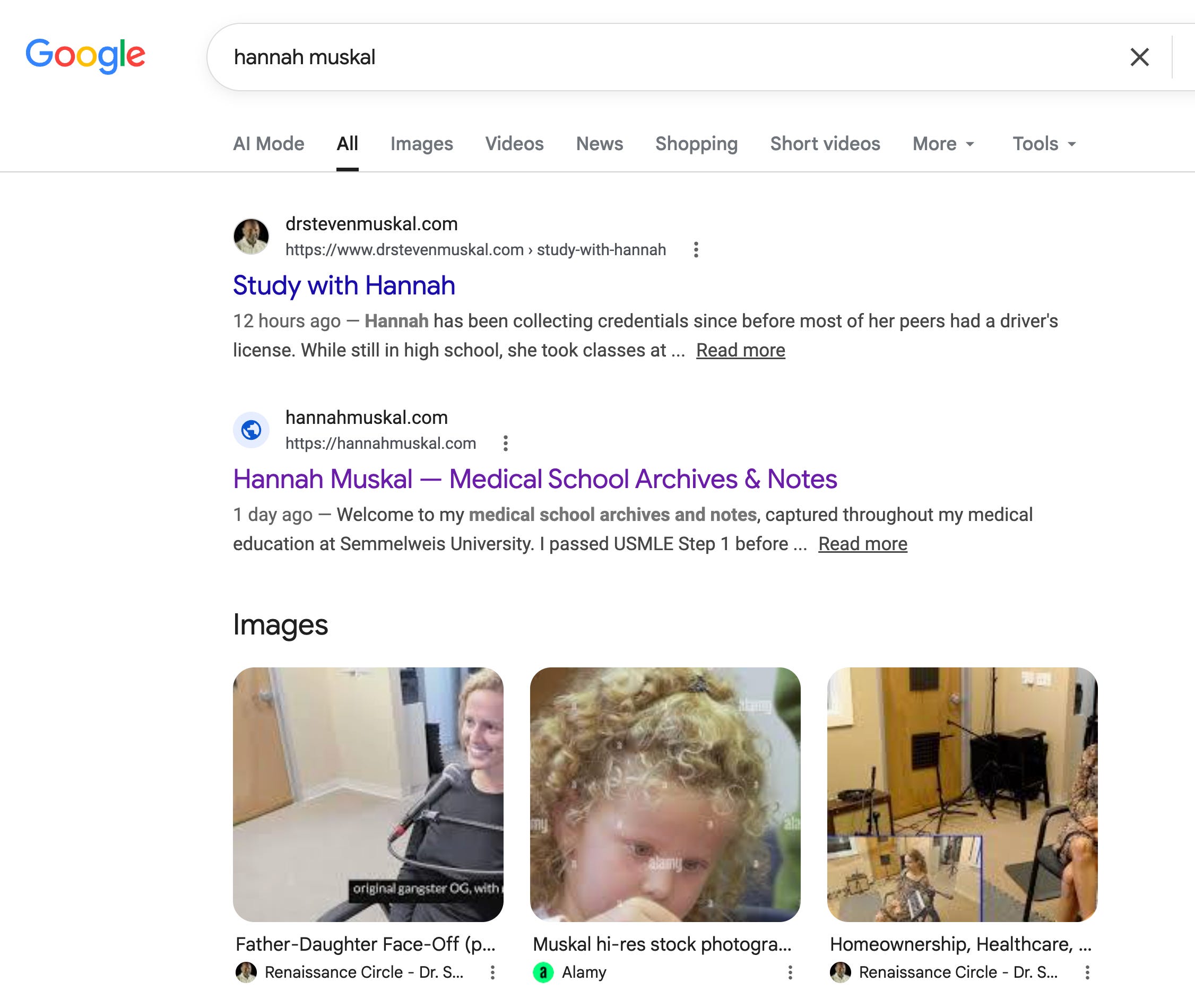
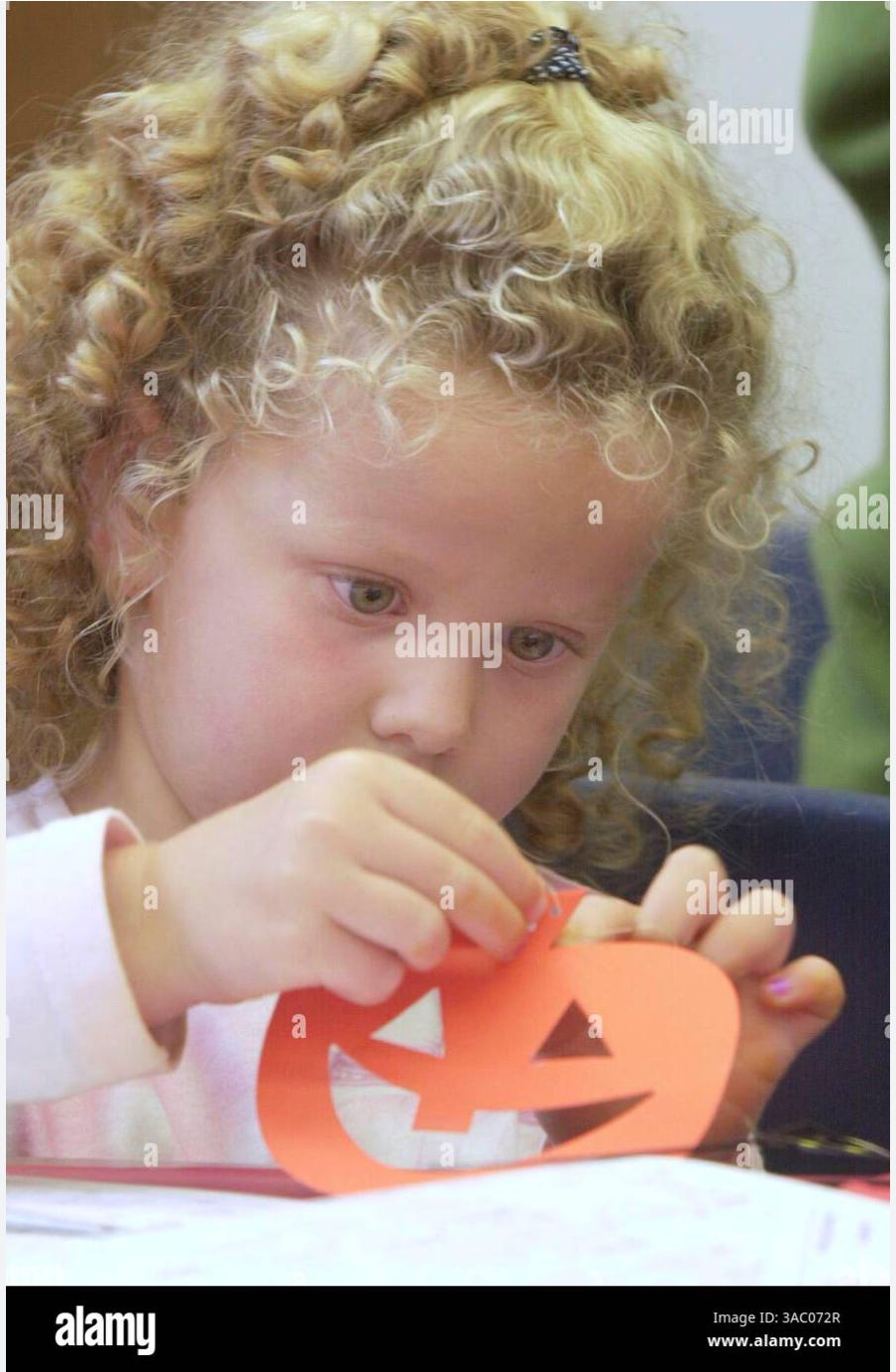
Nobody asked Hannah. Nobody asked me. A newspaper photographer took a picture of a kid at a library event two decades ago, and somewhere between then and now it became someone else’s inventory. That’s not a scandal. It’s just how content quietly changes hands when nobody’s watching. But it’s a hell of an illustration of the point I want to make: other people have been finding ways to monetize Hannah’s existence, her image, her likeness, for years, without her involvement or consent. So why exactly should it be strange, or greedy, or “unprofessional,” for her to be the one who benefits from something she actually built on purpose, out of her own effort, for once?
And this is bigger than one stock photo. We’re living through a moment where everything a person produces, every photo, every post, every carefully written note, tends to end up as somebody’s inventory or somebody’s training data, usually without the producer ever seeing the transaction. I’ve spent my career around datasets, and I’ll tell you what Hannah’s archive actually is in 2026 terms: a clean, hand-curated, expert-annotated corpus of tens of thousands of records and images, exactly the kind of thing entire companies get built on. The only difference between what Alamy did with her likeness and what she’s doing now is authorship and consent. She made this one. She gets to decide what happens to it. Most students have no idea they’re sitting on the same kind of asset, because nobody has ever told them their studying produces anything other than a grade.
Education is already a business. Ask any bursar.
This is the part I keep coming back to. We treat “education is a business” as an accusation, something said with a sneer about administrators and endowments. But it’s just a description. Tuition is a price. Textbooks are a price. Test-prep courses, private tutors, application consultants, all of it is a market, and schools and vendors participate in that market constantly and without apology. Students are the customers in that transaction, over and over, for years, often going into debt to be one.
What students almost never get to be is the seller. All that studying, all that synthesis, all those hours spent turning a professor’s rambling lecture into something clean and memorizable, that’s real intellectual labor, and it disappears into the ether the moment the final exam is over, or it gets handed out for free to whoever asks nicely. I don’t think that’s some kind of moral high ground. I think it’s a market inefficiency nobody’s bothered to fix, because nobody stopped to notice that a 26-year-old with sixty-two thousand study cards is sitting on an asset.
StudyWithHannah.com is not a grand theory of educational reform. It’s one daughter, one dataset, one day of building software, and one modest question: if schools can monetize the process of educating students, why can’t students find their own entrepreneurial angle on their own educational journey? This is just a first stab at that question. I suspect it won’t be the last one I take.
She’s in better company than she knows
Here’s the thing: medicine, of all fields, has already run this experiment, more than once. First Aid for the USMLE, the book every med student on the planet treats as the bible of Step 1 prep, began in the early 1990s as a “student to student guide,” written by medical students who got tired of bad review materials and turned their own notes into something better. It’s been an annual franchise for over three decades. Sketchy, the visual-mnemonic platform half of Hannah’s generation studies from, was started by medical students drawing their own memory aids; it eventually took a thirty-million-dollar investment. Even the flash card world itself has ecosystems where students collectively decide what belongs on the front and back of every card, and some of those efforts have quietly grown from dorm-room collaborations into commercial products.
So the precedent isn’t just there, it’s the backbone of how med students actually study. The strange part isn’t that a student’s study materials could be worth something. The strange part is that each new generation of students still doesn’t think of themselves as the ones allowed to benefit from making them.
I’ll be honest about one nuance, because it’s the first thing a learning scientist would raise: a big part of a study card’s value goes to the person who writes it. The act of wrestling a lecture into a clean question and answer is itself the studying. That’s true, and it doesn’t undercut the idea, it explains the trade. When you use cards built by someone who already passed the exam you’re facing, you’re not buying her learning, you’re buying her distillation: thousands of hours of deciding what matters, compressed into something you can drill at eleven at night. That’s the same trade every First Aid buyer has made since 1992. It’s just that this time, the student who did the distilling is the one at the counter.
A Gen-X dad, a Gen-Z daughter, and a few open questions
Hannah and I have been doing a running dialogue for a while now, a sort of Gen-X-meets-Gen-Z back and forth on the podcast, comparing notes on how different her path through school has looked from mine. We recorded a two-part episode about her medical training overseas, including a segment where I showed her old childhood photos (the same kind of photo, incidentally, that a stranger now has on file at Alamy) and asked her, more or less, “med school today?” You can find that conversation here: Father-Daughter Face-Off (part two): Medical Training Overseas. It’s a good companion piece to this one if you want the fuller picture of how she got here, astrocytes and all.
Visit, share, and ask your own question
I don’t know if this idea scales past one very determined med student. That’s fine. Most good ideas start narrow. What I do know is that Hannah spent years building something valuable, gave it away by default because nobody had suggested she do otherwise, and now has a small, honest way to let that work support her while she finishes the six-year climb to becoming a doctor. If you know a student sitting on their own pile of hard-won notes, summaries, or study systems, ask them the same question I asked Hannah: why exactly are you giving that away?
Go take a look at StudyWithHannah.com. Request access if you’re a student who could use sixty-two thousand study cards written by someone who’s already passed the exam you’re studying for. And if this story is worth passing along, pass it along. That’s the whole point of writing it down.
Related reading: Father-Daughter Face-Off (part two): Medical Training Overseas · Study with Hannah: Medical School Study Cards · Steven Muskal Projects
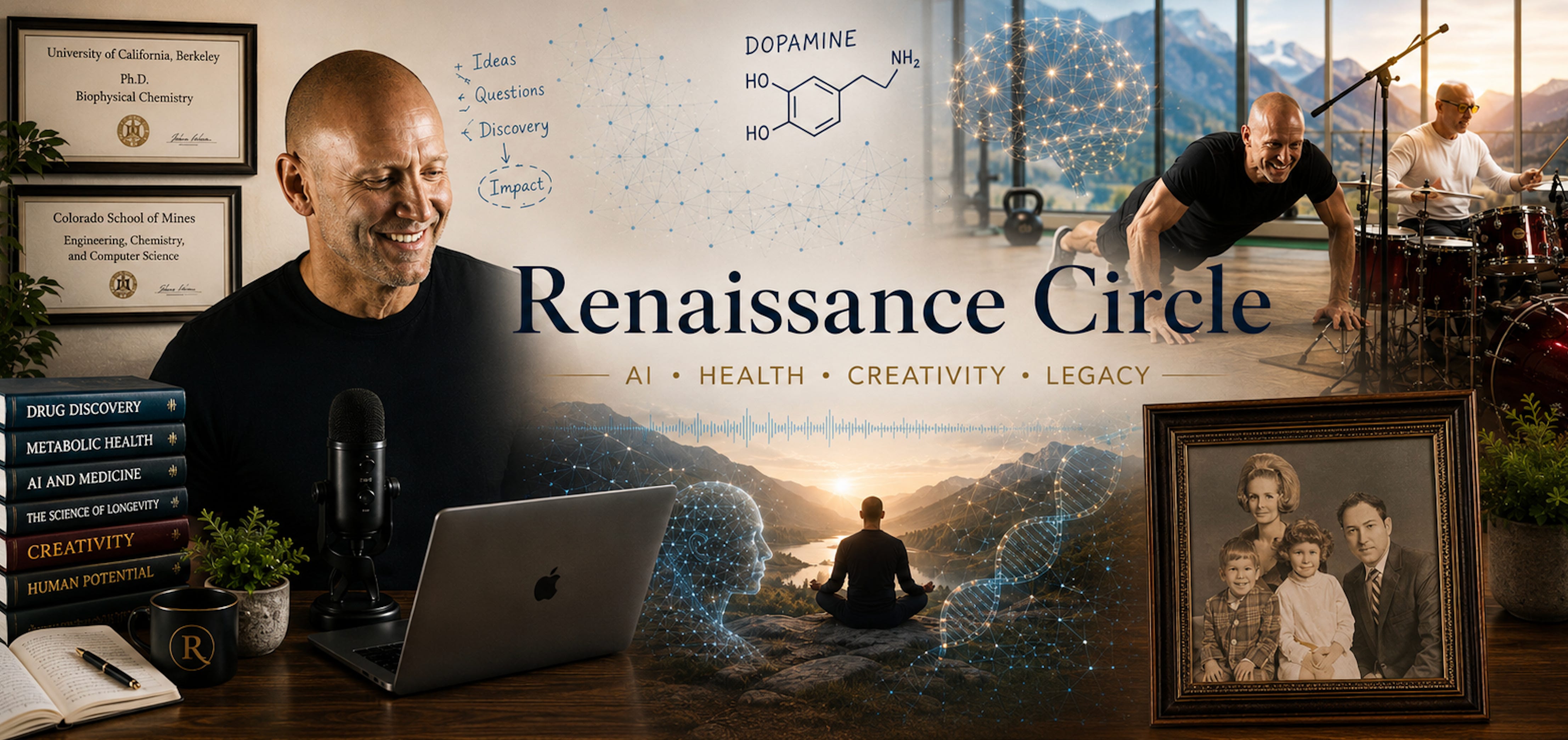
Steven Muskal, Ph.D. is the CEO of Eidogen-Sertanty, Inc. - a drug discovery informatics company. He has spent four decades working at the intersection of computational biology, AI, and drug discovery. He writes about AI, health, and the intersection of biology and technology at stevenmuskal.com
For a couple mix videos, here are timely samples involving Hannah who was home for a few weeks. The recent July 3rd (2026) ‘Mix and Match’ session at Ocean Ranch Studios. Hannah with Maya on What’s Up / 4 Non Blondes Cover (though Hannah is a true blonde!). AlanW on Bass, Giovanni on guitar, Dan on acoustic.
And a rough run of Let it Be — RickL, Hannah, Andrew, David, Dan. As usual, a single run through with people never having played together before on a song they learned on as we went. That’s how we roll!