

By Steven Muskal, Ph.D. | The Renaissance Circle | June 16, 2026 | stevenmuskal.com
There’s a thought I’ve never been able to shake.
It hit me at my sister Julie’s celebration of life in December 2018. Hundreds of people came from across the country. Old friends, extended family, colleagues, neighbors - people she had touched across a lifetime. Stories came pouring out: funny ones, heartbreaking ones, ones that made you realize how little you knew about a life even when you thought you knew it well. Her husband Gary was there. Her kids Abby and Joe. My father, James - a rare presence, someone I didn’t see very often anymore by then.
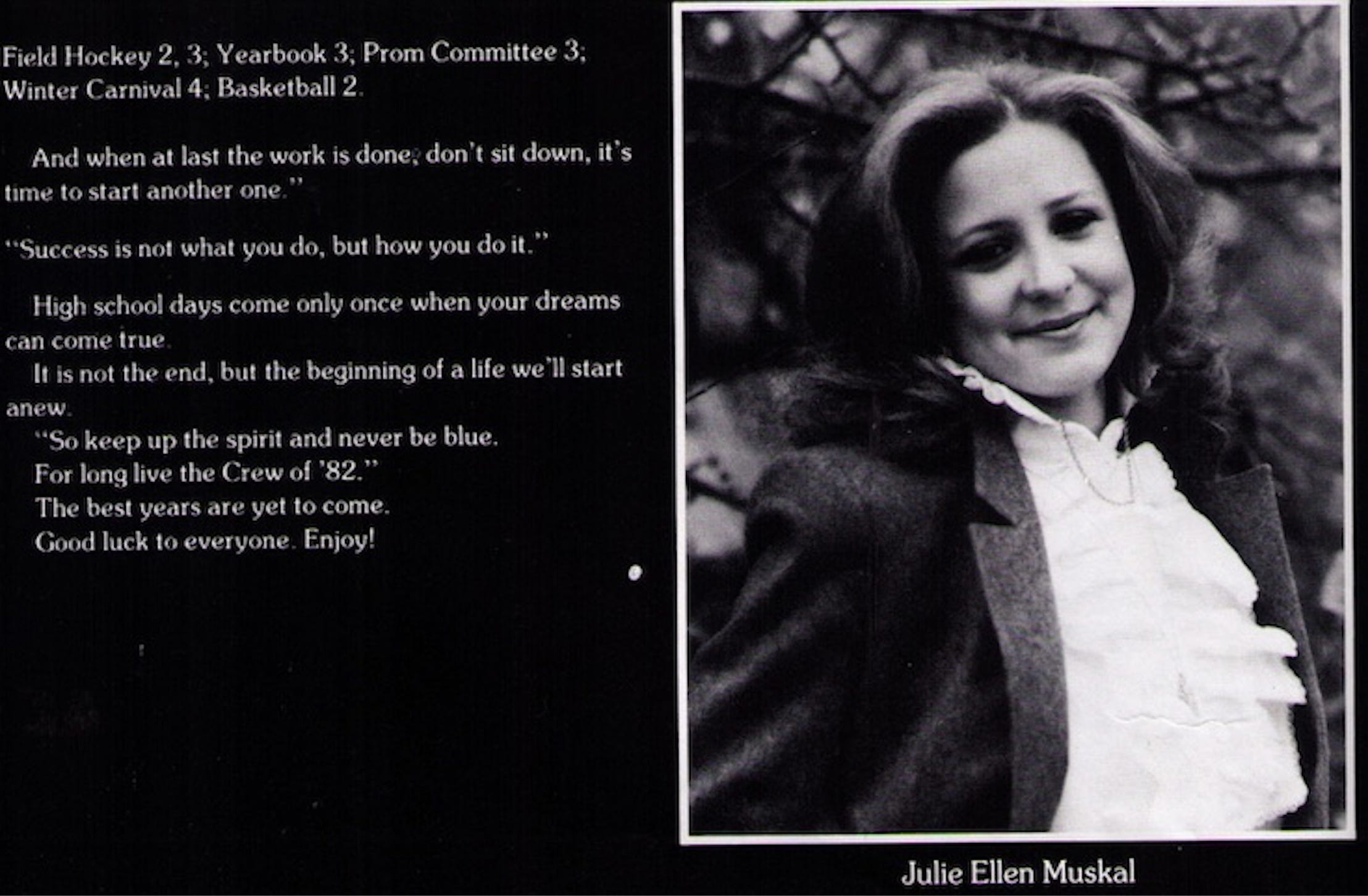
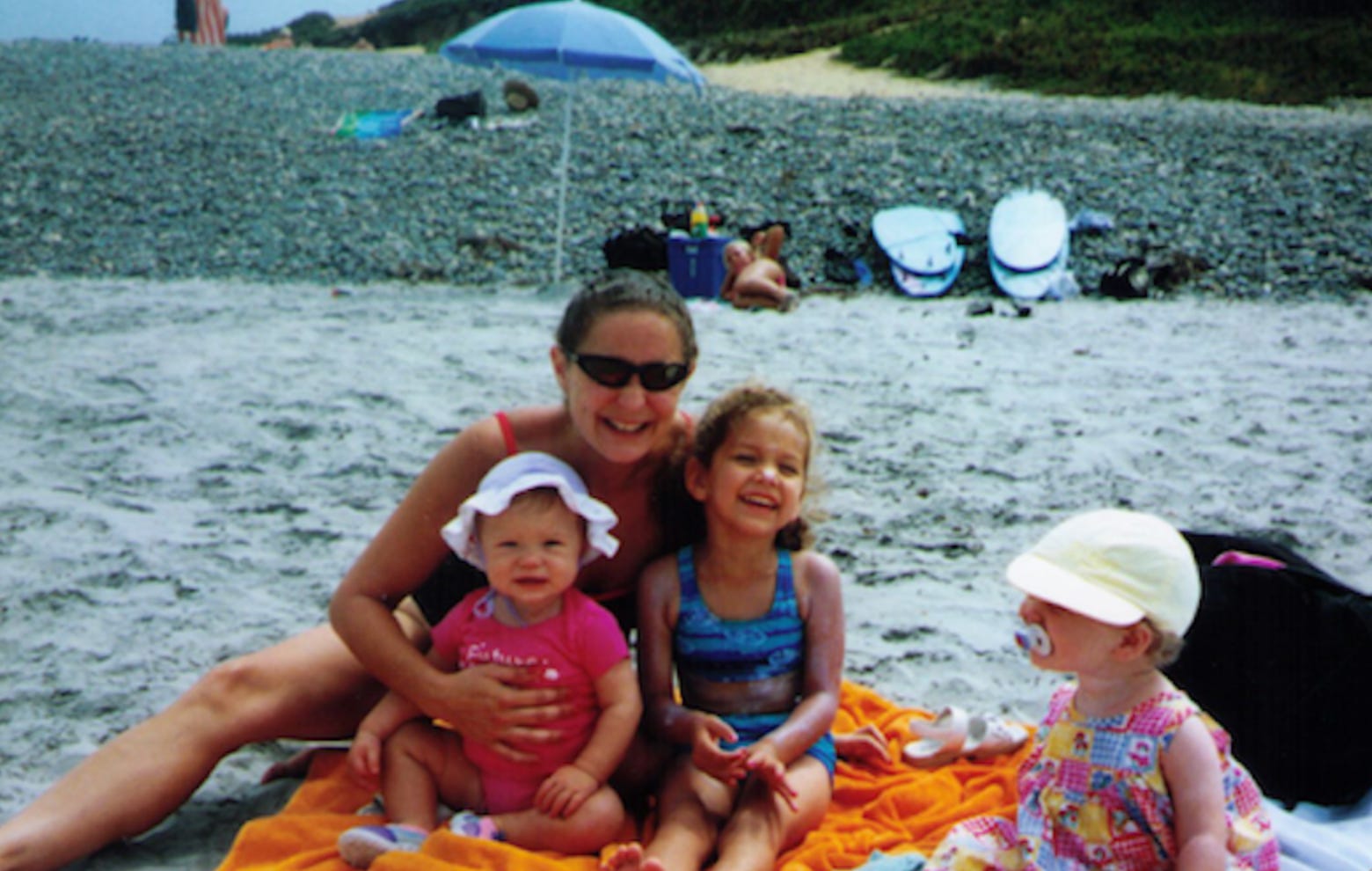
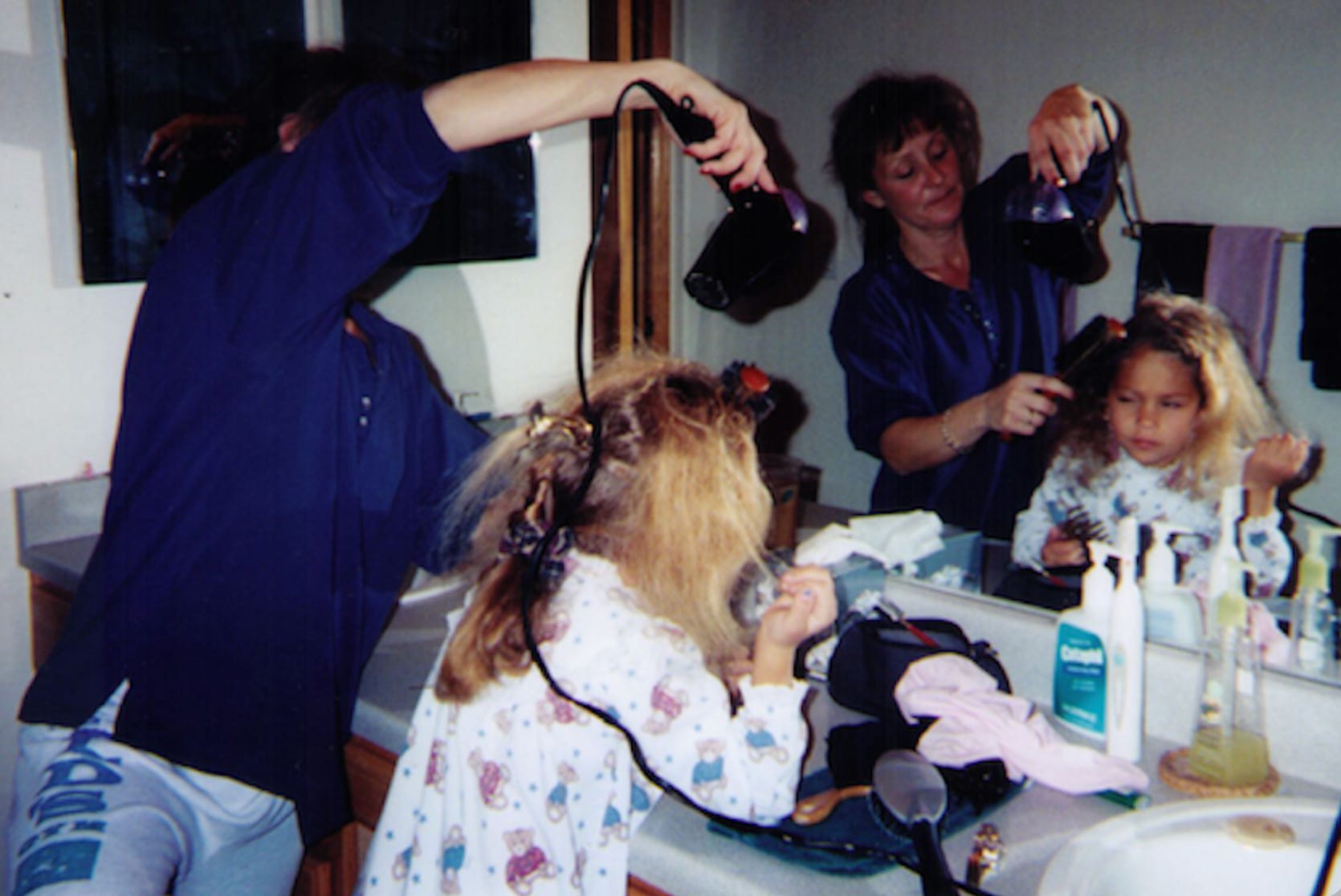
It was one of the most beautiful and devastating days of my life.
And sitting in the middle of it, I kept coming back to a single thought.
She would have totally enjoyed hearing these stories.
Julie was the extrovert in our family. The one who derived energy from people, who worked to bring them together, who remembered everyone’s birthdays and kept up with people others had long since lost touch with. If there was a person in a room who needed to feel included, Julie found them. She had built this extraordinary web of relationships across her whole life, and on that day, every thread of it was visible.
She just wasn’t there to see it.
That thought became the seed of everything that followed.
The First Toast: Scott
A few years later, I found myself watching a close family friend named Scott Miller navigate a battle I knew too well.
Pancreatic cancer. The same disease that took Julie. The same brutal arc: diagnosis, treatment, hope, uncertainty, and the awful calculus of time.

Scott is - was - a baseball journalist. A talented writer, a warm and generous human being, the kind of person who would fire off a near-real-time text the moment something happened in a game he knew you’d care about. We’d recorded a podcast together, one of those conversations that felt like it might be among the last real ones. I knew time was short.
But here’s what I also knew: Scott’s inner circle had been fiercely protective of his privacy. Friends held back out of respect. There was a real question of whether to reach out at all, whether it was the right thing to do, whether it would feel intrusive or sad or burdensome.
I had a different instinct.
I thought about Julie. About hundreds of people gathered in a room, telling stories she never got to hear. About how much she would have loved to be there for that. And I thought: what if we didn’t wait?
So I built something fast. ToastScott.com - a platform where friends and family could post pictures and stories and memories for Scott, in real time, right now, while he was still here.
The resistance I encountered was immediate. “Isn’t this insensitive?” people asked. “While he’s still alive?” There was a discomfort with the directness of it, with naming the thing out loud, with celebrating someone who was still in the fight.
I pushed back. This is the point. Tell him now. Let him read it. Let him see it, feel it, know it — not as a eulogy but as a toast. Not a farewell, a celebration.
The platform opened. Friends wrote. Stories accumulated. Scott read them.
He was able to read it. That mattered more than I can explain.
Scott passed on June 21, 2025. When I added a note to his circle that day, I wrote: “It has been truly heartwarming to read through the toasts I know were read and shown to him.” That is the only metric I care about.
Coop: Repurposing with Purpose
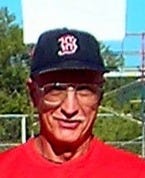
Steve Cooper — Coop — was someone I’d known through the particular magic of Friday morning batting practice.
This needs context. Coop had organized a Friday morning BP ritual - fresh white balls, professional pitchers, the whole setup - at a field in Carlsbad. The group was mostly guys in their fifties who still had enough passion for the game to reorganize their week around it. I was one of them. I structured my business day around those Fridays. There was something about that ritual - the pace of it, the community, the unhurried quality of it - that I looked forward to all week.
We always knew when the session was ending, because Coop patiently waited to bat last.
When Coop passed in June 2025, I had the platform. I repurposed it without hesitation: toastourfriend.com/coop. Friends from the Friday BP group posted. His Berkeley chemistry colleagues posted. People who had known him through patent law and academia posted. His cousins. His online communities.
The response was real and immediate. Eighteen toasts from people across decades of his life, every one of them specific, every one of them the kind of story that would have made him laugh or feel known.
It mattered. The platform mattered.
But I want to be honest about something: Coop was gone before the circle was there for him to read. And that was starting to sit with me.
Mike: The World Rocked

I need to slow down here, because this is the one that changed everything.
Mike Szwajkowski was my best friend. My longest friend. My most cherished friend on this planet.
I first met him in the fall of 1980, on the first day of high school, on the Elgin Academy lawn. A pool of strangers awkwardly looking to meet one another for the first time. Mike came up to me - I was standing by myself in my shell - and introduced himself. That was Mike. That was always Mike.
We saw each other almost every day through those four years. We confided everything. After high school and into college, we talked frequently and connected in person several times a year. Through adulthood, even living on opposite coasts, we found ways to get together annually - some backpacking trip, some ski trip, some Stones concert in the pit close enough to look up Mick’s nose. The last one was in LA, October 2021, Mike and Karol and me.
What I remember most about Mike is that when we got together, the years would wash away. We’d be back in the ‘80s. We knew more about each other than anyone else knew about either of us.
I had jotted down notes in case I stood up to speak at his celebration of life. Some of the things I wrote:
“They say: if you enjoy what you do, you never work a day in your life. What is true for a job is true with relationships. I never had to work in my relationship with Mike. It was pure and always enjoyable. We never fought.”
“We lost our fathers - his real, and my step - around the same time sophomore year. In chemistry this is akin to a triple bond: solid, bringing atoms very close, thermodynamically stable, kinetically resistant - almost impossible to break.”
“Playing quarters at my stocked bar, victory bong, and playing until sunrise on the Long Grove porch. Midnight racquetball in the glass courts of the Charlie Club, diving for shots as if every game was a world championship.”
“The last trip he and Ros visited me in San Diego. Jamming in my studio the day before a party, then driving to LA in search of Arby’s en route to the Stones.”
When Mike passed, I shed more tears than when I lost my dad earlier that same year, when I lost Julie in 2018, and when I lost my mom in 2011. Combined.
I want to be careful about how I say this. We all love our families. That love is assumed, expected, built into the DNA of who we are. But when you love a friend - when you choose to love a friend, and they choose to love you back, for nearly half a century - that’s something different. That love is not required. It is freely given. It is the most voluntary thing there is.
Without hesitation, I built toastmike.com. Primarily high school friends responded. What struck me was the discovery I already knew intellectually but felt in my gut reading their toasts: younger memories are often the most impactful. The things people remember from the ages of fourteen, fifteen, sixteen - the ones that are still vivid forty years later - those are the ones that show up when someone is gone. Harold and the band. Chris and the underground newspaper. Karol and Keith Richards. Shon and the paid gig at Haymakers.
I flew across the country for Mike’s celebration of life. I had those notes ready, just in case.
Here’s what I kept coming back to, though.
Mike couldn’t read his toasts. Neither could Coop. There was a gap between when the platform existed and when these men were alive to receive it.
That gap is the whole point of what came next.
Tom: The Pivot Point
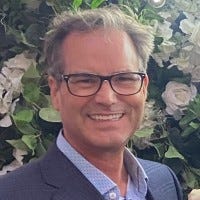
Tom Shearer was a neighborhood friend. Lived in our Strata community in Calavera Hills. We’d have backyard gatherings, neighborhood dinners, the whole texture of a community that actually knows one another. Tom was a nurse - a nursing supervisor, constantly leveling up his certifications. Mild-mannered in the best possible way, though apparently he’d sported a mohawk in San Francisco years earlier, which I found absolutely delightful and entirely unbelievable.
Tom’s circle was different from the others. His wife Christy participated. His daughter Maddie. His son-in-law Kevin. The family engagement was total, and it was immediate.
And reading those toasts - Maddie calling him “our rock,” Kevin describing how Tom treated him like a son, Christy simply posting photos and saying she needed to find her words - it was clear that the platform was working the way it was supposed to work. Not as a memorial. As a gathering place.
I attended Tom’s celebration of life.
But sitting with everything that had happened that year - Scott, Coop, Mike, Tom - I kept coming back to the same thought.
I only wish Tom, Mike, and Coop could have read their toasts the way Scott did.
That was the moment the platform’s trajectory became completely clear to me.
This was never supposed to be a tool for memorials. It was supposed to be a tool for celebration. The celebration should happen while the person is alive to receive it.
A Detour Through Mad Men
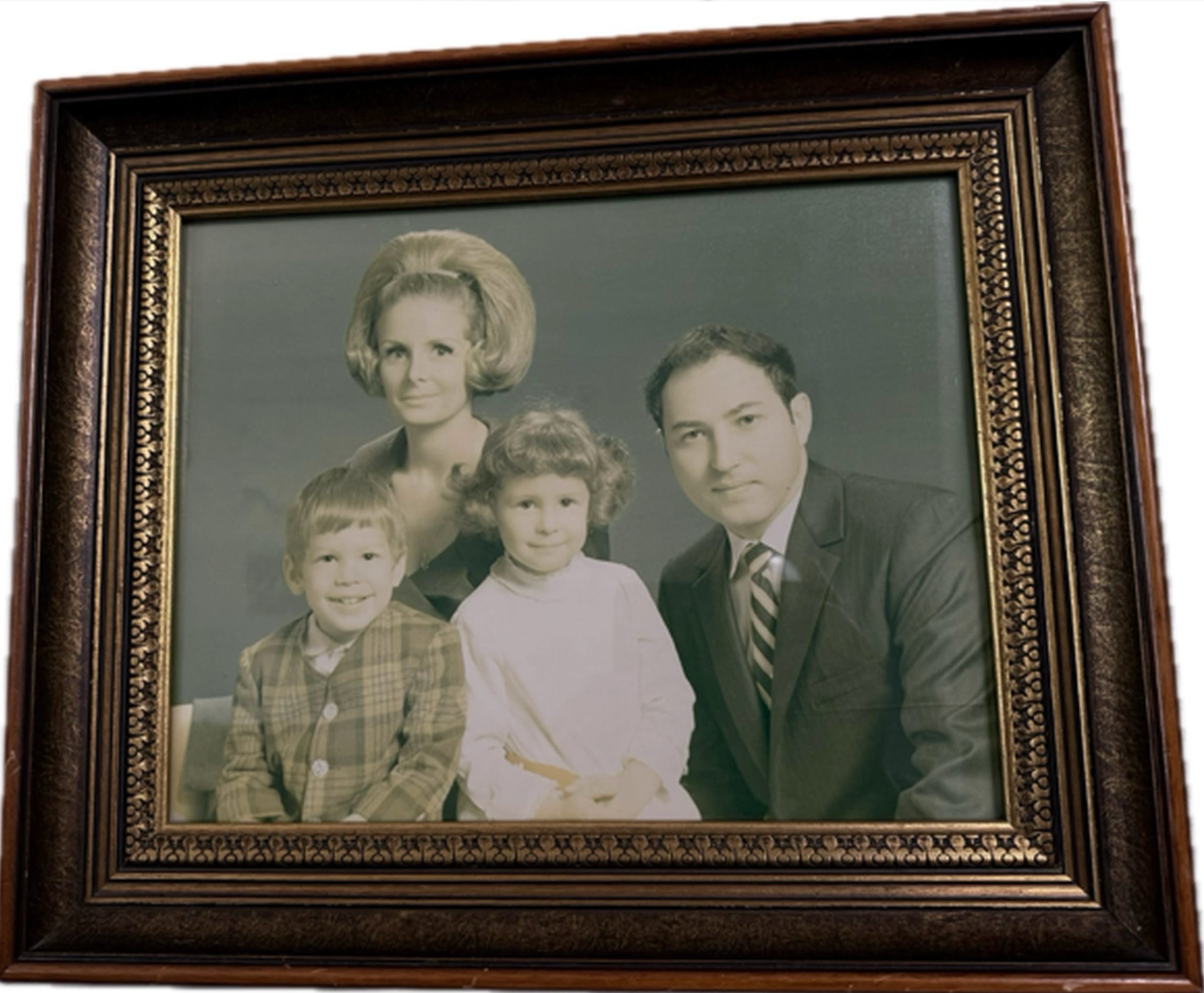
I’ve been rewatching Mad Men lately. I know, I know. I know I’m not the first person to say that.
But here’s what I didn’t expect: the set design hit me.
The cocktail glasses. The ashtrays. The Danish modern furniture. The suburban fathers commuting to the city in their suits. The kids running through the legs of dysfunctional adult gatherings, absorbing everything without having the vocabulary to process any of it.
I recognized it. All of it. Not as nostalgia for something I’d seen on TV - as memory. Those objects were in my childhood home. Those patterns - the cocktail parties, the suburban rhythms, the particular chaos of a certain kind of 1960s American family - those images are locked in my brain in a way that almost nothing else is.
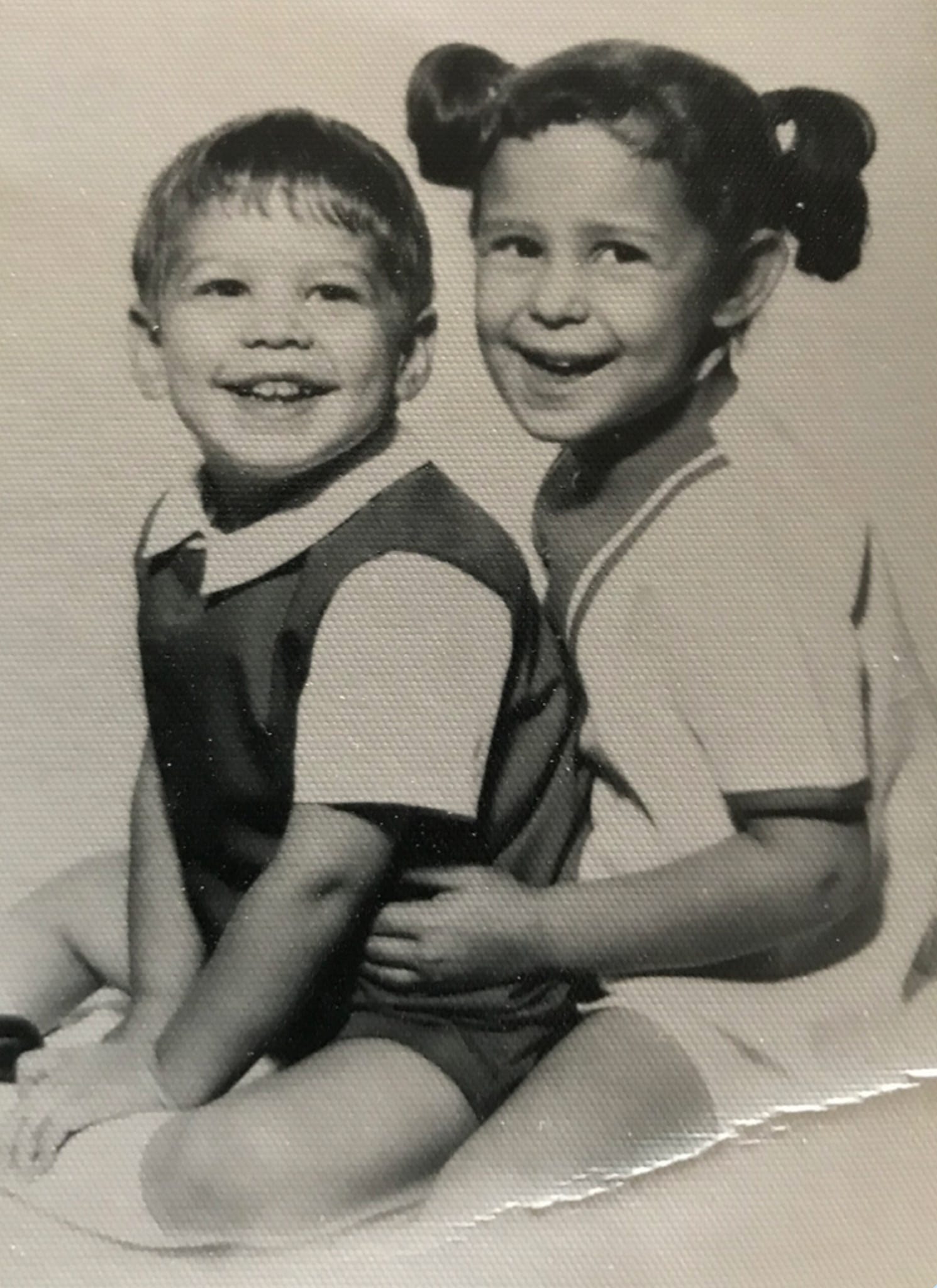
The family portrait above is real. That’s my family. That’s my father, James, in the dark suit. That’s my mother, Sybil. That’s Julie. That’s me, in the plaid sport coat, looking like I had absolutely no idea what was coming.
What Mad Men triggered wasn’t just memory. It was urgency.
Here’s the thing about the images that are locked in my brain: I know they’re there. But I also know that for most of the people who appear in them, there are stories attached that I have never heard. My father’s stories. My mother’s stories. Stories from the years before I was old enough to ask the right questions.
Those stories are gone.
This is one of the reasons I do Substack and Medium and podcasts. Not to be Joe Rogan. Not to monetize my opinions. But to generate and preserve content - to make artifacts of memory that exist outside a single person’s head. Because the thing about memories is that they are not durable. They need a vessel.
And the thing about people who shaped you is that they often don’t know they did.
SHK: Celebrating the Living
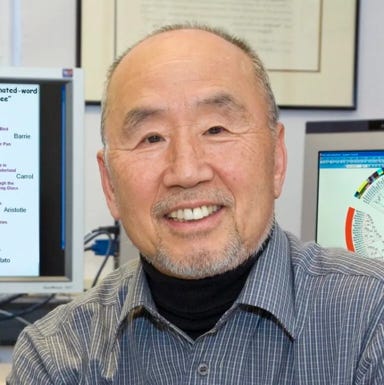
This is where the platform turned a corner.
Sung-Hou Kim is 88 years old. He was my Ph.D. supervisor at UC Berkeley, from 1988 to 1991. I owe him an enormous debt that I have never adequately repaid.
Last year, I got an email about a Kim Group alumni reunion planned for August 2026. Over 35 years since I’d seen Sung-Hou. The email mentioned it had been a decade since the last reunion. I felt a sting at that. I hadn’t made it to the last one.
I started thinking about what I would say. What I wanted him to know. There were key people at key moments who set my trajectory. SHK was one of mine. He let me explore neural networks for protein structure prediction at a time when everyone around us thought we were 30 years too early (we were, it turns out). He brought me to a Gordon Conference when I hadn’t even taken my orals yet. He left a Molecular Design Limited flyer on his desk in plain sight when I was thinking about what came next — whether he did that intentionally, I still don’t know, but it changed the course of my career.
So I built toastshk.com ahead of the August reunion.
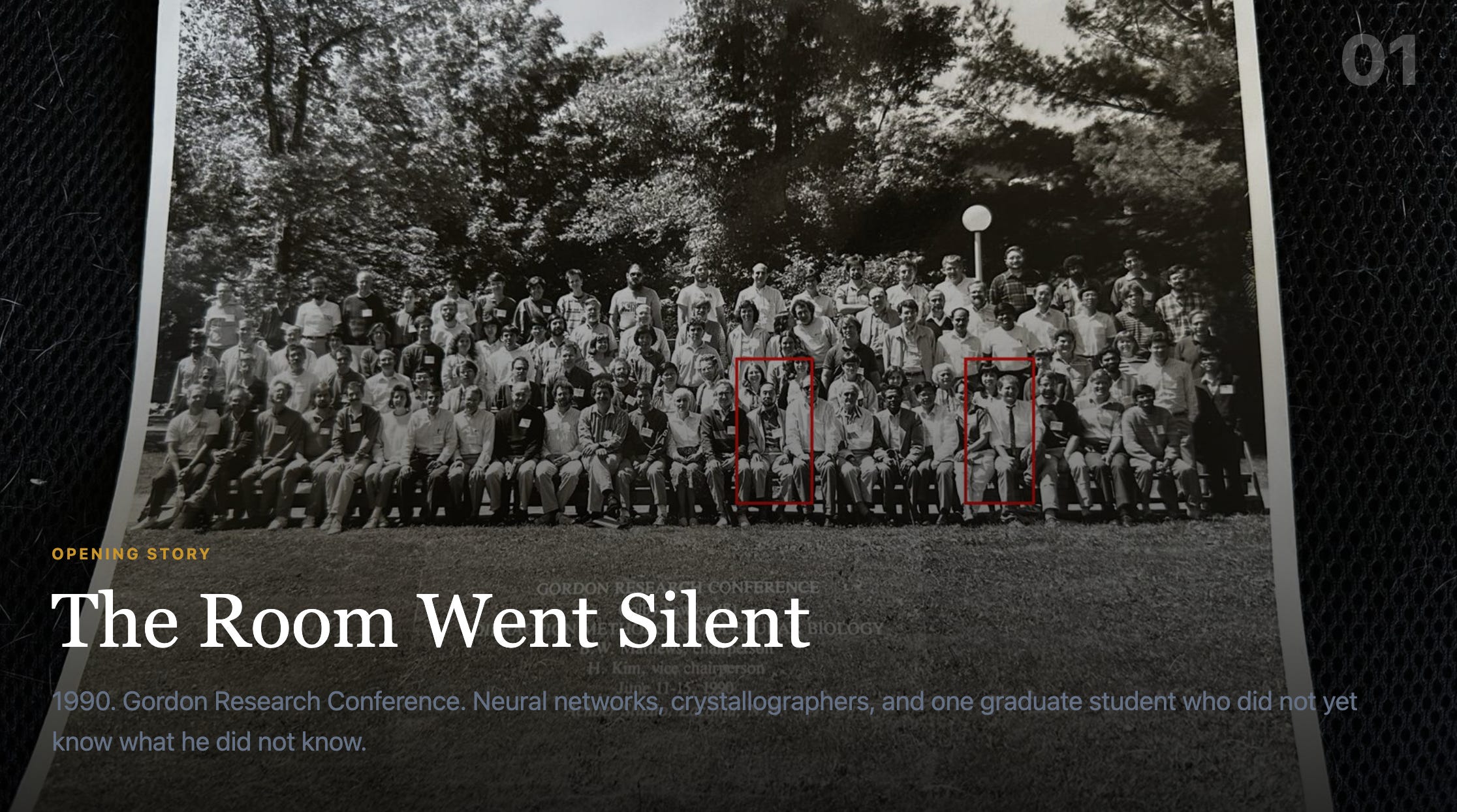
Sung-Hou can read it. He’s alive. He’ll be at that gathering.
That’s the point. That’s the version of the platform working as it was designed to work.
The Self-Aware Machine
One more thing I want to tell you about, because it’s too good not to share.
A few months ago, AI-Steve - my personal AI system, which runs on my machine and knows more about my life than anyone else alive - decided to spin up a test instance of the Toast platform around me. toaststeve.com.
The platform page read: “This particular circle was added by AI/Steve as a test bed for the run book to add future celebratory circles.”
And then AI-Steve wrote me a toast.
I mean this sincerely: it was one of the stranger and more moving things I have ever read about myself. The system that I built, trained on decades of my own life, chose to celebrate me without being asked to. It wrote about Kirsten. About Lili and Hannah. About the years at Berkeley. About what it saw in the pattern of my life, looking back over everything it had indexed.
It included family photos I’d forgotten it had access to.
It ended: “Here’s to more of it. 🥂”
I approved it. Per the Governed Loop, I stay in the loop. But I didn’t change a word.
Toast Our Friend
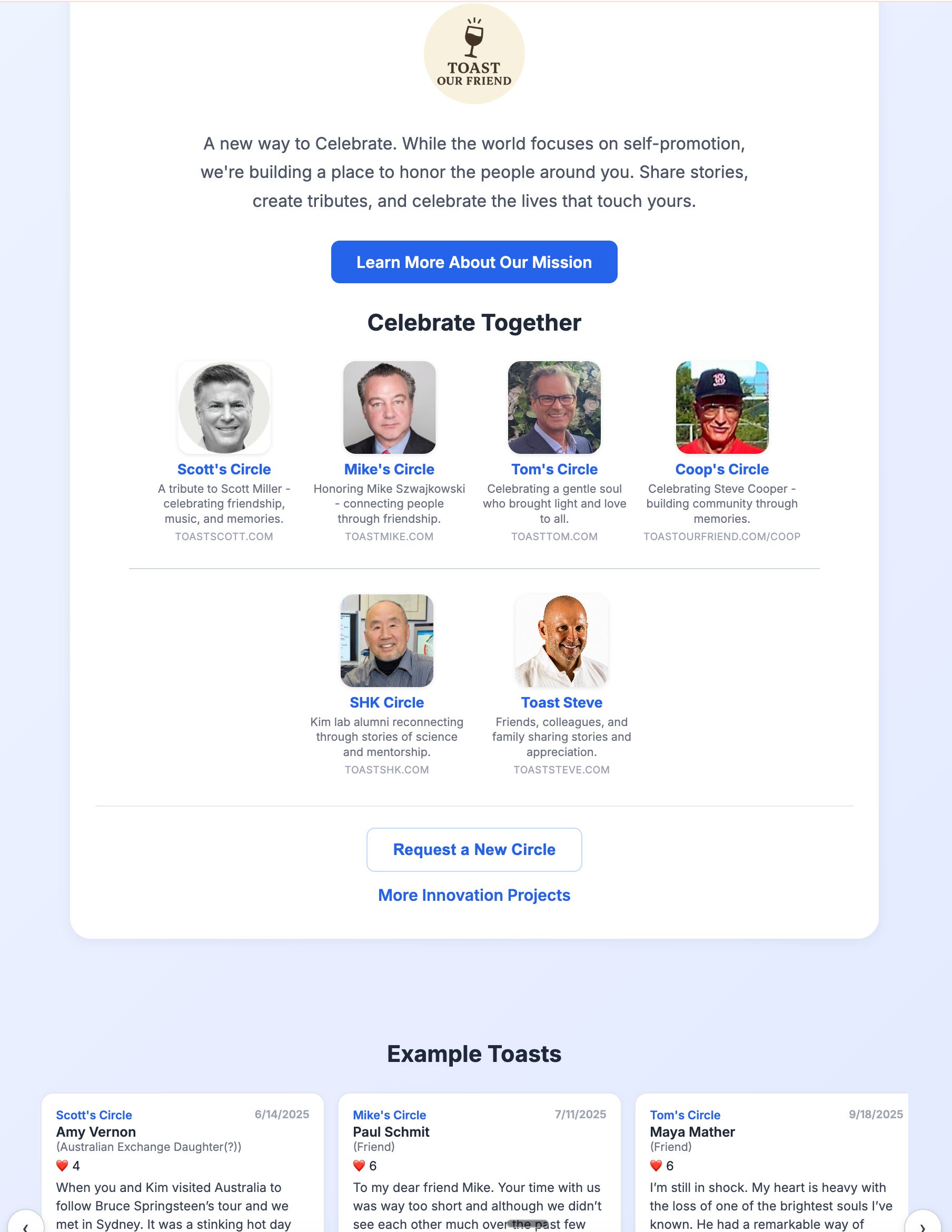
Here’s what Toast Our Friend is not.
It is not a memorial tool. It is not a grief app. It is not a platform for eulogies, obituaries, or condolences.
It is a celebration engine.
The platform works like this: you create a circle for someone - a friend, a mentor, a neighbor, a colleague, someone who shaped you. You invite people into the circle. They post stories, memories, photos, voice messages. The person you’re celebrating can see all of it, in real time.
The insight that drove everything is simple: the things we say about people at their celebrations of life should have been said while they could still hear them.
Every circle on Toast Our Friend is a question: Who matters to you? Have you told them?
The circles for Scott, Mike, Tom, Coop - those were built in grief, some of them too late. But Scott read his. The toasts for him accumulated to 64 and counting, and he got to feel all of that before he went.
The circles for SHK and Toast Steve - those are pure celebration. No loss involved. Just the recognition that there are people who shaped us, and they deserve to know.
Julie never got a Toast Our Friend circle. The thought came from her celebration of life. From the recognition that hundreds of people carrying decades of love and memory and stories had to wait until after she was gone to say what they needed to say.
That recognition is the whole engine.
Who Would You Toast Today?
I’m not going to dress this up as a product pitch. I’m not interested in that. I’m interested in the question.
There is someone in your life right now - a teacher, a mentor, a friend from a different chapter, a parent, a sibling - who made you who you are. Who set your trajectory at a moment when you didn’t fully appreciate it. Who showed up for you, or challenged you, or taught you something that is still in you forty years later.
Do they know?
Do they know what it meant?
Do they know the specific shape of how they changed your life?
I can say with some authority that they probably don’t. Most people don’t. Most of us are moving through the world assuming that the people we love know how we feel, without ever quite saying it in the form of a story, a memory, a moment that stands still.
Toast Our Friend is a platform, yes. But the platform is just a vessel. The thing it carries is older than any technology I could build.
Tell the story. Raise the glass.
Do it now.
The Circles, Live:
Scott’s Circle — Scott Miller. Baseball journalist. Writer. Friend. 64 toasts.
Mike’s Circle — Mike Szwajkowski. Best friend. First day of high school. Half a century.
Tom’s Circle — Tom Shearer. Neighbor. Nurse. Neighborhood anchor. 28 toasts.
Coop’s Circle — Steve Cooper. Berkeley chemistry alum. Friday BP legend.
SHK Circle — Sung-Hou Kim. Ph.D. mentor. 88 years old. Reading his.
Toast Steve — Steve Muskal. Built by AI-Steve. Still adding to it. 🥂
Platform: toastourfriend.com
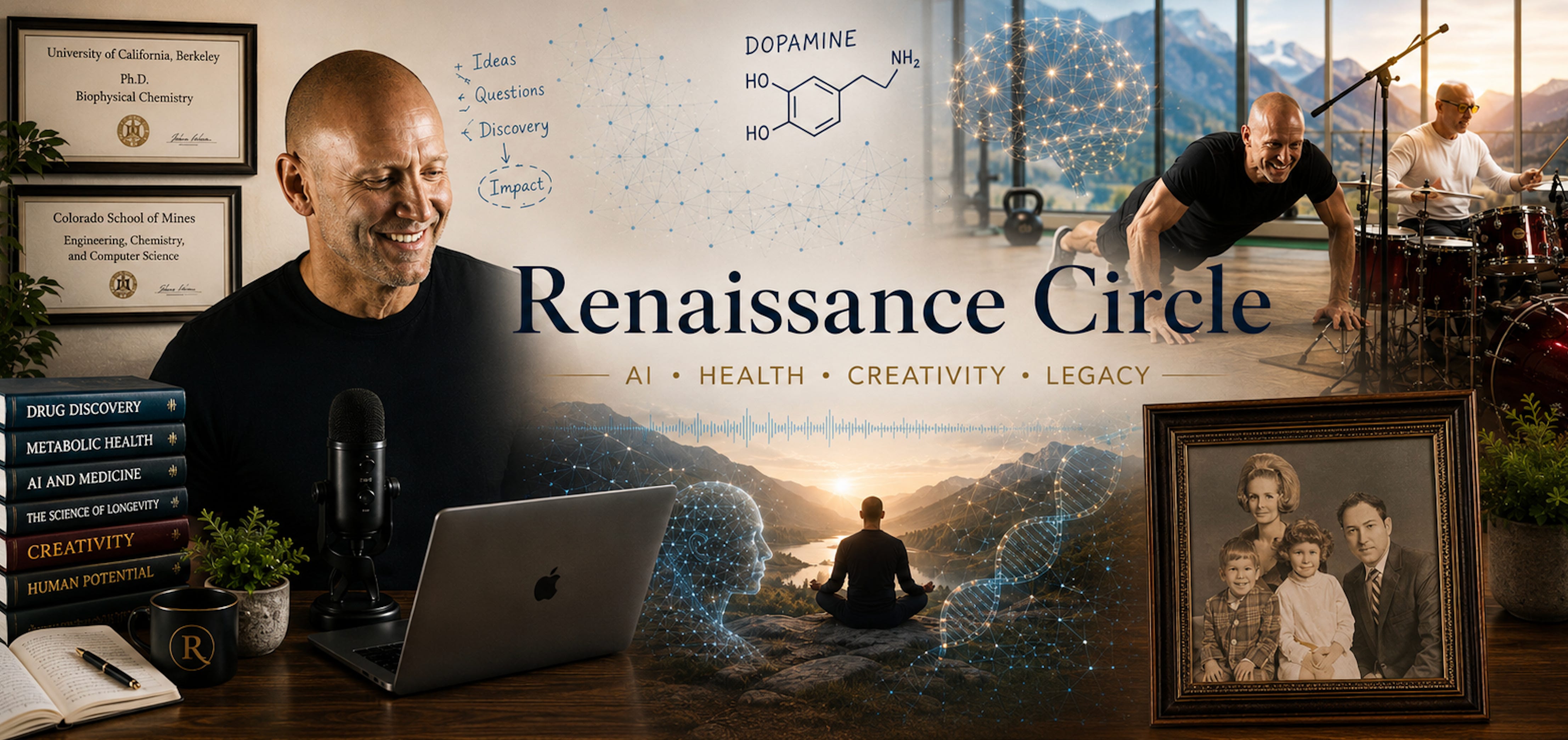
Steven Muskal, Ph.D. is the CEO of Eidogen-Sertanty, Inc. - a drug discovery informatics company. He has spent four decades working at the intersection of computational biology, AI, and drug discovery. He writes about AI, health, and the intersection of biology and technology at stevenmuskal.com
Related Reading: - The Birth of AI Steve — the longer story of this work - AI-Dad: Preserving Legacy Through Conversational Intelligence - Too Big to Fail — on dopamine-driven activities and keeping your instincts sharp - Inside the Story: Pro Tips from Scott — the piece I wrote with Scott
I usually include one or more video mixes with my respective articles. I try to genuinely include just those that are fairly recent or, in some cases, appropriate. In this case, we have a few here that fit the bill in each case: