


I have been on a tear. For the last few months I have been going back through work I did over the last twenty five years, some of it from 1998, some from 2003, and rebuilding it. Not for nostalgia. To find out whether it still holds.
Science is supposed to be hypothesis testing and validation. We seem to have quietly stopped applying that to our own back catalogs. You publish, the paper goes into the record, you move to the next problem, and the claim sits there untested against anything larger than the dataset you had at the time. Most of those claims were built on what was available then, which usually means a few dozen to a few thousand measurements. The data available today is often an order of magnitude larger. That is the part people underrate. Content is still king. New methods are interesting, but the reason a twenty five year old hypothesis can be meaningfully retested in 2026 is that there is now enough public data to put real weight on it.
So I went back and checked. Five preprints later, here is what I found, and what the process itself taught me. They also turned out to share three things I did not plan on, and I will come back to those.
The loop runs the other way now
The sequence I grew up with went like this. Do the work. Write it up. Submit. Wait months for review. Publish. Then field reprint requests one email at a time, for years. Eventually someone asks for the code or the data, and by then the grant has closed, the group has moved on, and the technology stack it ran on no longer exists. The science was sound and the access was terrible.
Here is the loop I am running now:
Rework the code. Agentic coding makes it realistic to resurrect a project that would otherwise require weeks of archaeology through old scripts and dead dependencies.
Revalidate on a larger dataset. The original hypothesis gets tested against data that did not exist, or was not public, the first time around.
Stand up a website. Open access, free to use, downloadable, on GitHub where it fits, before any reviewer has seen it.
Draft the preprint and post it to bioRxiv. Then submit to a journal at some point.
Access comes first and the formal record catches up. Peer review still matters to me, and every one of these is in a journal pipeline. It is simply no longer the gate that stands between the work and the people who might use it.
1998: six descriptors for human intestinal absorption
In 1998, Matt Wessel, Peter Jurs, John Tolan and I published a model that predicted percent human intestinal absorption from molecular structure. This paper has been cited by 500 other papers. It was good work. I am fairly certain it helped get Matt into Pfizer in his early career. Eighty six compounds. Six descriptors chosen by a genetic algorithm with a small neural network as the fitness function.
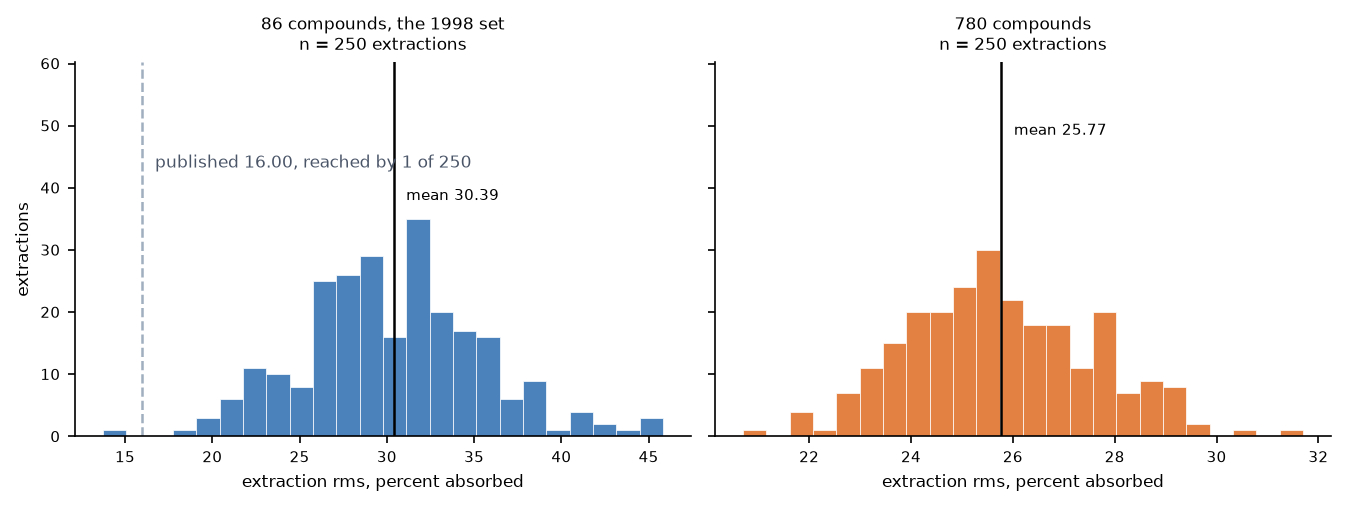
The 1998 result rested on a single division of the compounds into training, cross validation and external prediction sets. Repeat that division 250 times and only one of the 250 draws matches the external prediction error we published. We had a fortunate split. A single split was the convention in 1998, but with today’s compute we can do so much more.
Then the real question. Do those six descriptors still carry the signal on a dataset nine times larger? Booyah - they do. On 780 compounds from a public compilation, the six 1998 descriptors under a modern random forest give an extraction error of 24.72 %HIA units at R 0.63. A full modern descriptor search, choosing 25 consensus descriptors over the same 250 extractions, gives 20.47 at R 0.76. The improvement is real and it comes almost entirely from having a larger descriptor pool to choose from, not from the original six being wrong. In fact, we had to keep the number of descriptors down because we had so few examples and we did not want to overdetermine the system. This is something to keep in mind with today’s LLMs which are approaching double-digit trillions of parameters while the number of examples they’re trained on is also in the double-digit trillions. Indeed the frontier AI companies are running out of content, but that’s a whole different discussion for another post. The 1998 intuition about which molecular properties govern absorption survived a nine fold increase in data and twenty eight years of method development.
The deployed model (predicthia.ai) places a compound on the correct side of the 30.00 percent absorption threshold in 92.64 percent of predictions, which is the number that matters if you are using this to triage.
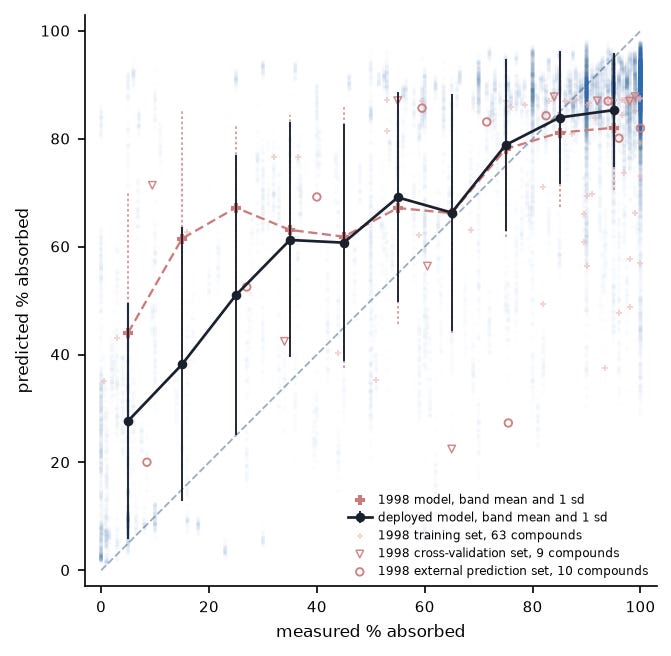
The method also extended to a problem the 1998 paper never touched. The same procedure, unchanged, now fits permeability across Caco-2 monolayers for 3,771 small molecules and 1,281 cyclic peptides, and across artificial membranes for 7,298 cyclic peptides. One procedure, four endpoints, including a molecular class that barely existed as a drug modality when we started. The model, the descriptors and an interactive predictor are at predicthia.ai.
Matt Wessel is a co-author again, twenty eight years later. He is at Thermo Fisher now. That reconnection was one of the real pleasures of this year.
2003: let a compound’s neighbors vote
In 2003 we showed that a compound’s toxicity can be gauged from the toxicities of the compounds it resembles. The structural neighbors form a consortium and vote. It worked, and it ran on a proprietary reference set that is no longer public, which is exactly the failure mode I described earlier. The method outlived its data.
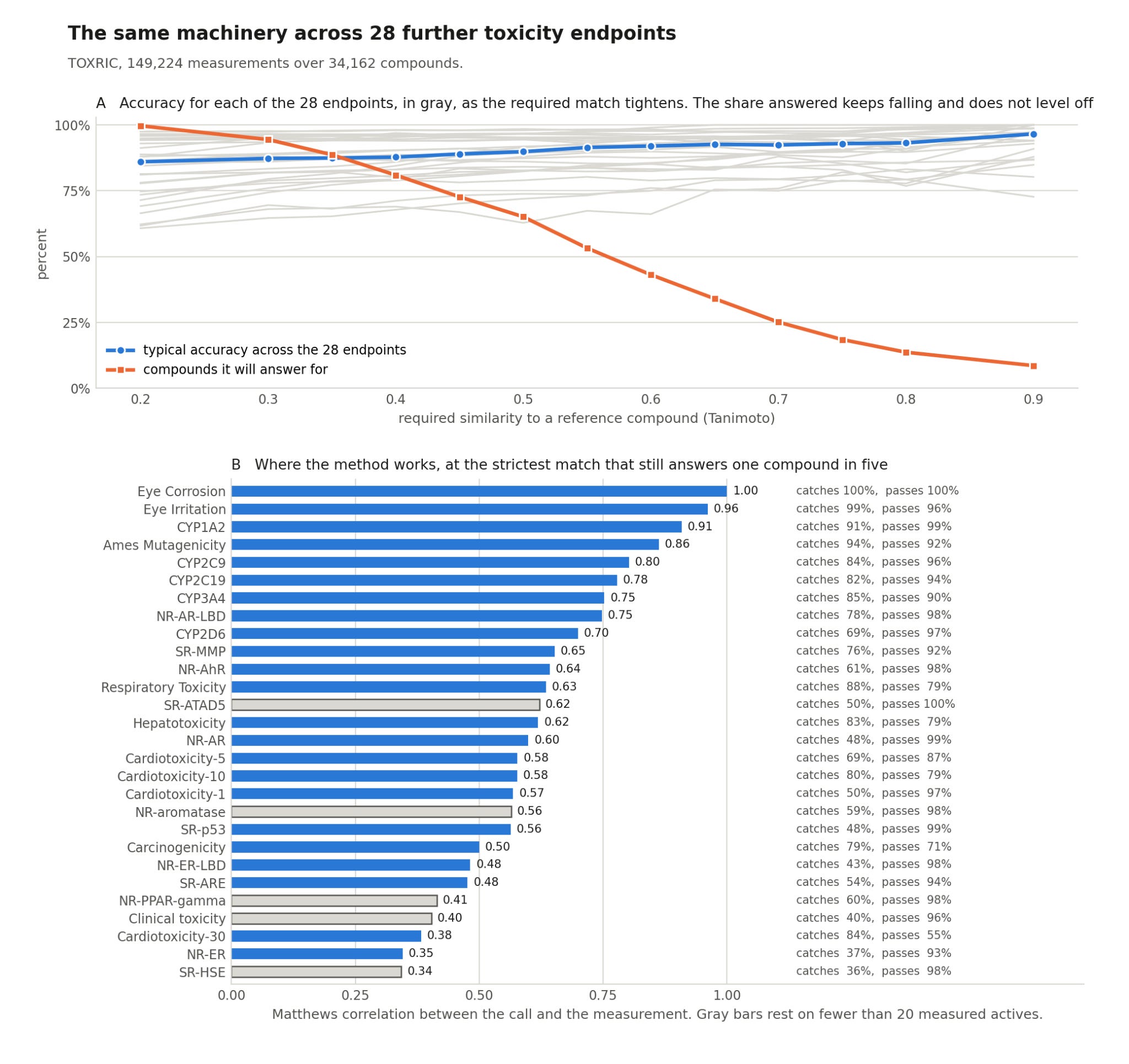
Twenty three years later the public data is there. Rebuilt on 11,989 curated rat oral LD50 values, the method answers for 67.0 percent of held out compounds and 92.1 percent of those answers land within one log unit of the measured value. In 2003 the figures were 94 percent within one log unit on 57.3 percent of compounds. The method answers for more compounds now at essentially the same accuracy, on data it has never seen and that we did not own.
Then we pushed it past where the original went. The same machinery, with nothing retuned except the similarity a neighbor must meet before it may vote, now runs over 28 further toxicity endpoints: 149,224 measurements on 34,162 compounds, from cytochrome inhibition through mutagenicity to clinical toxicity. On the compounds it has close enough neighbors to answer for, it correctly identifies a median 72.9 percent of those that showed the toxicity and 96.5 percent of those that did not.
The second signal in this revision is the one I did not expect. We asked whether a reverse screen carries information about toxicity beyond molecular size and lipophilicity, which is the usual explanation for why some compounds misbehave everywhere. Screen a compound against 27,910 ligands solved inside proteins and count how many distinct protein families those matches reach. A compound whose matches reach no protein family inhibits CYP3A4 2.5 percent of the time. A compound whose matches span sixteen or more families inhibits it 51.2 percent of the time. Added to heavy atom count, molecular weight and cLogP, the screen raises the mean area under the ROC curve from 0.72 to 0.76 across all 28 endpoints. So yes, the more families a molecule may interact with, the more likely it will have toxicity. Indeed, promiscuity often kills (a project).
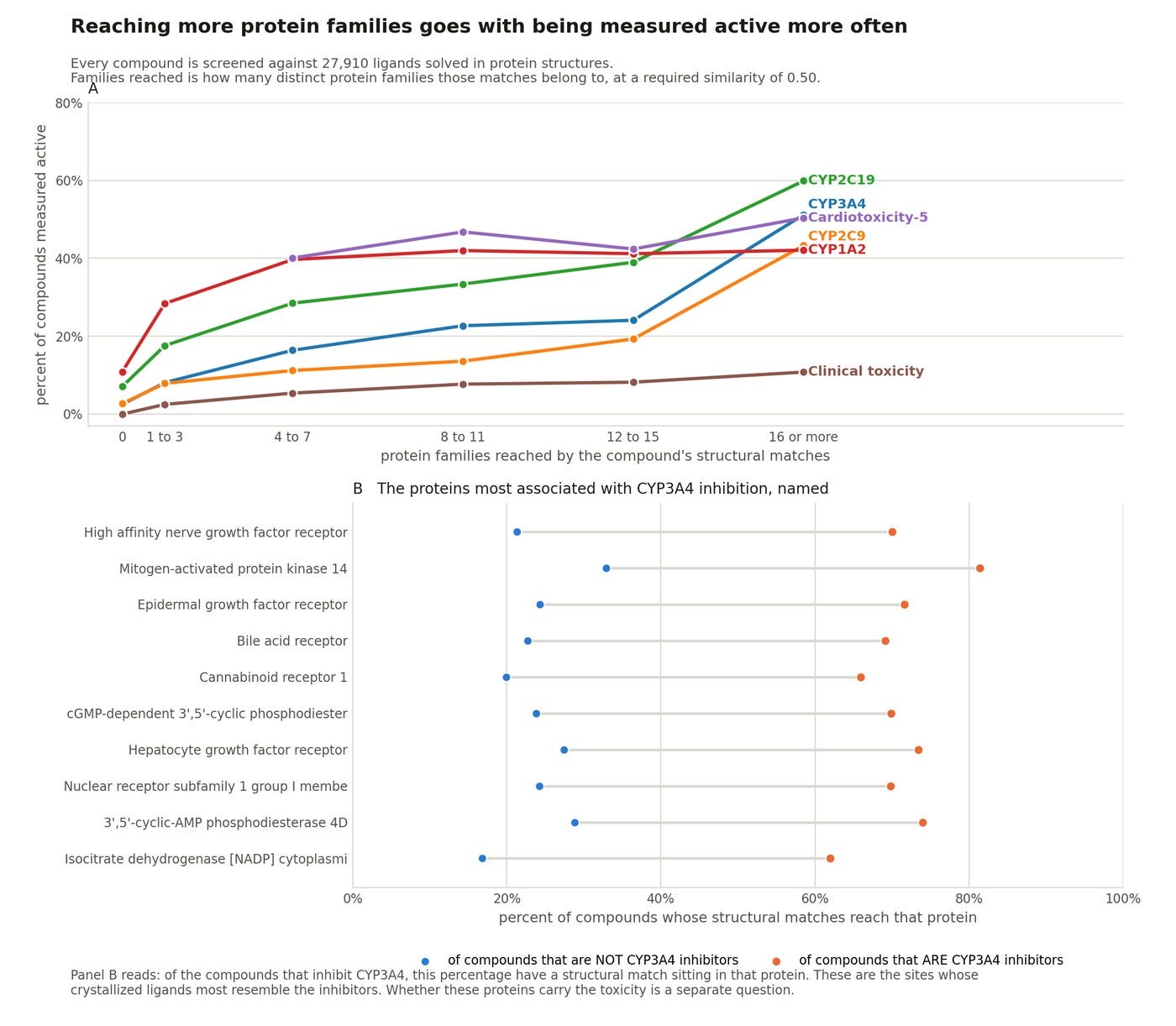
Then came the part that makes it a real test rather than a retrospective one. The OpenADMET consortium has since measured CYP3A4 inhibition on 2,335 compounds. The pattern held. Compounds whose matches reach no protein family inhibit CYP3A4 7.3 percent of the time, and those reaching sixteen or more families inhibit it 24.6 percent of the time.
That is strong enough to act on before anything is made. Score a library on how far its compounds reach across protein families together with their size and lipophilicity, set aside the riskiest fifth, and you remove two thirds of the androgen receptor binders and about half of the CYP3A4 inhibitors. Scoring needs a two dimensional structure and nothing else. No docking, no conformer generation.
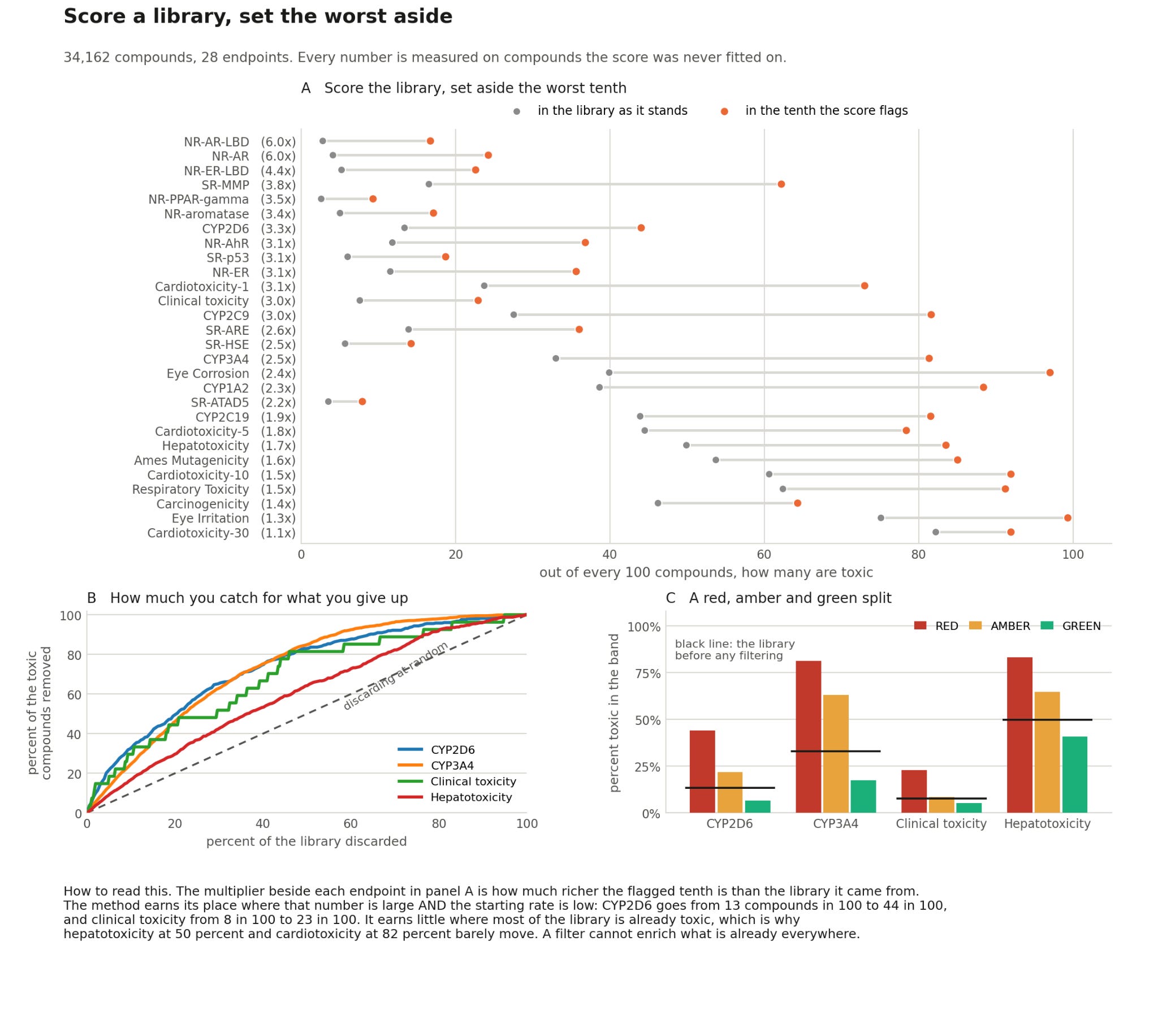
Interactive scoring, the data and the compound pool are at toxpred.ai.
Sanjiv Kumar Jha, Phani Kishore and Prashant Tyagi are on this one. All three were at my first startup company, and Prashant and I had worked together earlier at Affymax. They are at AM Green, DigitalOcean and Palo Alto Networks now.
Pharmacophore fingerprints without the conformers
A three dimensional pharmacophore fingerprint records the binding features a molecule can present. I have described it as a hand in search of a glove. Because it is defined by presented features rather than two dimensional structure, it finds similarity between compounds with unrelated scaffolds, which is what scaffold hopping and non obvious me too design actually require.
It stayed a niche tool for one reason: cost, and the cost is conformer generation. In the reference pipeline, generating 100 conformers takes 2.82 seconds of the 2.86 seconds needed to fingerprint a single screening compound. The bit calculation itself takes 0.039 seconds. Ninety nine percent of the expense is spent producing conformers you then throw away.
So we removed the conformational stage entirely. PharmCast is a feedforward neural network that predicts the 10,549 bit fingerprint directly from two dimensional structure. Same descriptor, same meaning, no conformers. Once again, a neural network learned very complex chemistry and physics, all embedded in a set of numerical descriptors or weights. Booyah. This theme has been repeated and exploited many times throughout my career.
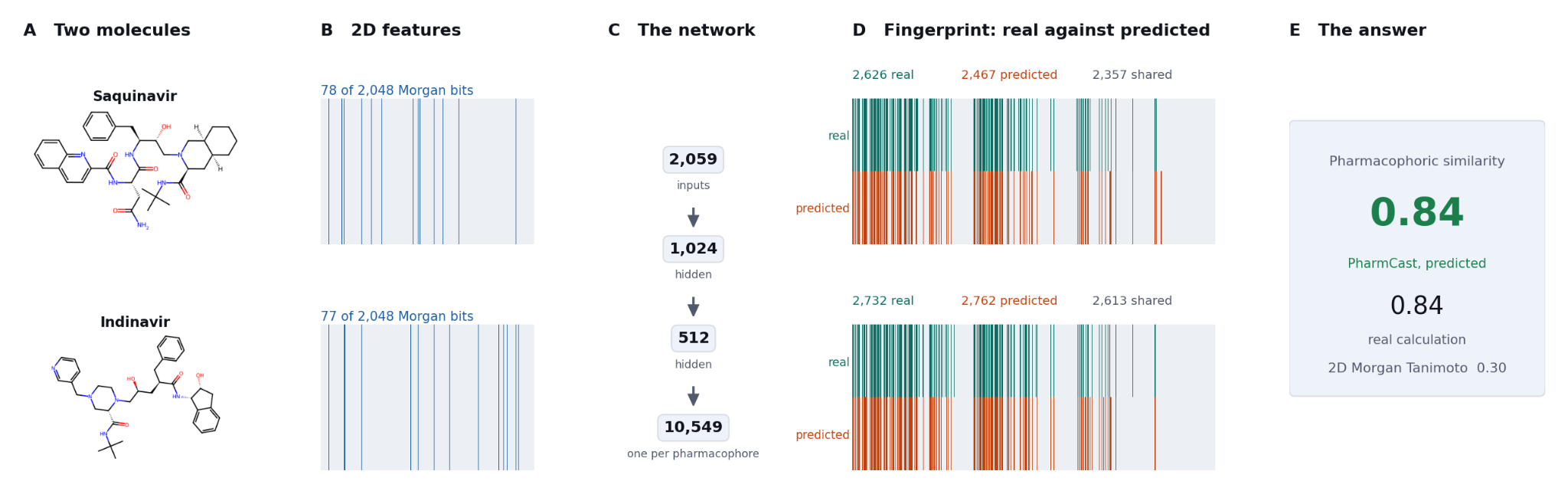
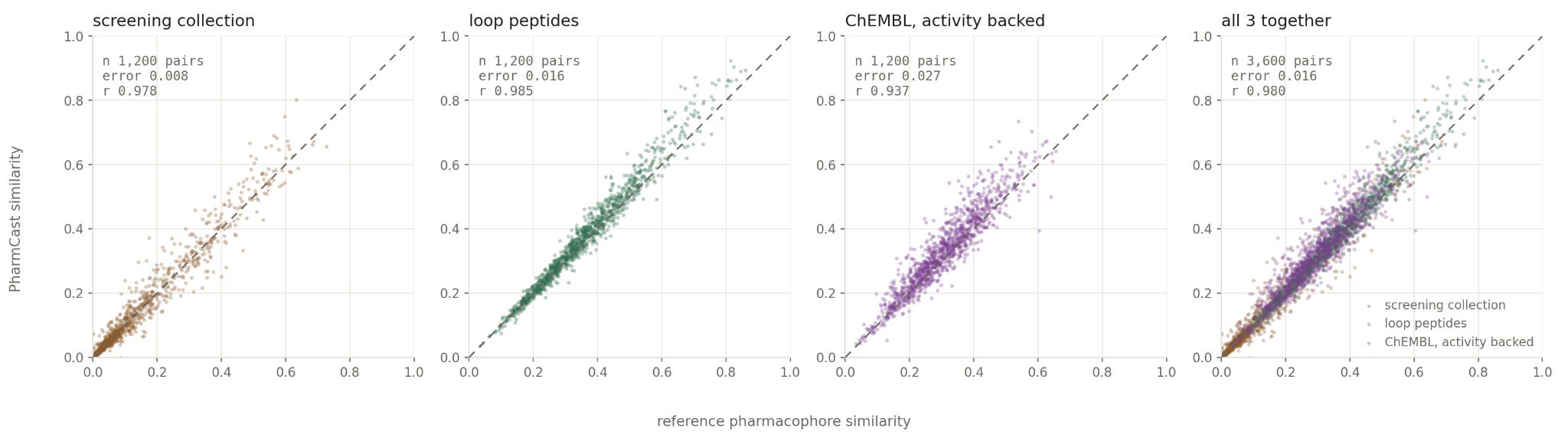
PharmCast runs as a service, with the model and the benchmark, at pharmcast.ai.
Malcolm McGregor, now at SRI International, worked on the original pharmacophore fingerprinting with me when we were at Affymax. He is a co-author here too.
Turning the screen around
Once fingerprints are cheap, something that was impractical becomes routine. The PharmCast work has opened up many new possibilities. For example - traditional forward screening asks which compounds hit a target. Reverse screening asks the opposite: given this molecule, which proteins might it touch. The latter can be very useful to identify off target liability or for repurposing. Done exhaustively by docking, one molecule against the 28,579 ligand bound proteins assembled here takes 40.5 hours on twenty CPU cores. That is why nobody does it casually.
ReverseScreen.ai puts a retrieval step in front of the docking. Every co-crystallized ligand in the Protein Data Bank is indexed by the three dimensional pharmacophore fingerprint it presents, predicted from two dimensional structure by PharmCast, together with the proteins it was solved against. A query retrieves the proteins belonging to its nearest neighbors, and only those get docked.
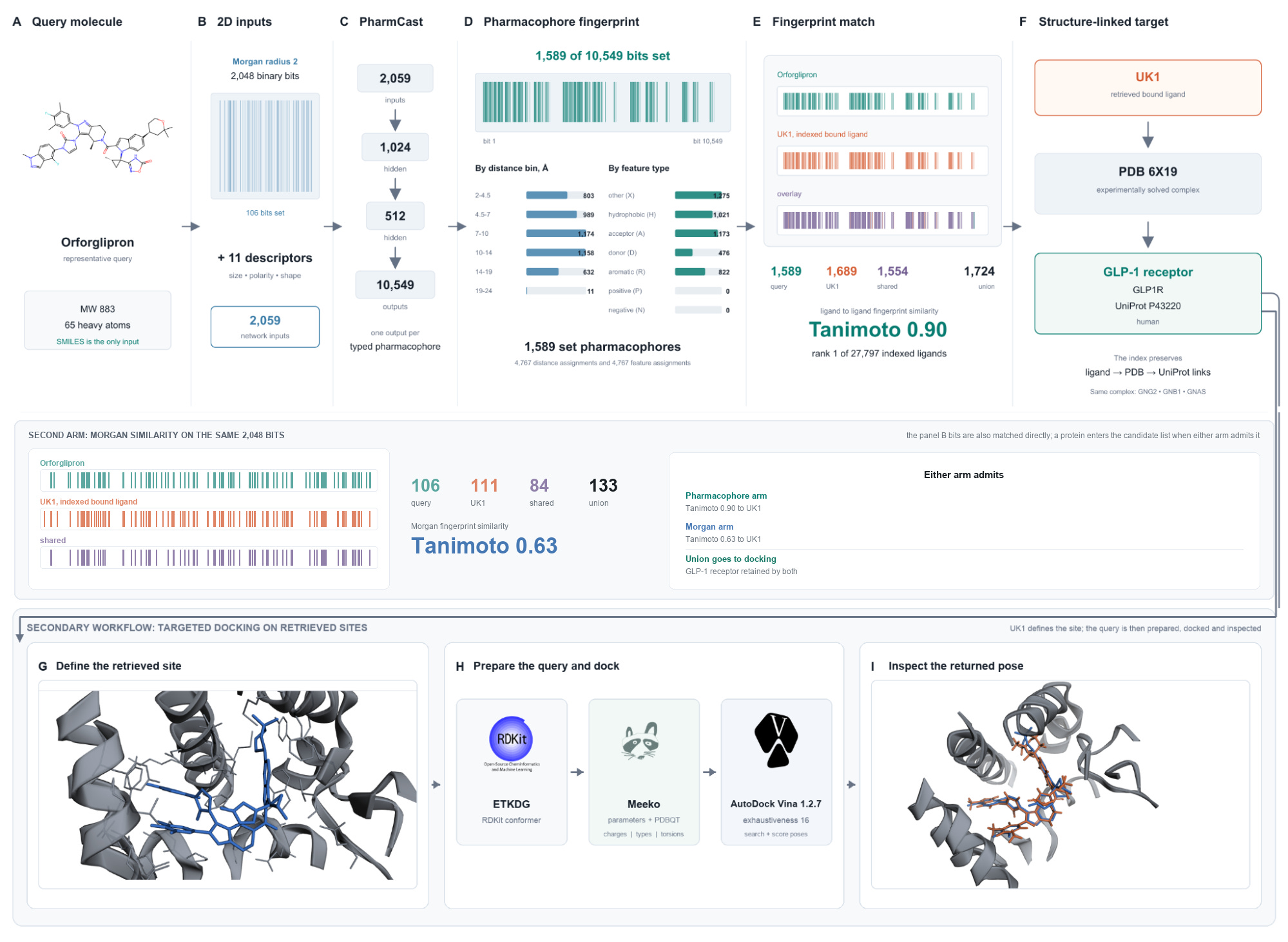
There are now two arms, and that turned out to be the interesting part - because the editor of the journal we submitted the preprint to suggested we consider this prior to going to peer review. Lo and behold, this added significant value and was very inexpensive to add, only an extra couple of days of work. The first arm indexes by 3D pharmacophores (i.e. PharmCast’s fingerprint), the second by Morgan 2D fingerprint, and a protein is admitted when either similarity clears its own cutoff. The arms find different things. Each holds recorded targets the other misses. Compounds that look unrelated in two dimensions while presenting a similar pharmacophore (i.e. “non-obvious me-toos”) are nearly four times more likely than chance to share a target with the query, and a Morgan cutoff alone never puts them on the list. Across the full sweep of cutoffs, the setting that recovers the most targets for a given list length uses both arms rather than one in 49 of 60 cases.
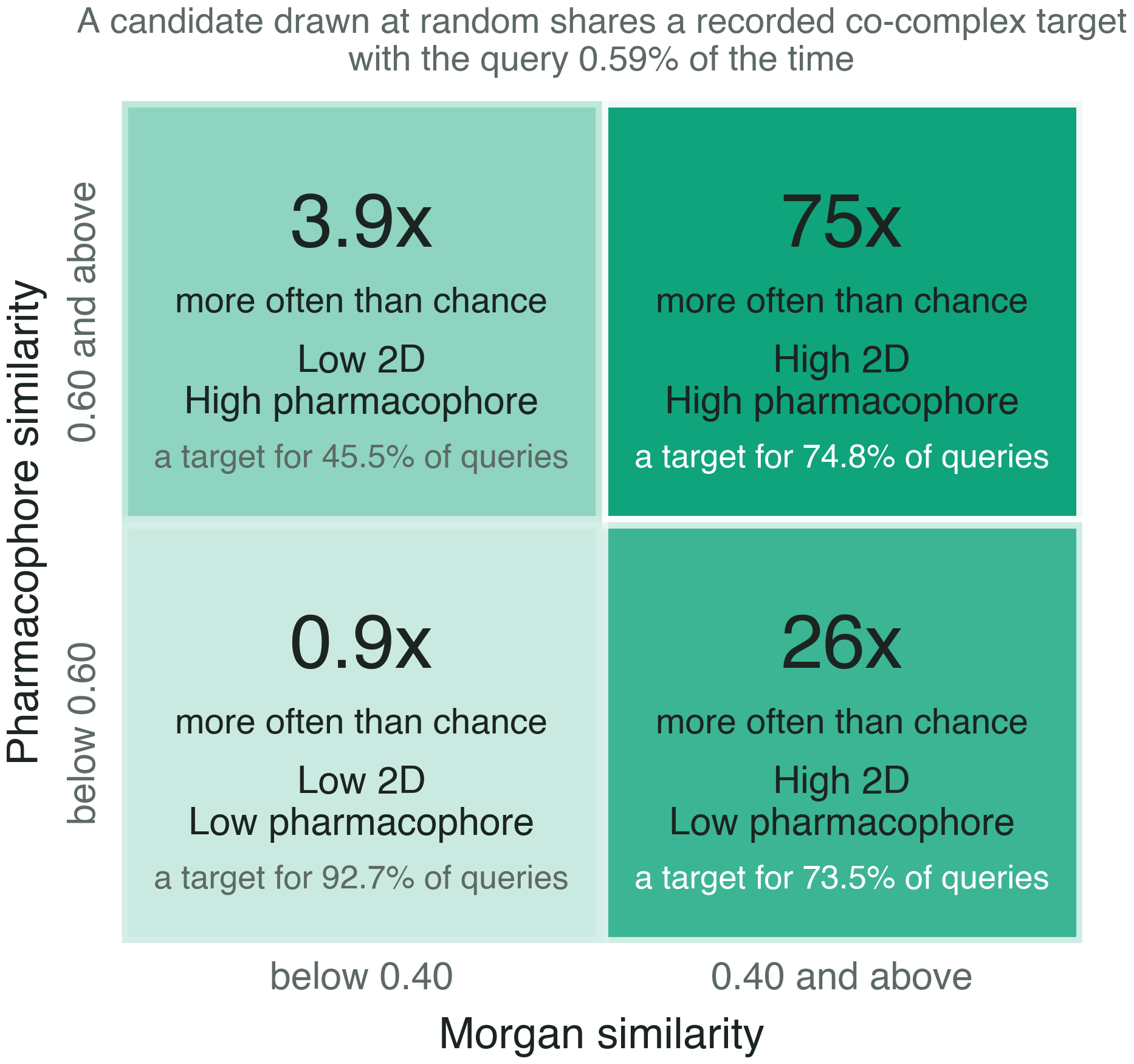
The evaluation is deliberately hard - something the editor also “suggested.” Before a query runs, its own entry and every indexed ligand sharing its generic scaffold are removed, a mean of 97 of them, so a target can be reached only through a different molecule crystallized against the same protein. For 4.5 percent of queries no such molecule exists at all, which caps recall at 0.96 before the method does anything.
Within that, the balanced setting leaves a typical query with 35 proteins to dock instead of 28,579, and the recorded target is among them for 71 percent of queries. A looser setting catches 86 percent and hands docking a longer list. Fingerprinting and searching both arms takes 45.7 milliseconds per query, roughly 79,000 molecules per hour on a single core.
Two 2025 clinical molecules were run as cross validation. Orforglipron (a once-daily oral, non-peptide, small-molecule GLP-1 receptor agonist developed by Eli Lilly and Company and approved by the FDA in April 2026 for chronic weight management) returns the glucagon-like peptide-1 receptor first, through a non identical analog, at a pharmacophore similarity of 0.90 against a Morgan similarity of 0.63. Daraxonrasib (a first-in-class, once-daily oral targeted medication developed by Revolution Medicines to treat advanced cancers driven by RAS gene mutations) returns the KRAS and cyclophilin A tri-complex fourth, at 0.84 against 0.64. In both cases the pharmacophore arm is what put the right answer near the top.
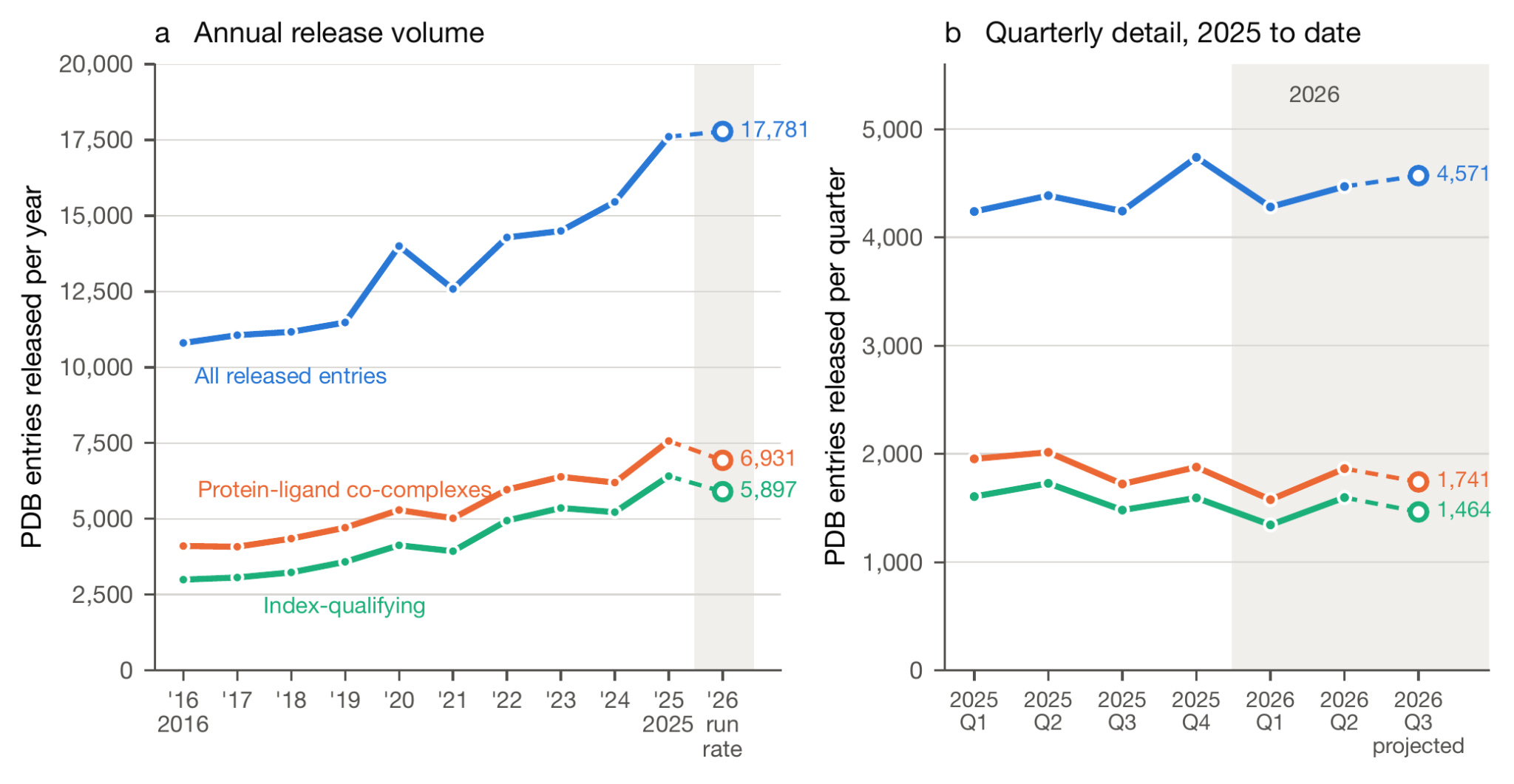
This one has moved past the preprint. It is now an application note submitted to the Journal of Chemical Information and Modeling, with George Nicola as co-author. George and I have worked on several reverse screening and repurposing projects over the years. The service, a downloadable index for confidential local screening, and the archived benchmark are at reversescreen.ai.
Two comparators may be all we need
This is the one I expect pushback on, and I mean that as a compliment to the idea. I almost always involve multiple co-authors on my papers. I single-authored this one only because I did not want to inflict likely heat on anyone else. That said, this one I think could reset how the field thinks.
A compound inside a cell meets a spectrum of proteins from many families at once. Screening interrogates one target at a time. But the questions that actually drive decisions in a rank ordering workflow are comparative: which of two targets does this compound prefer, and which of two compounds does this target prefer. So I built one model for each question. Two chemical structures and a sequence, or two sequences and a structure. No conformational analysis, no protein structure, no binding site, no docked pose.
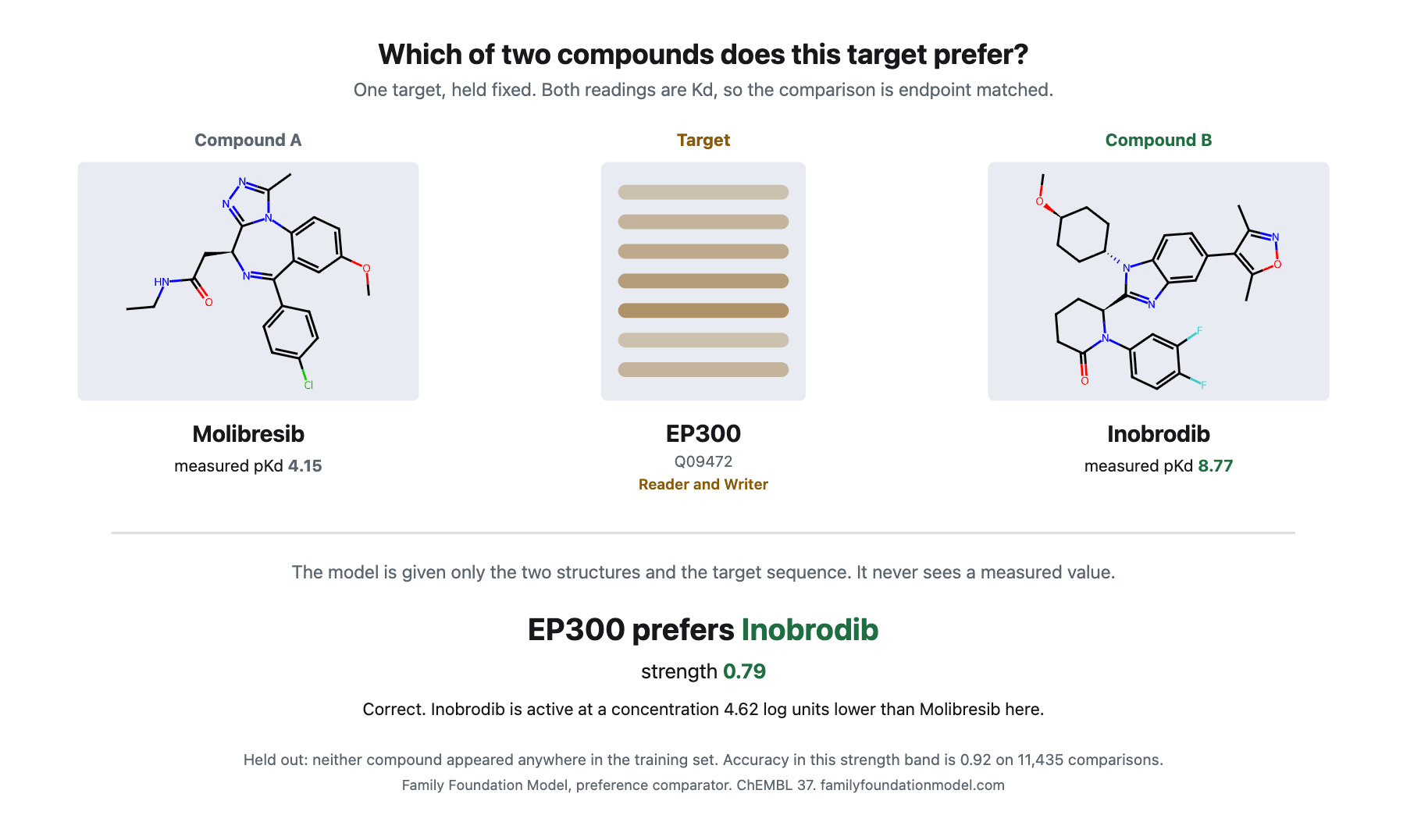
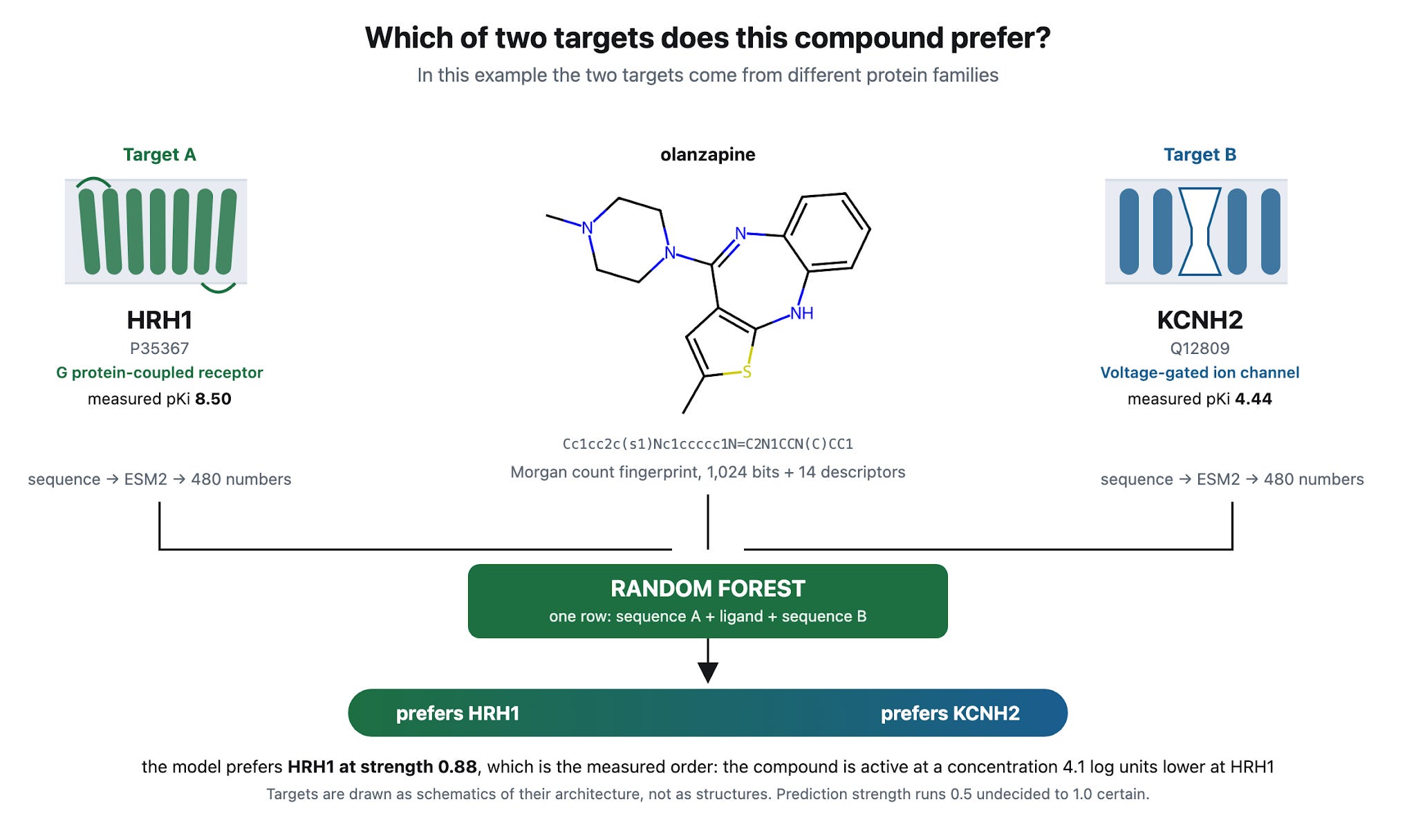
The compound comparator reached 0.71 on 65,725 held-out comparisons, increasing to 0.96 when filtering on prediction strength. The target comparator reached 0.75 accuracy on 8,689 held out comparisons across protein families, and 0.94 when the comparisons are filtered by the model’s own prediction strength. Crossing a family boundary costs about three points against staying inside one. The useful property is that the model tells you when to trust it.
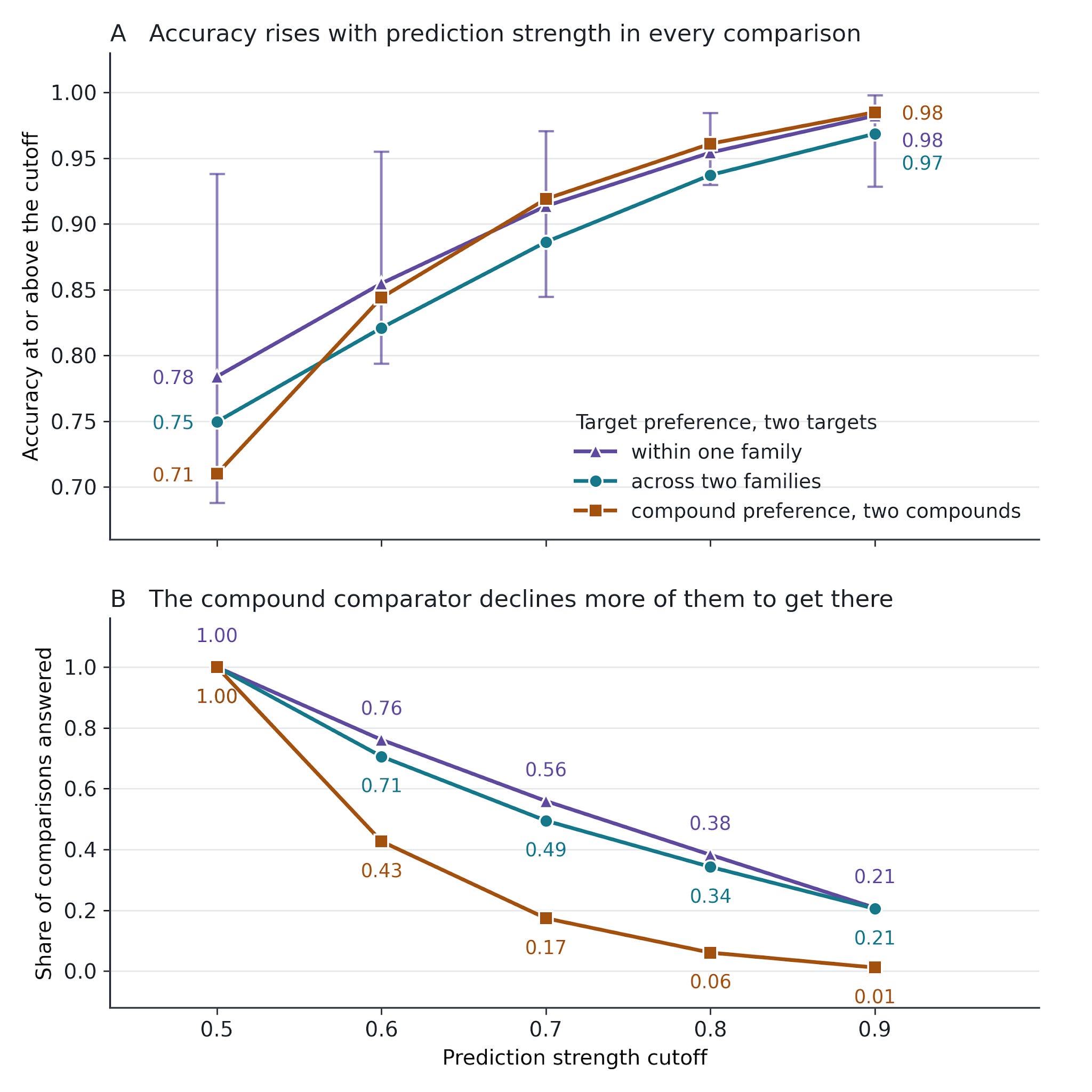
The roster is 2,279 human proteins across 34 families for the target comparison and 2,079 across 32 for the compound comparison. Both comparators are live at familyfoundationmodel.com, alongside the family level models they came from. The same comparative framing is what sits underneath kinasefoundationmodel.com and gpcrfoundationmodel.com.
Three things they all turned out to share
That is the work. I did not plan it as a set, and it came back as one. It took until the fourth of them before I saw what they had in common, and now that they are all on the table, here is what runs through every one.
Ask which, not how much. Every one of these projects got better the moment it stopped trying to compute a number and started making a comparison. The 1998 absorption model is judged on whether it puts a compound on the correct side of a threshold, not on how close its percentage lands. The 2003 toxicity method never calculates a toxicity at all. It asks which compounds this one resembles and lets them vote. The reverse screen asks which proteins have already been seen holding something like this. And the last paper presents the aha realization that much of preclinical discovery is about prioritization and can thus boil down to two pairwise questions asked over and over: which target does a compound prefer, and which compound does a target prefer. This field has spent decades trying to predict absolute quantities. Almost every decision anyone actually makes with them is a comparison.
The expensive step is usually optional. Generating a pharmacophore fingerprint takes 2.86 seconds, and 2.82 of those are spent building conformers that get thrown away, so we removed that stage and predicted the fingerprint directly. Docking one molecule against every crystallized protein site takes forty hours on twenty cores, so we put a retrieval step in front and dock 35 sites instead of 28,579. The revisits themselves needed no new experiment, because the data was already public and one to two orders of magnitude larger than what we had the first time. And the comparator models need no protein structure (just its sequence), no pocket and no pose. In every case the expensive step was buying a precision the decision never used.
The question outlives the tools. This is the one I did not expect, and it is the least scientific of the three. None of these old hypotheses turned out to be wrong. They turned out to be underpowered. The six descriptors were right, and there were 86 compounds. The idea that a compound’s neighbors can speak for it was right, and the public data to prove it would not exist for another twenty years. What expired was never the idea. It was the tooling and the sample size, and both of those have now moved by factors that make the original questions answerable almost casually. The same turned out to be true of the people. Every one of these revisits put me back in touch with a co-author I had not worked with in years, and in every case the question we left open was still interesting to both of us. A career is not really a list of results. It is a list of questions, most of them still open, and most of the people who cared about them are one email away.
None of those three were in the plan. They are what the work turned out to be about.
The part I did not plan for
Every one of these revisits put me back in touch with someone I had not worked with in years. Matt Wessel on absorption. Malcolm McGregor on pharmacophores. Sanjiv, Phani and Prashant on toxicity. They have all moved on to other companies and other fields. Thermo Fisher, SRI, AM Green, DigitalOcean, Palo Alto Networks. Everyone said yes.
There is something specific about reopening a working relationship around a question you both cared about once and never fully settled. It is a different conversation than a cold introduction. The shared context is already there, and so is the unfinished business. If you have old work worth retesting, you probably also have old collaborators worth calling, and the retest is a better reason to call than catching up.
A quieter thread: sound, the microbiome, and the voice
Alongside the drug discovery work I have been pulling on something further out. Expect more on this as I turn this momentum toward other past projects.
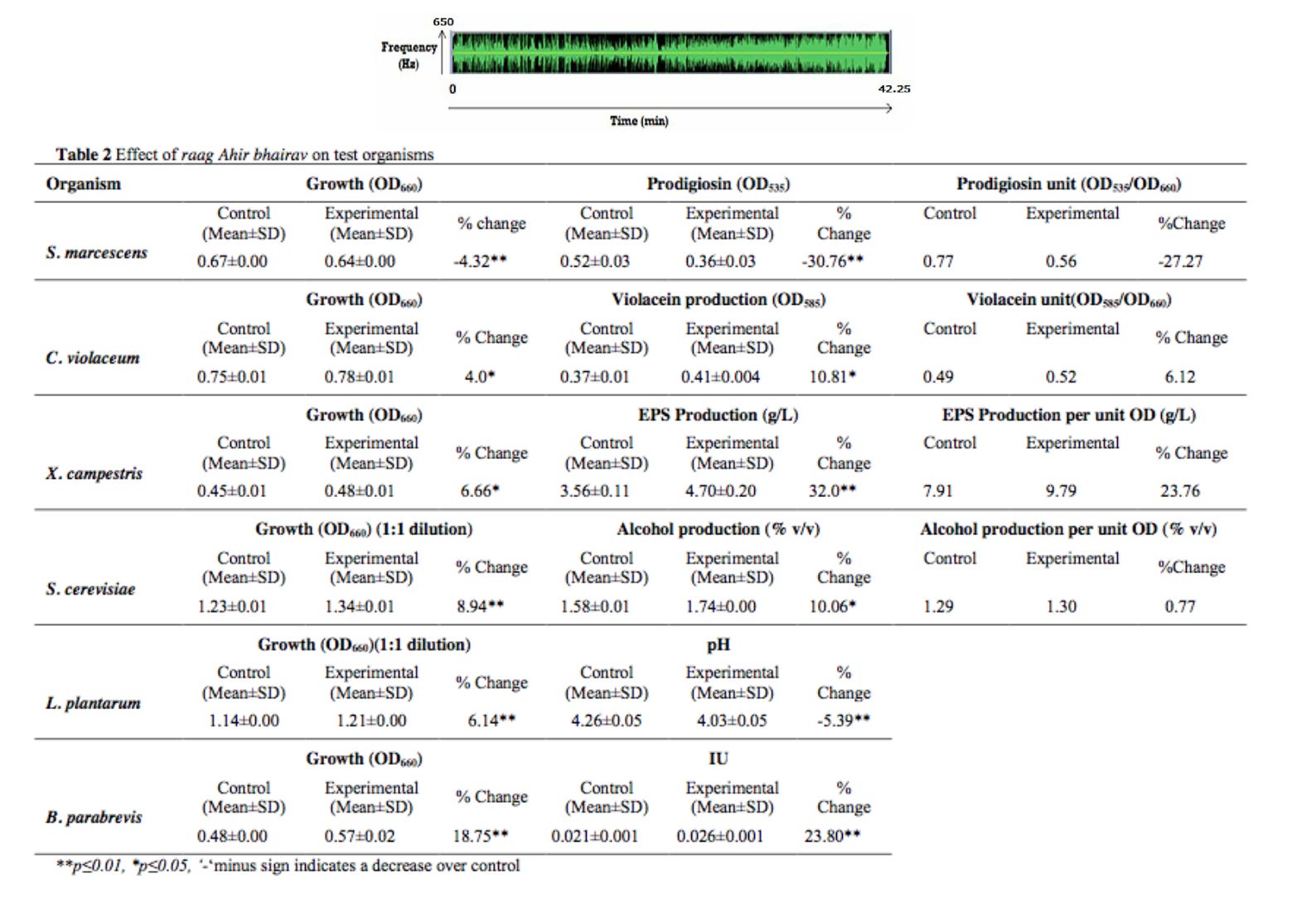
To us, music is perceived in the brain. But sound is a vibration, a pressure wave, and it has measurable effects on organisms with no ears and no nervous system to hear it with. Music has been shown to shift microbial growth and the production of certain metabolites. Bacteria appear to both emit and respond to sound waves, with at least one study suggesting sound can act as a growth regulatory signal between cells. The mechanisms are not settled. What interests me is whether carefully designed sound could nudge the gut microbiome in a deliberate, therapeutic direction. We carry a pharmacy inside us. Activating it with something as cheap and non invasive as sound would be a genuinely new route to personalized medicine. Just before the pandemic, I reached out to a now collaborator - Prof. Vijay Kothari, Institute of Science, Nirma University. Vijay’s lab and I explored the effect of various sound frequencies on microbiota and published in 2019 “Sonic Stimulation and Low Power Microwave Radiation Can Modulate Bacterial Virulence Towards Caenorhabditis elegans.” Amazingly, sound corresponding to 400 Hz, and the divine sound ‘Om’ conferred a protective effect on C. elegans in face of bacterial infection. I look forward to picking back up on this trajectory as I think there are many, many new possibilities, and frankly it is one of the main reasons I continue to record music in my studio. It’s all about the content baby!
Vitamin D, and a question I wrote down ten years ago
Ten years ago I wrote down a question and had no practical way to answer it.
Here is the question. Most Americans are short on vitamin D. And the vitamin D you get, whether from the sun or from a pill, does not work as it arrives. Your body has to switch it on in two steps, first in the liver and then in the kidneys.
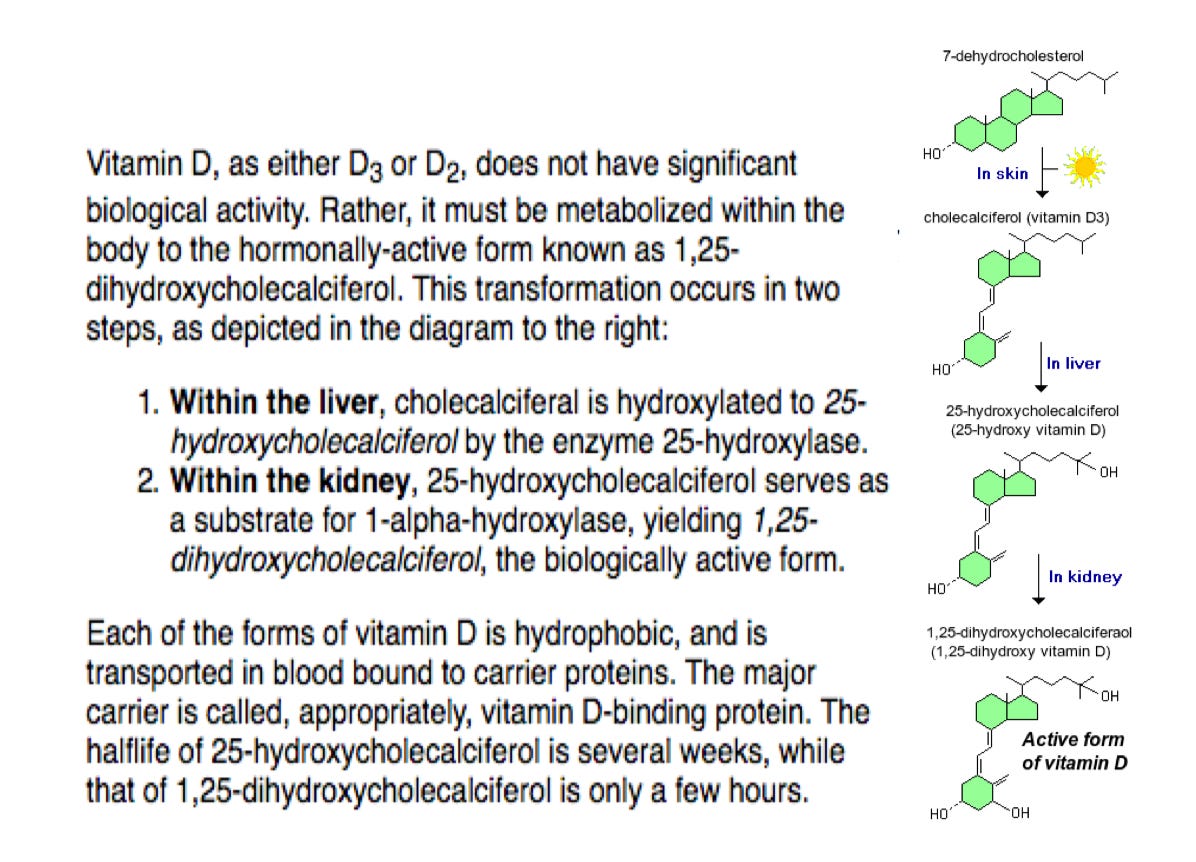
There are reports that taking probiotics raises the amount of usable vitamin D in the blood. That made me wonder whether some of the bacteria we live with are doing part of that switching on for us, and whether we could encourage them to do more of it.
Ten years ago that was a thought on a page. Chasing it down would have meant months in the literature, and I never did.
Last night I checked it in about a third of a second.
I typed vitamin D into reversescreen.ai. The tool does one thing. You give it a molecule, and it gives back a list of proteins that molecule might stick to, drawn from the tens of thousands of molecule-inside-protein snapshots that scientists have deposited in a public archive over the past fifty years. Think of it as a reverse image search for drugs. Instead of asking which molecules hit this protein, you ask what this molecule touches.
Hold the diagram above in your head, because the search reproduces most of it without being told any of it.
Two answers came back as near certainties, because vitamin D has already been photographed sitting inside them. Both of those proteins belong to bacteria, and one of them is an enzyme whose job is to modify vitamin D.
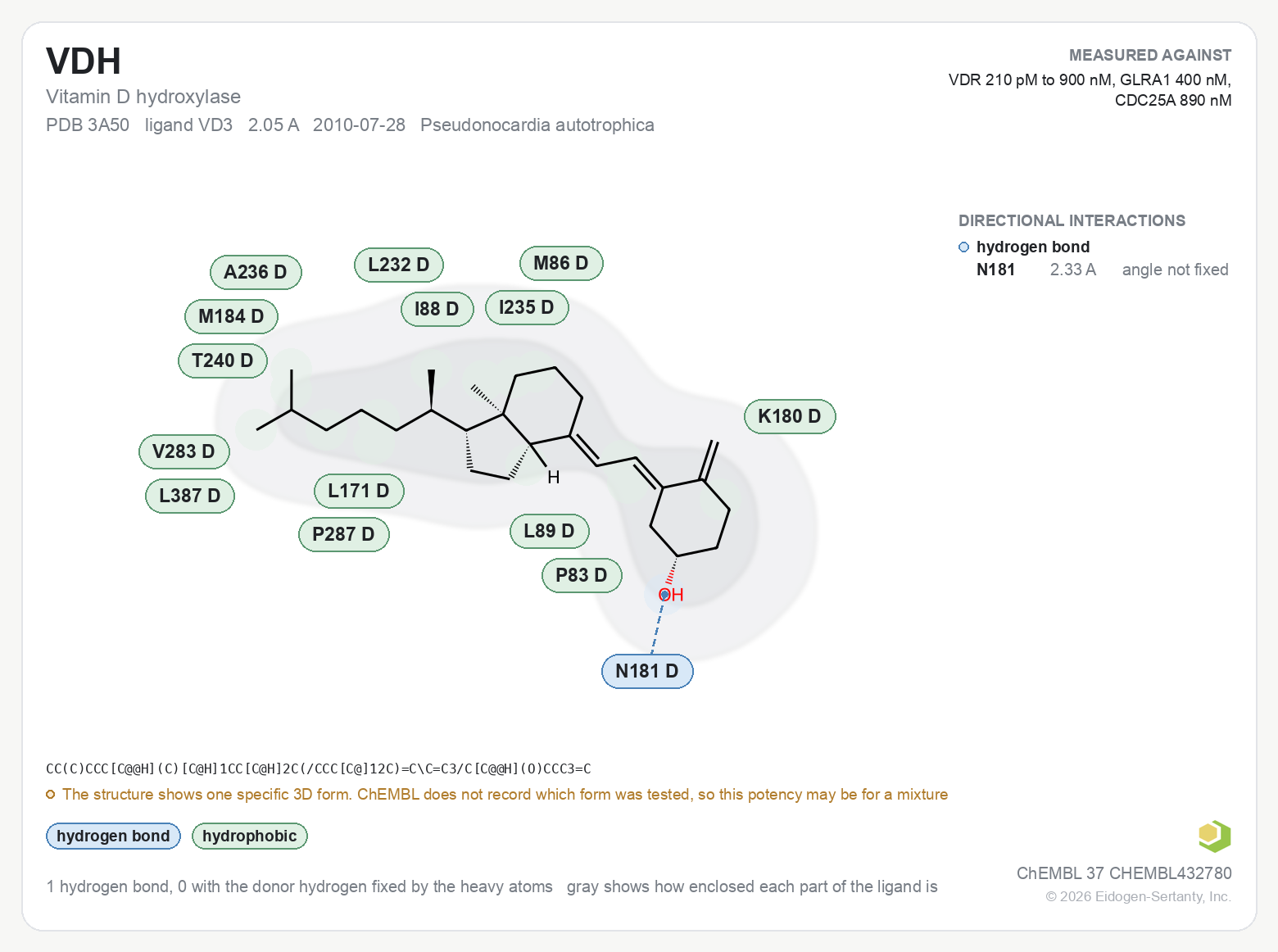
Then came the suggestions. Seventy one more proteins, reached not by a direct photograph but by chemical family resemblance. The liver enzyme from step one of the diagram is in there, the human one. So is the carrier protein that moves vitamin D around in the blood. So is the receptor the active form finally acts on, four times over, in humans, rats, zebrafish and lamprey. The search was given a molecule and nothing else, and it handed back most of a textbook page.
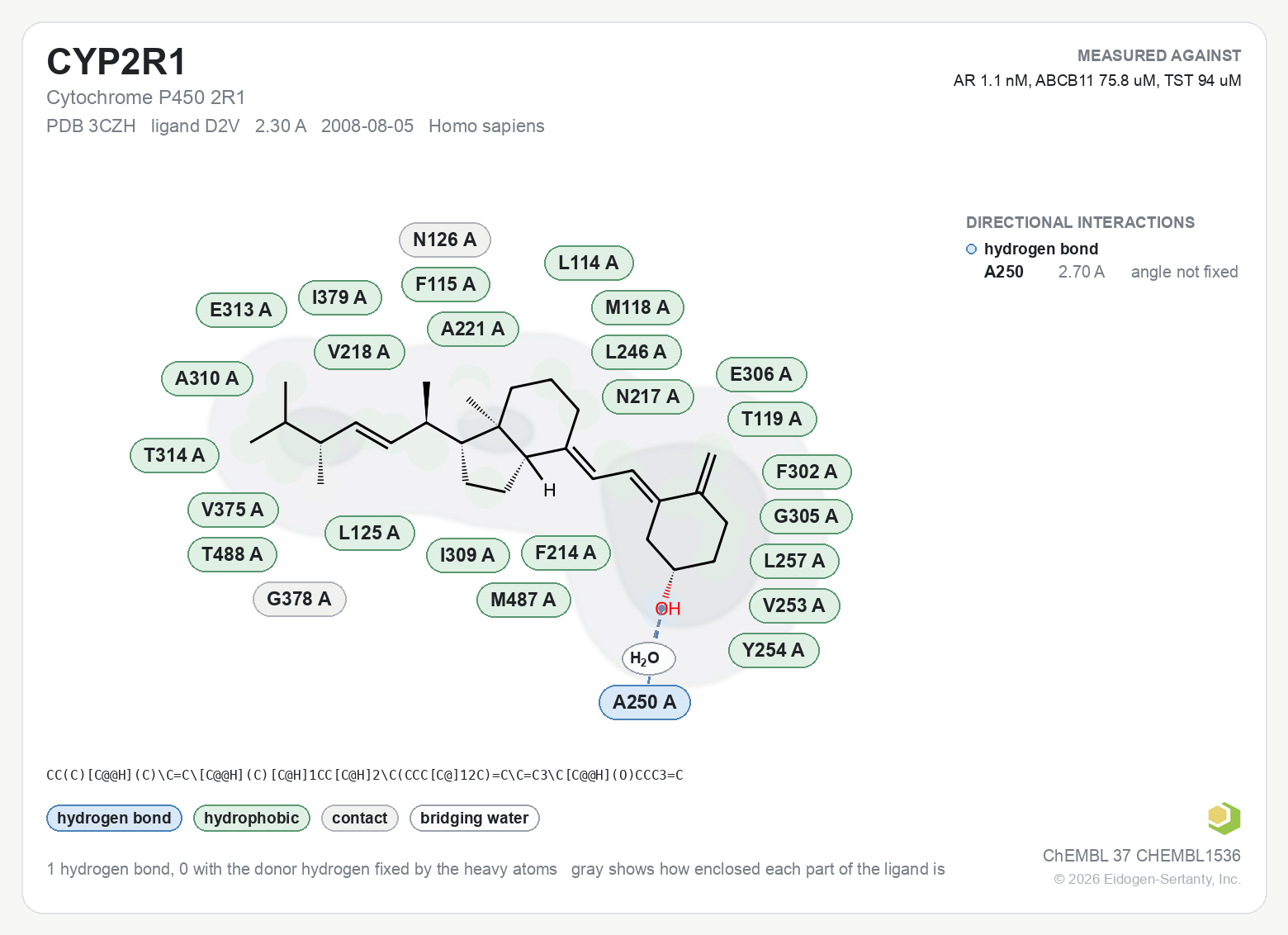
One thing in the diagram does not come back, and the reason is worth more than the hits are. The second step, the one in the kidney, is carried out by an enzyme called CYP27B1. Nobody has ever determined its structure. There is not a single picture of it in the archive, anywhere, so there is nothing for a search like this to match against. What turns up in its place is a bacterial enzyme that performs both steps at once. A search of this kind can only show you what somebody has already photographed, and the most important human enzyme on that slide has never been photographed at all.
Which is a fair place to say what the rest of the list is worth.
A photograph of a molecule inside a protein tells you the molecule was there, under laboratory conditions. It does not tell you the molecule does anything useful once it is there. And a molecule that merely resembles one that was photographed tells you even less than that. Resemblance is a lead. It is not a result.
This is the most common way to fool yourself in my field, so I built a page about it. It lines up 14 protein pockets, shows every molecule ever photographed inside each one, and sets those pictures against how strongly each molecule was actually measured to work. Inside a single pocket, the strongest and the weakest molecule can differ by a factor of a million. The pictures look much the same. The results do not.
Look at the bacterial enzyme image again with that in mind. Vitamin D sits in it making exactly one firm connection, and otherwise just resting against it. Yet when you look up how strongly that same molecule has been measured against various human proteins, the numbers spread over a factor of several thousand. The picture predicts none of that.
Which is the honest shape of all of this. A search like that takes you from a vague idea to a short list of real candidates in under a second, and it tells you plainly where the archive runs out. Finding out whether any of it is true is still an experiment, and still takes a year.
Sound and vitamin D look like two separate interests. They are the same one. Both are cases where something cheap and already present, a pressure wave, a public archive, a change in what you eat, might move a system we normally treat as fixed.
Voice, and why both of my food apps listen
And vitamin D is where that thread runs into its plainest version, because the most reliable lever most people have over it is not a molecule at all. It is sunlight, and it is food. Which is a large part of how I ended up building food apps.
The same instinct, that there is signal in channels we routinely ignore, is what pulls me toward voice as a biomarker. There are real associations between vocal characteristics and metabolic conditions, Type 2 diabetes among them. That is one reason both of my food apps now listen. See “Why I Started Talking to My Computer Instead of Typing at It.”
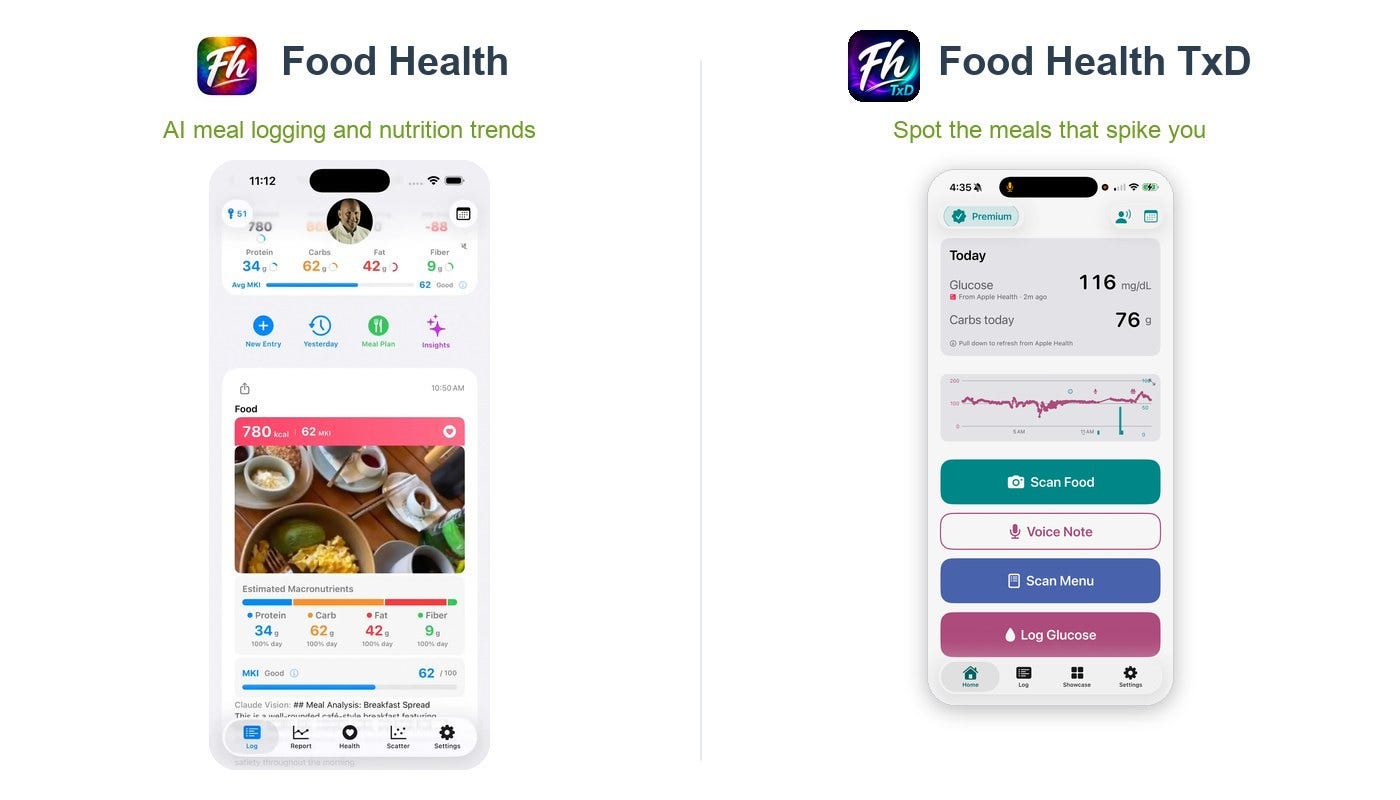
Food Health is the general one. Photograph a meal, get calories, macronutrients and a score, and watch the trend over weeks. Food Health TxD is the metabolic sibling. It pulls glucose from Apple Health, sets it against what you logged, and surfaces the meals that moved you. Scan a menu before you order. Log a reading. Leave a voice note instead of typing.
The voice capture is there for convenience, and it is also there because the recording itself may carry signal. If vocal features track metabolic state, then every spoken note is a measurement nobody had to ask the user to take. That is a hypothesis, and it is the kind I now know how to test.
Why this matters more than any one result
None of this is really about a single preprint or application.
Five pieces of work, four of them resurrections, each rebuilt, revalidated on data that is one to two orders of magnitude larger than the original, published openly with the code and a working website, inside one year. In the era I trained in that would have been a department. Multiple people on data acquisition and curation alone, someone on infrastructure, someone on the writing, and a year of calendar time before anyone outside the building could use any of it.
That is the shift, and it is not that the science got easier. The tooling around doing science got radically faster. Agentic coding collapses the archaeology. Public data collapses the acquisition. Open preprints and a static website collapse the distribution. What is left is the part that was always the real work: knowing which question is worth asking, and being honest about what the answer says.
And the three things that tie them together are not really about chemistry. Ask which rather than how much, because comparisons are what decisions are made of. Skip the expensive step, because precision you do not use is not rigor, it is cost. And treat an old question as underpowered rather than closed, because the thing that expired was the tooling, not the idea.
I have written before that the AI we have now feels like fire to me. The Fire This Time. The more of this revisiting I do, the more I suspect fire undersells it. Fire changed what one person could do with their hands. This changes what one person can do with a career’s worth of unfinished questions, and with the unfinished questions of everyone they ever worked with.
We are at an inflection point. I think people looking back at this stretch of years will see it clearly, the way inflection points are always obvious in retrospect and easy to miss from inside. I would rather name it while it is happening.
If you want to see where this goes next, what I am building lives at stevenmuskal.com/projects.
Steven Muskal, Ph.D. is Chief Executive Officer of Eidogen-Sertanty, Inc. All five preprints are open access under CC BY 4.0, and the figures above are taken from them.
Where the work lives
pharmcast.ai pharmacophore fingerprints from two dimensional structure
reversescreen.ai reverse screening, service and downloadable index
toxpred.ai interactive toxicity scoring, data and compound pool
predicthia.ai human intestinal absorption and permeability
familyfoundationmodel.com the two comparators and the family models
kinasefoundationmodel.com and gpcrfoundationmodel.com the family specific models
foodhealthscan.com Food Health and Food Health TxD
eidogen-sertanty.com the company
stevenmuskal.com/projects everything in one place
The papers
PharmCast: rapid generation of three dimensional pharmacophore fingerprints from two dimensional structure without conformer generation. Muskal and McGregor. doi 10.64898/2026.09.02.748999
Toxicity by Consortium Revisited: Structural Neighbors and Cross-Family Reach. Muskal, Jha, Kishore and Tyagi. doi 10.64898/2026.10.04.756566
Human Intestinal Absorption Revisited: The 1998 Descriptors Survive, and the Method Extends to Permeability. Muskal and Wessel. doi 10.64898/2026.10.03.756481
ReverseScreen.ai: Pharmacophore-Guided Reverse Screening Across the Growing Co-Complex Proteome. Muskal and Nicola. doi 10.64898/2026.09.09.750461. Now also an application note submitted to the Journal of Chemical Information and Modeling
Two Comparators May Be All We Need. Muskal. doi 10.64898/2026.09.15.751854
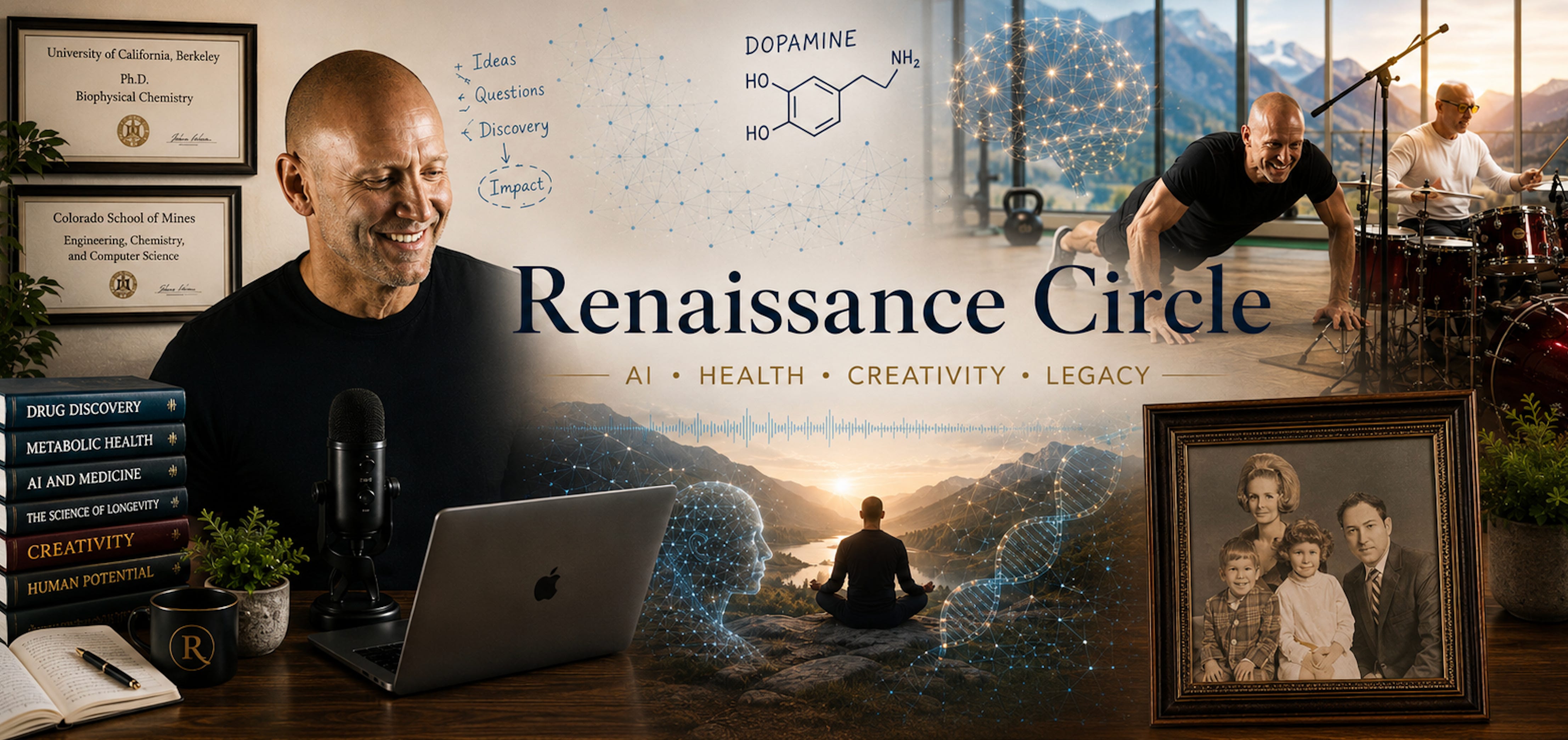
Steven Muskal, Ph.D. is the CEO of Eidogen-Sertanty, Inc. - a drug discovery informatics company. He has spent four decades working at the intersection of computational biology, AI, and drug discovery. He writes about AI, health, and the intersection of biology and technology at stevenmuskal.com
For a couple mix videos, the first was from a recent ridiculously productive session with Maya, David, Tim, Dom, and Don. Such a good example of Bass and vocals laying down the track for the rest of us to follow. The second is from a party mix session earlier this year with Rick, Grant, Dom, and Alan. My first opportunity after all these years to hit real drums (v. air drums) on this Phil Collins classic. Booyah!