


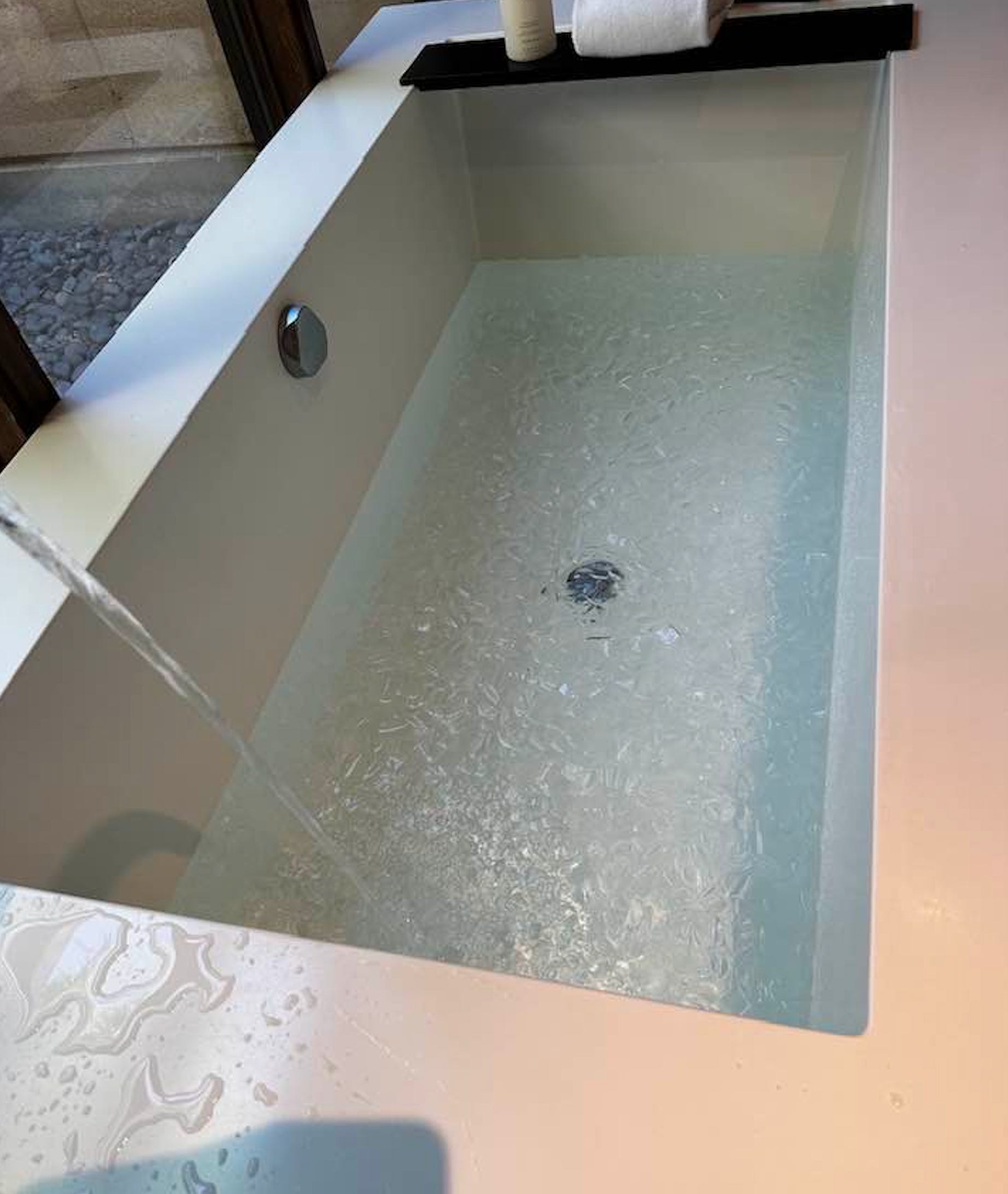
I turn sixty this month, so I have been thinking a lot about team sports, injury, ritual, routine and regimen. We replaced the master bathtub with an always-cold plunge. That tells you where this is headed.
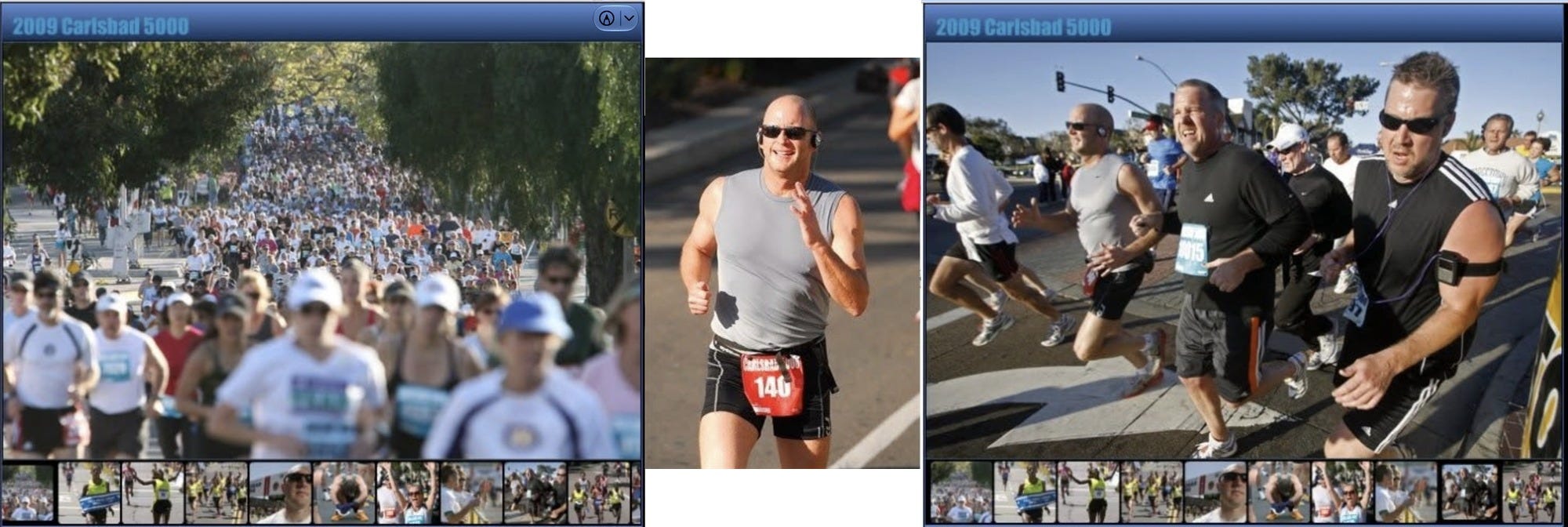
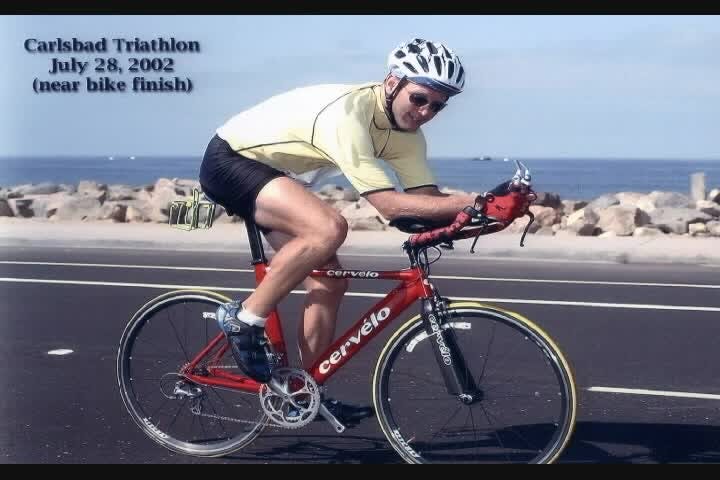
For most of my adult life I played team sports, or at least competed alongside others, and trained too hard: more volume, more intensity, more days, and another session whenever something ached. Not surprisingly, most of my injuries came while competing with others. Hormesis means a stressor small enough to provoke adaptation without doing damage. I was doing it wrong. I kept my body in distress, well past that line, and I had no instrumentation to tell me so. Then I was turned on to cold plunging, and it changed how I think about stress enough that I went looking for the mechanism.
When More Is Not Better
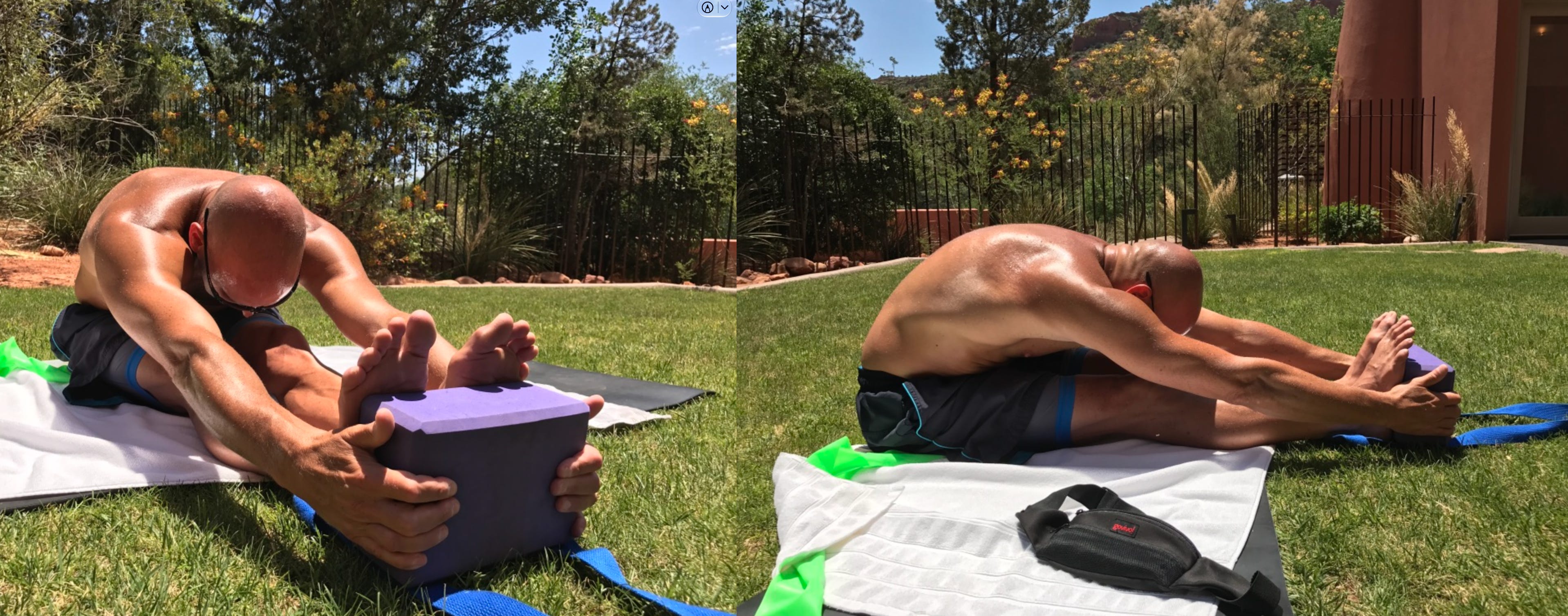
The old logic said that if a little stress is good, more must be better. Cortisol does not work that way, and neither do muscle, tendon or sleep. Chronic stress runs through the same HPA axis machinery that governs glucose regulation, which I covered in The Metabolic Crisis Is Not a News Story. Overtraining is the gym version of that pattern - and that was my routine. I used to do two sessions of yoga, heated then Ashtanga. Shavasana has always been the toughest pose for me. I have always known rest and recovery are critically important, but since I medicate through exercise and am a bit of a dopamine junkie, I never listened to my own advice, or my body. A variant on the phrase “the cobbler’s children go without shoes” applied to me personally.
Exercise comes with me when I travel. Boynton Canyon in Sedona is one of my favorite places to take exercise on the road, and Miraval in Tucson is another go-to spot, where I work on balance on a slackline.
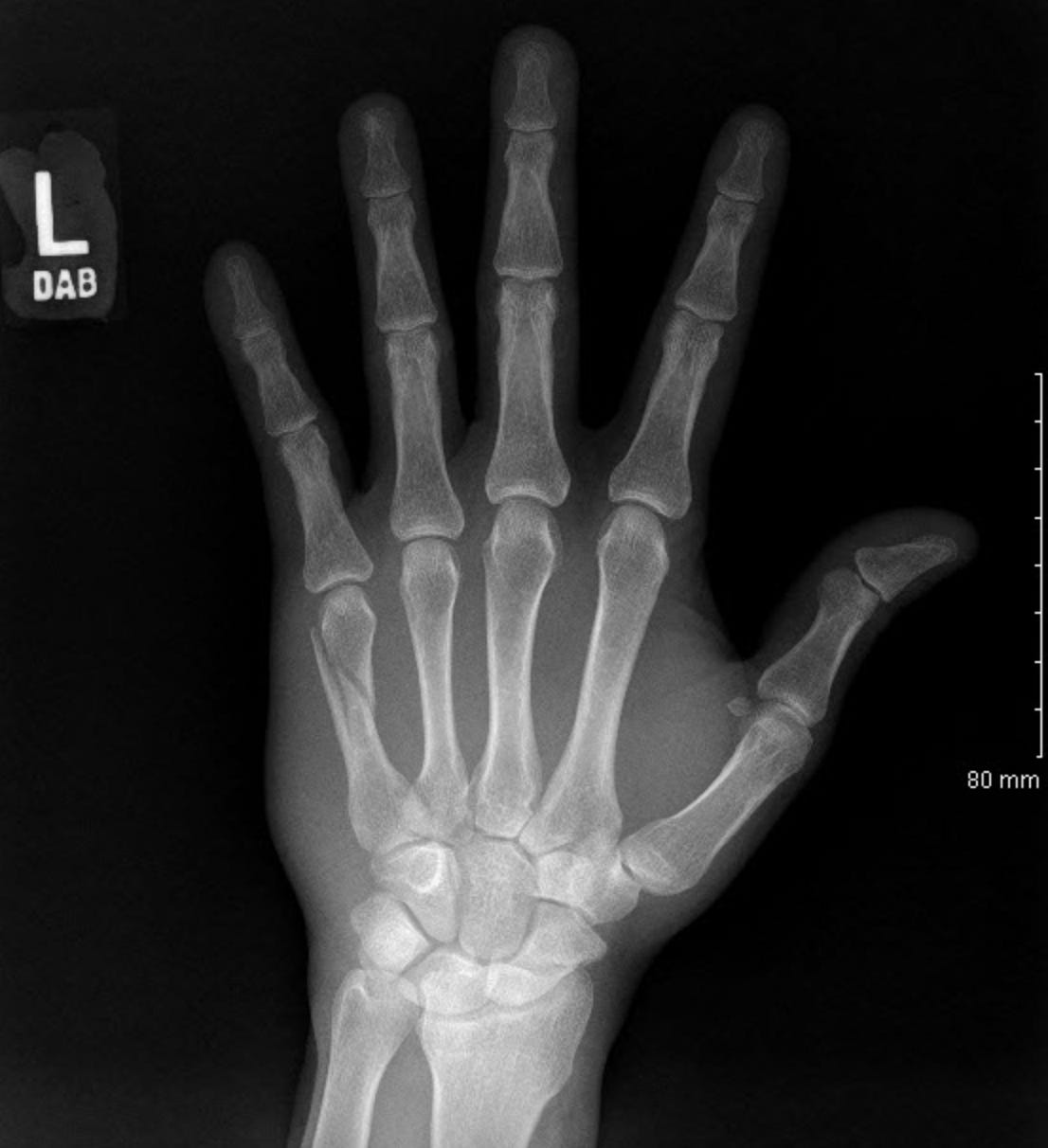
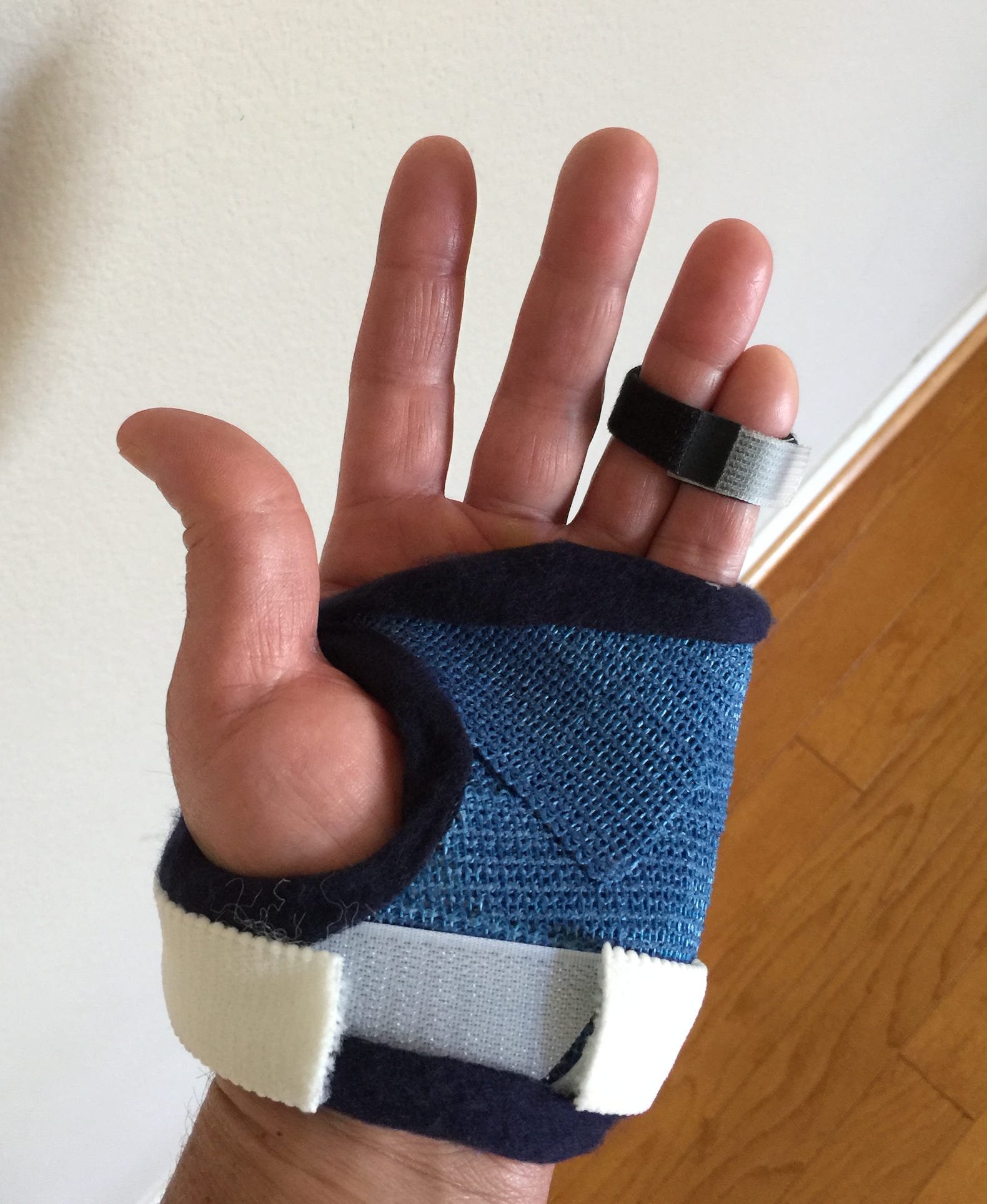
Then as I aged, injuries took longer to heal. About 10 years ago, I broke a bone in my hand on a dive-n-catch in the outfield. Because it was a simple removable cast and I could still drum (I recall vividly having a gig later that week), that wasn’t enough signal to tell me to stop...

When I tore my ACL playing baseball a couple years later, I had a surgical repair. Most surgeons indicated at my age they would do a procedure from my hammy or cadaver, but I insisted on the gold standard patellar tendon. I found only one surgeon, Dr. Murphy, who used to work with the Chargers, who was open to that type of procedure given my age, but only if I would commit to a significant amount of pre- and post-hab. I spent hours in the gym, spinning weeks before the surgery, and spent a year and a half in physical therapy. I returned to sport, actually using a DonJoy cage, stole a whole slew of bases that season, but of course, baseball injuries continued. A couple years later at 50ish, I finally destroyed my right throwing shoulder; but to keep going I learned how to throw left-handed, which is a serious commitment. No more trying to throw people out at the plate from left or center field directly, or trying to throw to first from the outfield to put out a lazy base-hit hitter slowly jogging to first. I stopped playing a couple of years ago, but did continue with Friday batting practices and weekend trips to the batting cages.
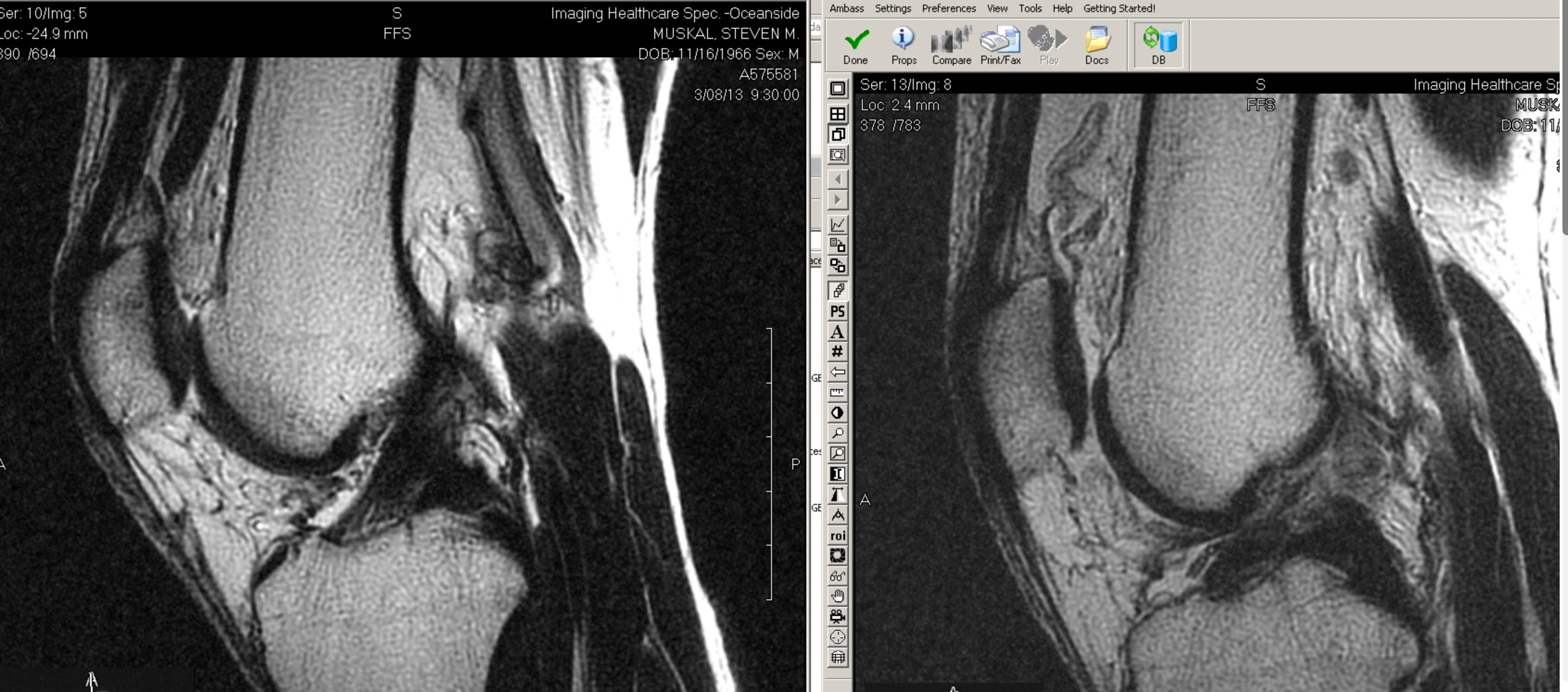
Post ACL reconstruction, meniscus repair batting cage session.
Learning how to throw with my opposite arm (left) after throwing with my right arm for over 50 years.
The shoulder problem led to a long-head biceps tear during volleyball, and that ended traditional team sports for me. Now I focus on music with others as my only team sport. I use the shoulder reliever to loosen the shoulder up. This is not one of those pieces of athletic equipment you buy and put in a closet. I genuinely use it often.
Cold plunging forced a different relationship with discomfort because it is brief and unambiguous. You get in, your nervous system objects loudly, you ride it out, and you get out. A hard workout can take two days to tell you that you overdid it. The plunge settles the question on the spot.
The Plunge and the Sauna
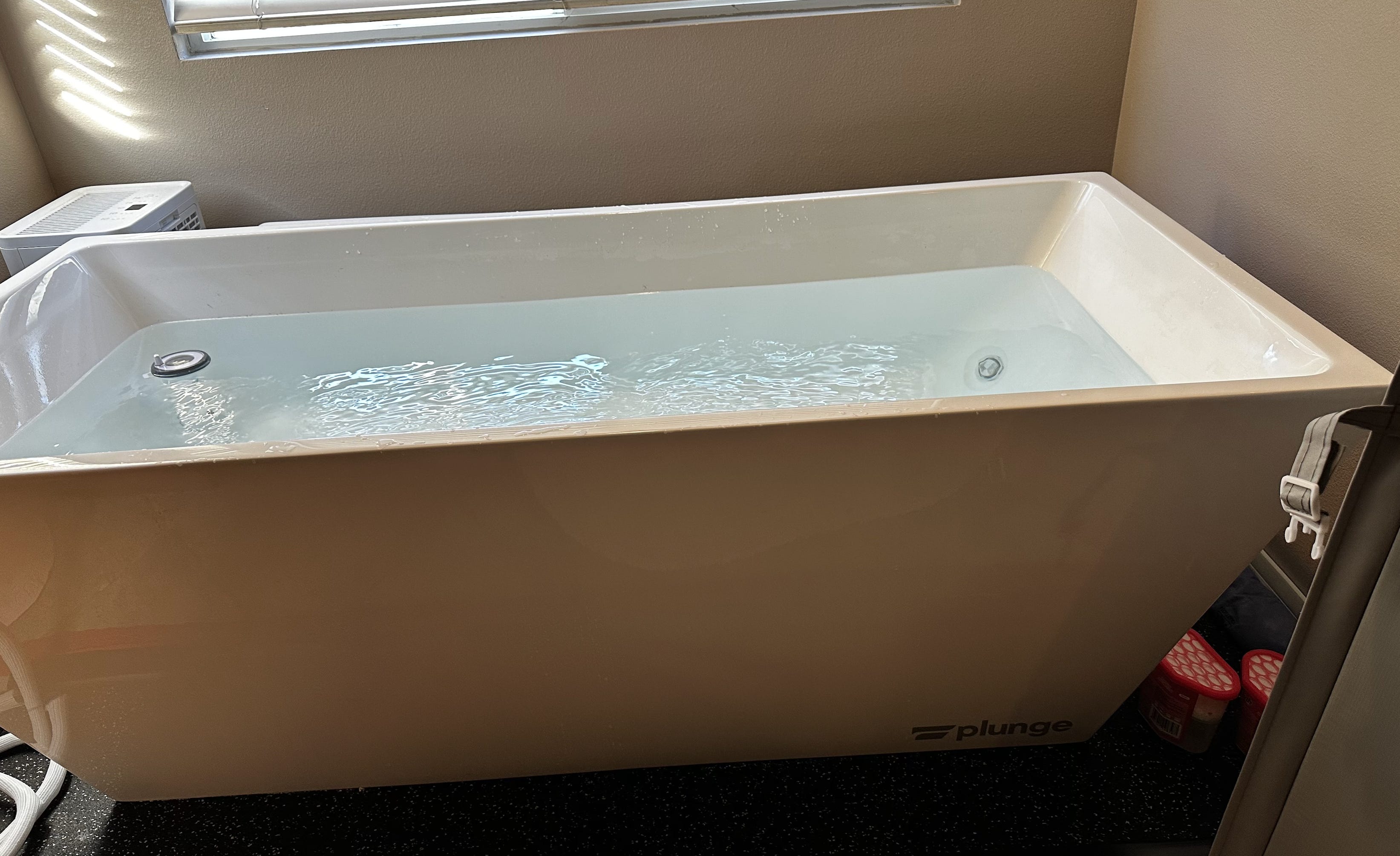
The master tub is now a Plunge, and it keeps the water cold continuously, so there is no ice to haul and no decision to make. I experimented with morning plunges and prefer them later in the day, in place of a mid-day nap or a caffeine hit. It is far more powerful and activating than either one.
I typically keep the water at 52°F. I have gone colder, and it is less enjoyable. At 52 there is just enough edge to get a cold shock response when you first get in, I think that edge is necessary. Occasionally, when I take a few days off, I notice a bit more of a shiver effect the next time in. I also hum to stimulate the vagus nerve and submerge right upon entry.
This is my protocol:
Submerge upon entry for a few seconds.
Surface, humming of course, for 30-45 seconds.
Put my snorkel in my mouth and put my hands underwater for 30 seconds.
Submerge again for 45 seconds or so.
Surface, rinse and repeat.
Total time: 5-6 minutes.
The humming has an amazing effect of distraction and assisting with cold-tolerance. It also lets others in the house know that I am plunging. I also naturally warm with squats on a power-plate and a little resistance weight work-out. The Power-plate is amazing - full body vibration. If you hate doing crunches, do a few minutes of plank variants on the Power-plate and you may never do a crunch again.
I kept plunging through a week of being ill a few months back, the same week I wrote We Are Optimizing the Wrong Objective in Biology. I really think it helped my recovery, but I cannot run the control experiment. Regardless, the plunge contains my “magic-soup.” If I tweak something, or have a headache, recovery is usually very fast after my plunge protocol. I am so addicted to plunging that when I traveled to Miraval, I used to request buckets of ice (they called me the “Ice-man” at check-in). Others followed. I don’t have to request ice anymore. Now Miraval-Tucson has cold-plunges. I think they found it more cost-effective.
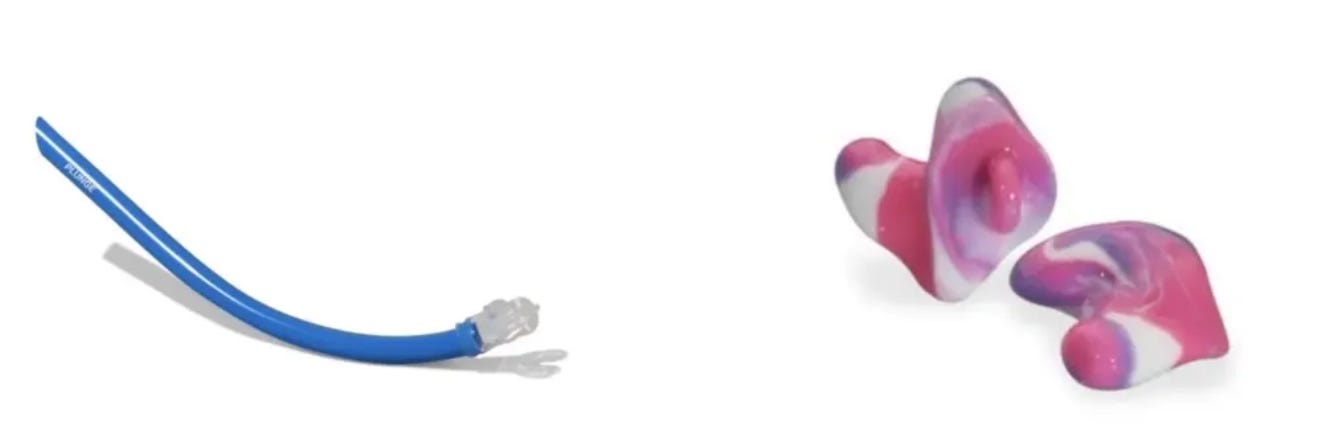
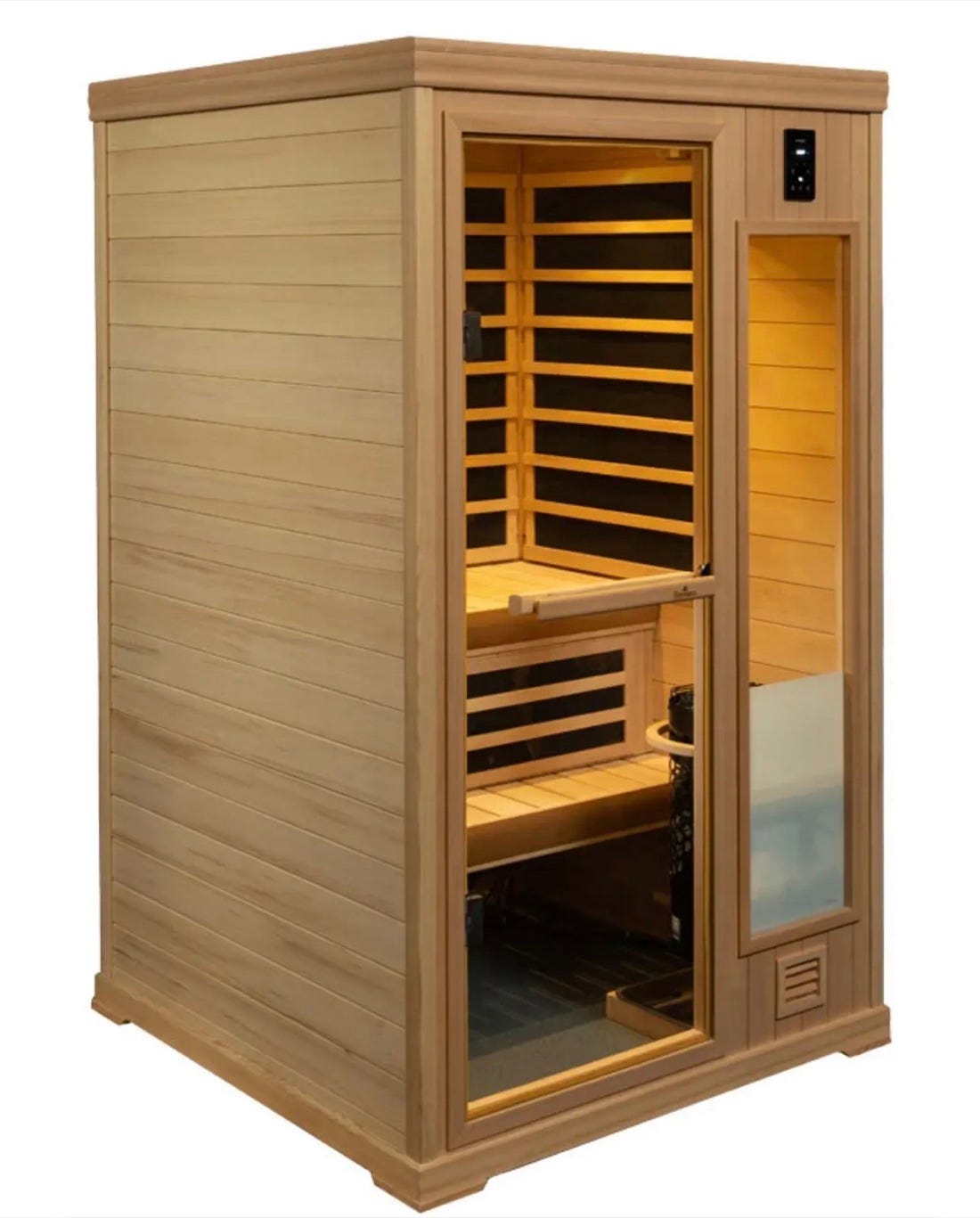
Critical to my protocol is starting with heat. I prefer sauna, especially if it’s a intense amount of heat for a short period of time. This is a VERY important first step. My sauna takes some time to heat, and if I don’t have the time, I’ll take a very hot shower in advance, then hit the plunge. I believe it’s about the delta, the temperature differential, that seems to have the greatest effect with respect to recovery.
My sauna is a Finnleo Infrasauna, which heats with infrared or traditional heat. It plugs into a normal wall outlet instead of a 220 line, so it runs one mode at a time. I usually choose traditional because it gets hotter, and water on the rocks creates a nice steamy hit. This and some of my other go-to’s (typically associated with sleep) were discussed in this - Sleep Optimization Go-Tos:
Brown Fat Shows Up in Winter
Brown adipose tissue burns fuel to make heat. In 2009, van Marken Lichtenbelt and colleagues used PET-CT to show cold-activated brown fat in healthy adult men, overturning the textbook view that it was mostly a feature of infancy.
Yoneshiro and colleagues scanned 45 healthy men and measured how much energy they burned after two hours at 19°C. Cold-induced thermogenesis rose from summer to winter, and it depended on brown fat: men with active brown fat burned about 186 extra kcal/day in winter against about 18 in summer.
In February, insitro took that to population scale. Using machine learning on 69,598 UK Biobank MRI scans, they derived a brown fat measure from the fat-signal difference between abdominal and supraclavicular tissue, which removes the need to PET scan every subject. The signal peaked in late winter, a pattern absent from general adiposity measures. Their genetic study found 81 independent loci fine-mapped to 45 genes, including the known brown fat regulators PRDM16, PGC-1α and EBF2. Twenty-seven of the 45 genes do not appear in studies of other fat depots or waist-to-hip ratio.
Knocking down one of those targets, BAT-01, in the fat of diet-induced obese mice cut body weight 15 percent over four weeks and fat mass 25 percent, with lean mass preserved and food intake unchanged. UCP1 rose and leptin fell in white fat, which points to beiging of white fat with no effect on appetite. The company has not named the gene, and the work is so far a press release and a Keystone Symposia talk.
Winter Versus Summer
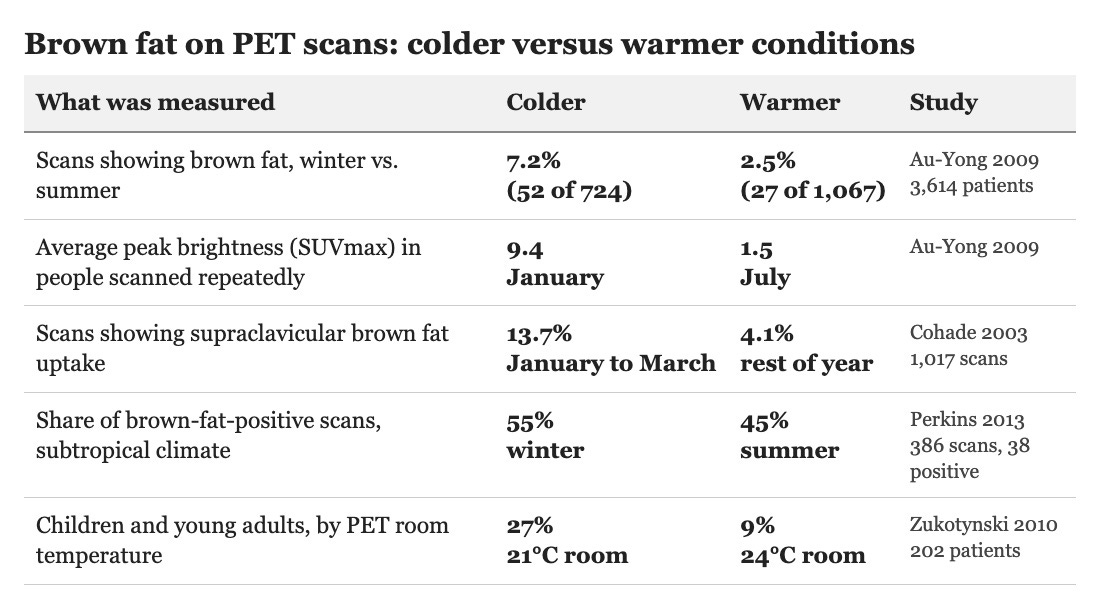
The seasonal story is older than the genetics. For years radiologists reading PET scans, which light up tissue burning glucose, kept seeing bright spots around the collarbones of cancer patients. In 2003 Cohade, Mourtzikos and Wahl at Johns Hopkins went through 1,017 scans and found that uptake in this supraclavicular fat appeared in 13.7 percent of scans from January through March and 4.1 percent the rest of the year.
The largest study is Au-Yong and colleagues in Diabetes in 2009. They reviewed 3,614 consecutive patients. Brown fat appeared on 7.2 percent of winter scans and 2.5 percent of summer scans. In people scanned more than once, average peak signal was 9.4 in January and 1.5 in July, a sixfold swing in the same bodies. Month to month, brown fat tracked day length (r² = 0.88) more closely than outdoor temperature (r² = 0.70).
Saito and colleagues ran it prospectively in healthy volunteers, two hours at 19°C, and cold-activated uptake was higher in winter than in summer. The pattern even shows up in a subtropical climate, more weakly. And a few degrees indoors moves it: in children and young adults at one PET center, brown fat appeared on 27 percent of scans with the room at 21°C and 9 percent at 24°C.
Body fat runs the other way. Nelson and colleagues scanned 52 midlife women in North Dakota by DEXA once per season. Average body fat rose from 37.73 percent in summer to 38.15 percent in winter, and the rise did not reverse by spring. Higher food intake from summer into fall predicted the gain. Westerterp followed one person’s weight daily for more than twenty years: a swing of about 3 kg, peaking in the cold months when physical activity was lowest. So winter switches brown fat on while the rest of the body stores more. Brown fat appears to be a seasonal response to cold, and on its own it does not outrun a winter of eating more and moving less.
What Repeated Cold Does
A 2023 narrative review by Scott and Fuller found that intermittent cold exposure does not consistently lower body weight or fat mass. It does appear to improve glucose tolerance and insulin signaling, it consistently increases brown fat activity, and it shifts white fat toward a brown-like phenotype. Most of that literature comes from rodents housed in cold rooms, which looks nothing like a person climbing into a tub. At sixty, I will gladly take better glucose handling.
In the human study behind the most quoted numbers, Blondin and colleagues put six men in a liquid-conditioned suit at 10°C for two hours a day, five days a week, for four weeks. Brown fat volume rose 45 percent and its oxidative metabolism rose 2.2-fold. A plunge is a far shorter exposure, so those numbers cannot be carried over to a tub. Jori Enfield’s “The Water Nobody Studies” makes a related point about temperature: most cold-water studies ran at 50 to 59°F, and below 50°F the benefits have largely gone untested. My 52°F sits inside the range that has actually been studied, which I arrived at by feel.
Søberg’s Winter Swimmers and the Case for the Delta
Susanna Søberg has done much of the work on cold plunging. Her study in Cell Reports Medicine followed young, healthy men who practice Scandinavian winter swimming two to three times a week, combining brief cold-water dips with hot sauna. In response to cold, the swimmers showed greater increases in cold-induced thermogenesis than controls, while brown fat glucose uptake rose similarly in both groups. Whole-body heat production outran what brown fat imaging would predict.
I think going from hot to cold activates both heat shock and cold shock proteins, and that the delta is the hormetic stress. The heat shock response is well established. Cold shock proteins such as RBM3 have solid rodent neuroprotection data, and the human evidence is thin. Nobody has run the trial that isolates the delta from its components.
The Confound Finland Never Measured
Many Finns who sauna jump into cold water afterward. Avantouinti, ice swimming, belongs to the same culture. So I went to the primary sources for the sauna and mortality claims: the Kuopio cohort papers in JAMA Internal Medicine (2015, men) and BMC Medicine (2018, men and women).
Between them they adjust for age, sex, BMI, smoking, blood pressure, LDL cholesterol, alcohol, prior heart attack, type 2 diabetes, physical activity and socioeconomic status. Neither lists cold-water immersion as a covariate, and the words “cold water” and “winter swimming” do not appear in the BMC Medicine paper at all. The dataset doing the most to establish sauna’s cardiovascular benefit never asked. I would want to see sauna alone stratified against sauna plus cold water before crediting heat with the whole effect.
My Own N of 1
I had two DEXA scans about eleven months apart, during a period of nearly daily plunging, which is a serious commitment. My diet was pretty close to identical, I exercised slightly less but consistently, and I slept a bit more.
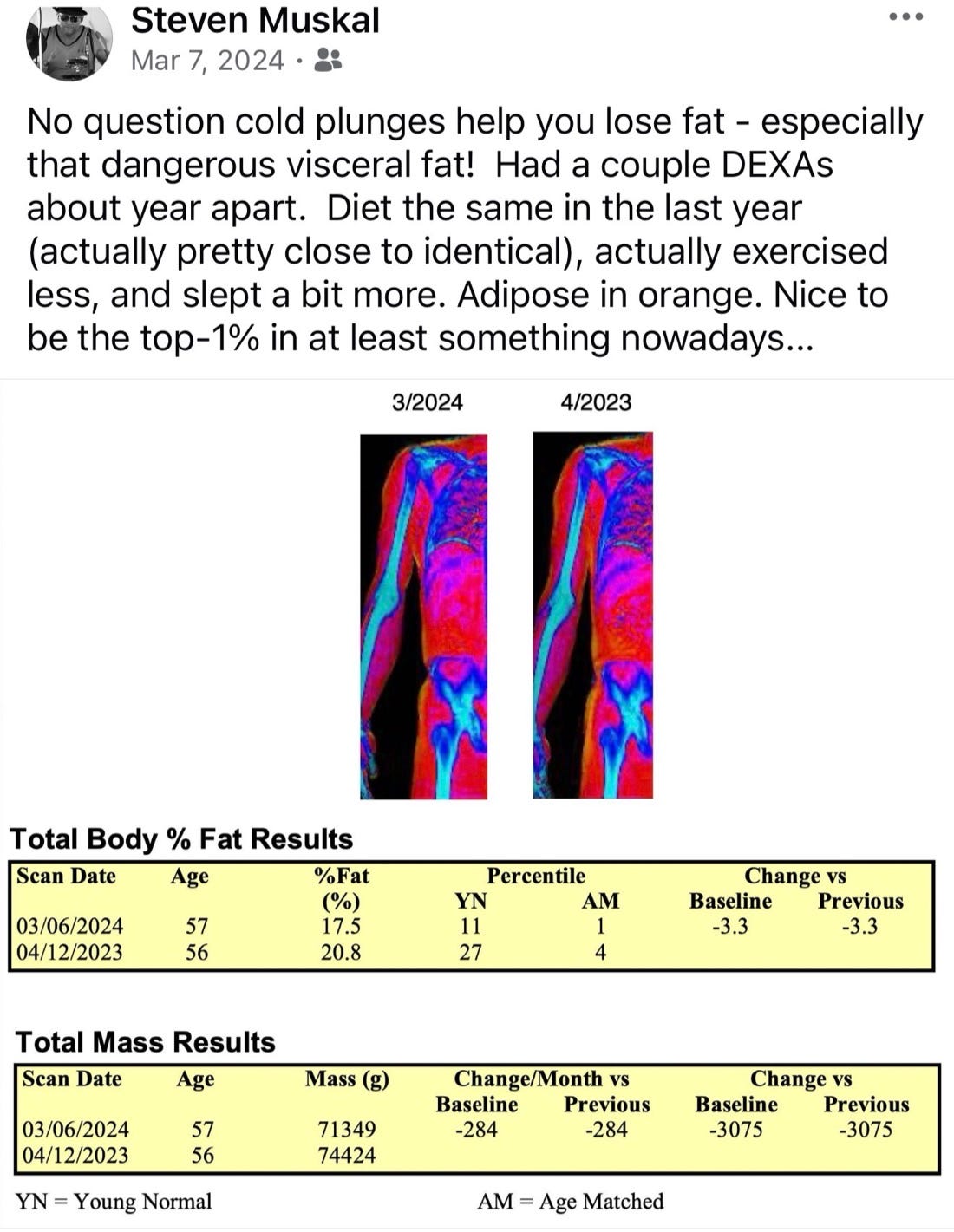
Body fat went from 20.8 percent on April 12, 2023 to 17.5 percent on March 6, 2024. Total mass went from 74,424 g to 71,349 g, a loss of about 6.8 pounds. My age-matched body fat percentile moved from the 4th to the 1st. DEXA does not identify brown fat. It did show the reduction, with pretty much everything else held the same. The two scans fall in March and April, nearly the same point on the calendar, so the seasonal swing above does not explain a 3.3-point drop. Hitting the 1st percentile is what prompted my joke on Facebook about being top 1 percent in at least something nowadays.
This is one person with no control arm. It is also the one body I get to run the experiment on, and the direction fits what the imaging and the biology would predict.
What My Genome Says
I have had my DNA read three separate ways: a 23andMe array, and two whole genome sequencing runs, one on a BGI instrument and one on Illumina. Those whole genomes are the data I once sent George Church, a fellow Sung-Hou Kim lab alum. With that much of my own data sitting around, I had to ask whether it says anything about brown fat.
Think of your genome as a book three billion letters long, with two copies of nearly every page, one from each parent. Most differences between any two people are single-letter spelling changes, called SNPs. Because you have two copies, your result at any one spot is a pair of letters, such as A/A or T/C. Most of these spellings do nothing you would ever notice. A few change how much of a protein gets made, or how well it works.
Brown fat runs on a short chain of command. Cold skin signals the brain, and the brain sends noradrenaline to the brown fat. One of the receptors it lands on is made by a gene called ADRB3. Think of that as the doorbell. When the signal gets through, it turns up UCP1, the protein that makes brown fat what it is. Normally your mitochondria capture the energy in food in a usable form. UCP1 short-circuits that process so the energy comes off as heat. Think of it as the furnace. That gives us a doorbell, a furnace, and a place in each gene where people’s spelling differs.
Here is what I found. All three readings of my DNA agree on every call.
The furnace dial, UCP1 (rs1800592): A/A
The doorbell, ADRB3 (rs4994): Trp/Trp, the unchanged version on both copies
The obesity gene, FTO (rs1421085): T/C, one copy of each
The first two come from a study by Yoneshiro and colleagues, who chilled 199 volunteers aged 20 to 72 for two hours and then put them in a PET scanner. They looked at the UCP1 spelling, which sits just upstream of the gene in the stretch that helps set how strongly it is read, and the ADRB3 spelling, which swaps one building block of the receptor. Brown fat showed up in 55 percent of younger people and only 15 percent of those over 40. That loss with age is the part that got my attention.
Genotype appeared to affect how fast you lose it. Across these two genes there are four letter slots, and each can carry the altered version. Younger people looked about the same no matter how many they had. In people over 40, it separated: among those with two or more altered letters, none had detectable brown fat, against 24 percent of those with zero or one. The group with more altered letters also carried more visceral fat, the dangerous kind packed around the organs.
I have zero altered letters out of four. That puts me in the favorable group as I turn sixty. It does not tell me how much brown fat I have. Even in that group, about three out of four older people had none detectable, and a cold PET scan would answer the question for me. It does mean my genes are not working against me on the two variants anyone has tied directly to brown fat with aging.
FTO is the more tangled story. It holds the strongest common genetic signal for obesity. In 2015, Claussnitzer and colleagues traced that signal to a single letter, rs1421085, which can be T or C. In human fat cells, the C spelling knocks out a landing site for a molecular brake. Two genes downstream, IRX3 and IRX5, then run at double strength, and the fat cells shift from burning to storing, with heat production falling about fivefold. When the authors used CRISPR to correct that one letter in cells from a carrier, the burning program came back.
Then in 2023 Zhang and colleagues put the same variant into mice and got the opposite answer in brown fat: the C version increased thermogenic capacity and protected the animals against weight gain on a high-fat diet. So the human cells and the mice disagree. My own reads show the one-of-each pattern plainly, 27 reads of T and 28 of C in the first sequencing run. I carry one copy, and the field has not settled what that copy does in brown fat.
The study I most want to run my genome against is the one that started this piece. insitro has not published its 81 loci, so that comparison waits for the paper. Three letters out of three billion are hardly a verdict on anyone, but they make a satisfying corner of my own data to find. Regardless as I often say, nature loads the gun; the environment pulls the trigger. Lifestyle, I think, is critical, which is one of the reasons I continue to exercise and cold plunge, regardless of what is seen in the literature.
The Take-Home at Sixty
The overtraining years taught me what too much stress feels like. The plunge and the sauna taught me what the right amount feels like: a sharply bounded stressor, applied briefly and often, has done more for me than the chronic load I used to carry. Brown fat is real, it swings with the seasons, and it is at least partly inducible. Its genetics now point to a peripheral mechanism that leaves appetite alone. My scans moved the right way in a year when I plunged almost daily, exercised less, and, most importantly, slept more. My genome is at least not arguing.
Whether the delta beats either half alone is still untested, and Finland’s best sauna data never asked. I have a plausible mechanism, a consistent personal result and an open question. At sixty, that is plenty of reason to keep getting in.
References
Au-Yong IT, Thorn N, Ganatra R, Perkins AC, Symonds ME. Brown adipose tissue and seasonal variation in humans. Diabetes. 2009;58(11):2583-2587. pmc.ncbi.nlm.nih.gov/articles/PMC2768171
Blondin DP, Labbé SM, Tingelstad HC, et al. Increased brown adipose tissue oxidative capacity in cold-acclimated humans. J Clin Endocrinol Metab. 2014;99(3):E438-46. doi.org/10.1210/jc.2013-3901
Claussnitzer M, Dankel SN, Kim KH, et al. FTO obesity variant circuitry and adipocyte browning in humans. N Engl J Med. 2015;373(10):895-907. nejm.org/doi/full/10.1056/NEJMoa1502214
Cohade C, Mourtzikos KA, Wahl RL. “USA-Fat”: prevalence is related to ambient outdoor temperature. J Nucl Med. 2003;44(8):1267-1270. jnm.snmjournals.org/content/44/8/1267
Enfield J. The Water Nobody Studies. Substack, Aug 24, 2026. jorienfield.substack.com/p/the-water-nobody-studies
insitro. insitro Completes First AI-Enabled Human Genetics Study of Brown Adipose Tissue, Shares Differentiated Targets with Anti-Obesity Effects. Press release, Feb 2, 2026. insitro.com/news
insitro. Mapping the genetics of brown fat. Feb 2, 2026. insitro.com/news/mapping-the-genetics-of-brown-fat
Laukkanen T, Khan H, Zaccardi F, Laukkanen JA. Association between sauna bathing and fatal cardiovascular and all-cause mortality events. JAMA Intern Med. 2015;175(4):542-548. jamanetwork.com/journals/jamainternalmedicine/fullarticle/2130724
Laukkanen T, Kunutsor SK, Khan H, et al. Sauna bathing is associated with reduced cardiovascular mortality and improves risk prediction in men and women: a prospective cohort study. BMC Med. 2018;16:219. pmc.ncbi.nlm.nih.gov/articles/PMC6262976
Muskal S. The Metabolic Crisis Is Not a News Story. Renaissance Circle, May 2026. drstevenmuskal.com/p/the-metabolic-crisis-is-not-a-news
Nelson AM, Casperson SL, Jahns L, Palmer DG, Roemmich JN. Seasonal changes in midlife women’s percentage body fat: a 1-year cohort study. JAR Life. 2022;11:20-25. pmc.ncbi.nlm.nih.gov/articles/PMC10002894
Peretti D, Bastide A, Radford H, et al. RBM3 mediates structural plasticity and protective effects of cooling in neurodegeneration. Nature. 2015;518:236-239. doi.org/10.1038/nature14142
Perkins AC, Mshelia DS, Symonds ME, Sathekge M. Prevalence and pattern of brown adipose tissue distribution of 18F-FDG in patients undergoing PET-CT in a subtropical climatic zone. Nucl Med Commun. 2013;34(2):168-174. doi.org/10.1097/mnm.0b013e32835bbbf0
Saito M, Okamatsu-Ogura Y, Matsushita M, et al. High incidence of metabolically active brown adipose tissue in healthy adult humans: effects of cold exposure and adiposity. Diabetes. 2009;58(7):1526-1531. pmc.ncbi.nlm.nih.gov/articles/PMC2699872
Scott MC, Fuller S. The effects of intermittent cold exposure on adipose tissue. Int J Mol Sci. 2023;25(1):46. pmc.ncbi.nlm.nih.gov/articles/PMC10778965
Søberg S, Löfgren J, Philipsen FE, et al. Altered brown fat thermoregulation and enhanced cold-induced thermogenesis in young, healthy, winter-swimming men. Cell Rep Med. 2021;2(10):100408. cell.com/cell-reports-medicine
Westerterp KR. Seasonal variation in body mass, body composition and activity-induced energy expenditure: a long-term study. Eur J Clin Nutr. 2020;74(1):135-140. doi.org/10.1038/s41430-019-0408-y
van Marken Lichtenbelt WD, Vanhommerig JW, Smulders NM, et al. Cold-activated brown adipose tissue in healthy men. N Engl J Med. 2009;360:1500-1508. nejm.org/doi/full/10.1056/NEJMoa0808718
Yoneshiro T, Matsushita M, Nakae S, et al. Brown adipose tissue is involved in the seasonal variation of cold-induced thermogenesis in humans. Am J Physiol Regul Integr Comp Physiol. 2016;310(10):R999-R1009. journals.physiology.org/doi/full/10.1152/ajpregu.00057.2015
Yoneshiro T, Ogawa T, Okamoto N, et al. Impact of UCP1 and β3AR gene polymorphisms on age-related changes in brown adipose tissue and adiposity in humans. Int J Obes. 2013;37(7):993-998. doi.org/10.1038/ijo.2012.161
Zhang Z, Chen N, Yin N, et al. The rs1421085 variant within FTO promotes brown fat thermogenesis. Nat Metab. 2023;5(8):1337-1351. doi.org/10.1038/s42255-023-00847-2
Zukotynski KA, Fahey FH, Laffin S, et al. Seasonal variation in the effect of constant ambient temperature of 24 degrees C in reducing FDG uptake by brown adipose tissue in children. Eur J Nucl Med Mol Imaging. 2010;37(10):1854-1860. doi.org/10.1007/s00259-010-1485-2

About the Author: Dr. Steven Muskal is CEO and founder of Eidogen Sertanty, with more than four decades of experience in AI driven drug discovery. He holds a Ph.D. in Chemistry from UC Berkeley (1991), where his thesis focused on neural networks for protein structure prediction.