

By Steven Muskal, Ph.D. | The Renaissance Circle | July 15, 2026 | stevenmuskal.com
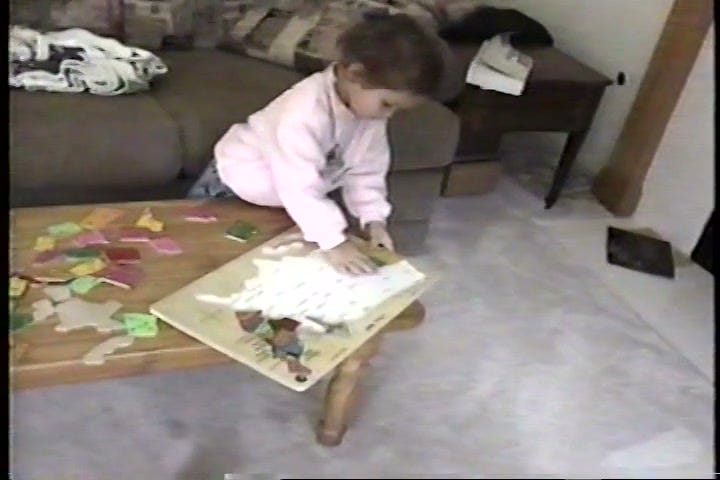
A few days ago I was on the phone with a family member, and the conversation drifted, the way these conversations do, to an old video tape. My older daughter was two and a half. She was on the floor with a wooden puzzle of the United States, and she was picking up each state and setting it down in its exact spot without hesitating. Nevada, there. Colorado, there. If you asked her the capital, she would tell you, in the small serious voice kids use when they already know they are right.
I could not do that today. I am not entirely sure I could do it the day I am writing this sentence.
That is not really a story about a smart toddler, although she was one. It is a story about how much a very young brain can hold, briefly and completely, and how much of that same knowledge quietly falls away as the brain grows into a life that no longer needs state capitals on demand. What she knew at two and a half did not disappear because it was unimportant. It disappeared because nobody needed her to keep carrying it forward. The tape, though, still carries it. Thirty-some years later, I can press play and get it back. That gap, between what a mind lets go of and what a piece of media holds onto, is the whole reason I am writing this.
What She Knew at Two and a Half
If I asked my older daughter today where Nevada is, she would get it right, probably without thinking. Ask her the capital, and I suspect there would be a pause, maybe a guess, maybe a shrug. That gap between geography and trivia is a pretty good stand-in for how memory actually works across a life: the shape of a thing survives long after the specific detail does not. We keep the map. We lose the footnotes.
My younger daughter, Hannah, would probably handle both questions without hesitation today (she even knows all the countries and their locations), but you already heard a bit about Hannah - Study with Hannah, about the sixty-two thousand study cards she built for herself in medical school. Different puzzle, same posture at the table, the same total absorption in getting something exactly right. What has changed between the toddler and the med student is not a child’s capacity to learn. What has changed is what we bothered to keep a record of, and whether that record is still readable when we go looking for it.

Berkeley, DEC, and the Machines That Wouldn’t Talk to Each Other
I have been thinking about this problem longer than I have had children. In the late 1980s I was in graduate school at Berkeley, building some of the earliest neural network methods anyone was using for protein structure prediction, work that was probably thirty years ahead of the field’s patience for it. None of that matters here except for one detail: the machines.
I started on old DEC systems and moved, over a few years, onto Silicon Graphics workstations. The two families of machines were different enough that moving anything between them (code, results, the tapes I had recorded my work onto) took real, deliberate effort. Nobody handed me a converter. I had to notice, ahead of time, that the platform I was standing on would not be the platform I would be standing on in five years, and that if I did not move my own work forward on my own schedule, I would eventually be locked out of it on somebody else’s schedule instead.
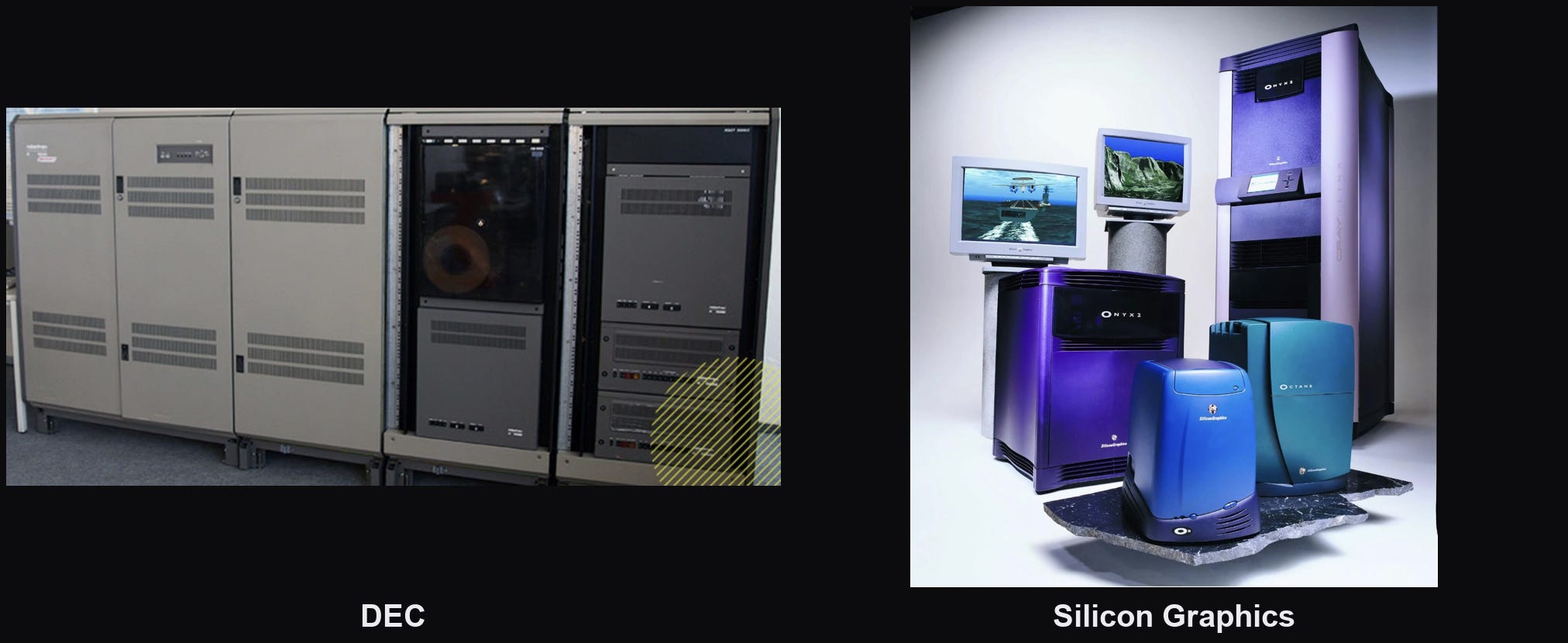
That was not foresight so much as an early, uncomfortable lesson, learned by hand, tape by tape, in a lab that had no particular reason to warn me about it. I moved source code and results off those machines more than once, onto whatever came next, well before I had hard evidence the old hardware was actually going away. It turned out to be the right call every single time. Ever since, I have treated “will I be able to read this in ten years” as a real engineering requirement for anything I actually care about keeping, not a nice-to-have I get around to eventually.
The Alexandria Fire, on a Budget
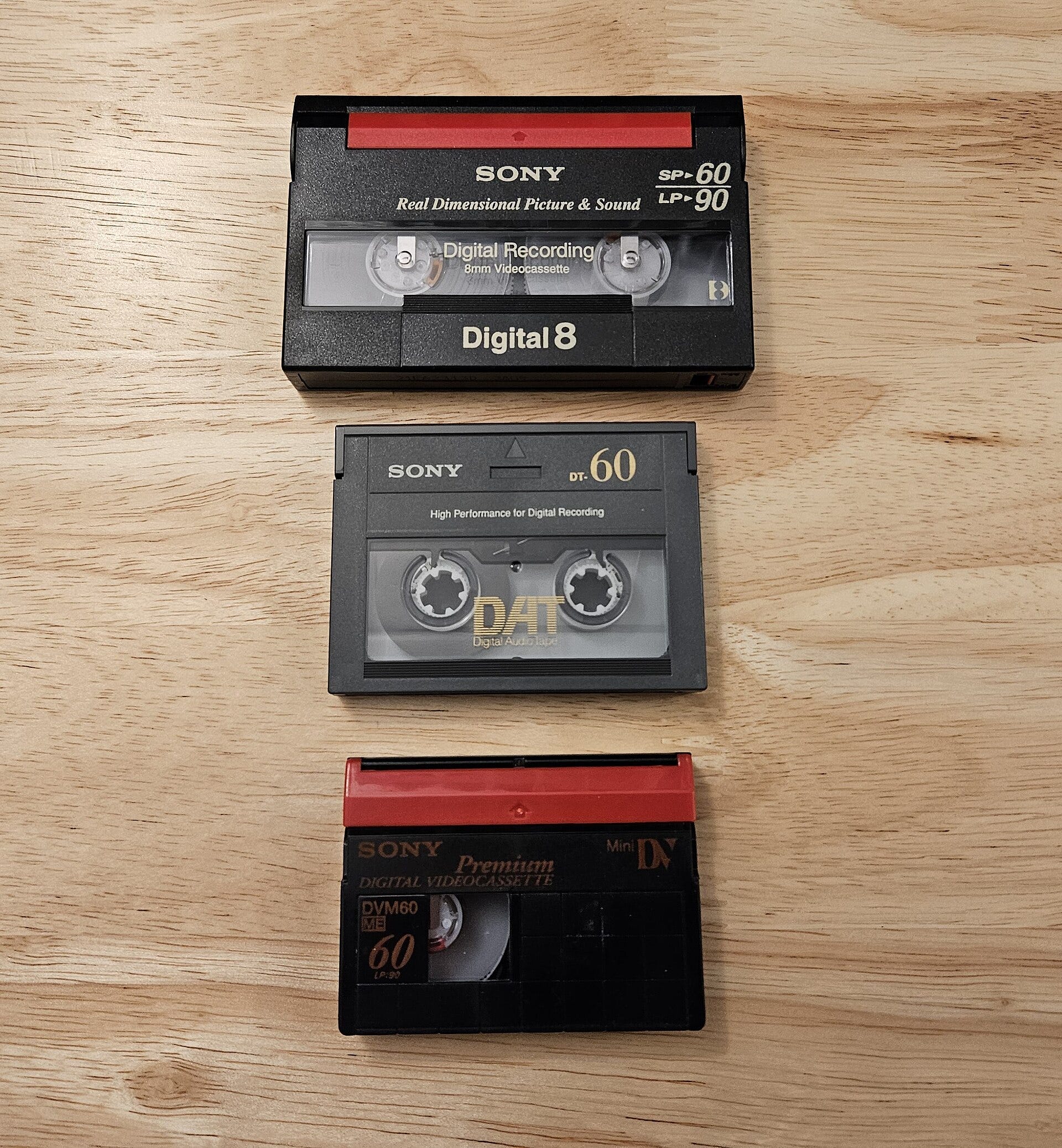
Here is the part almost everyone has lived through without ever quite naming it. Betamax. Video CDs. MiniDV. Blu-ray, which felt permanent for about a decade. Every one of those formats held real memories: someone’s wedding, someone’s Christmas morning, someone’s toddler doing a state puzzle. And every one of those formats has quietly become harder to play than the memory itself deserves. You can find a working deck in the Smithsonian Institute. You can probably find one on eBay if you are patient and willing to gamble on a stranger’s storage unit. You are not finding one on Amazon, and you are certainly not finding one at Walmart.
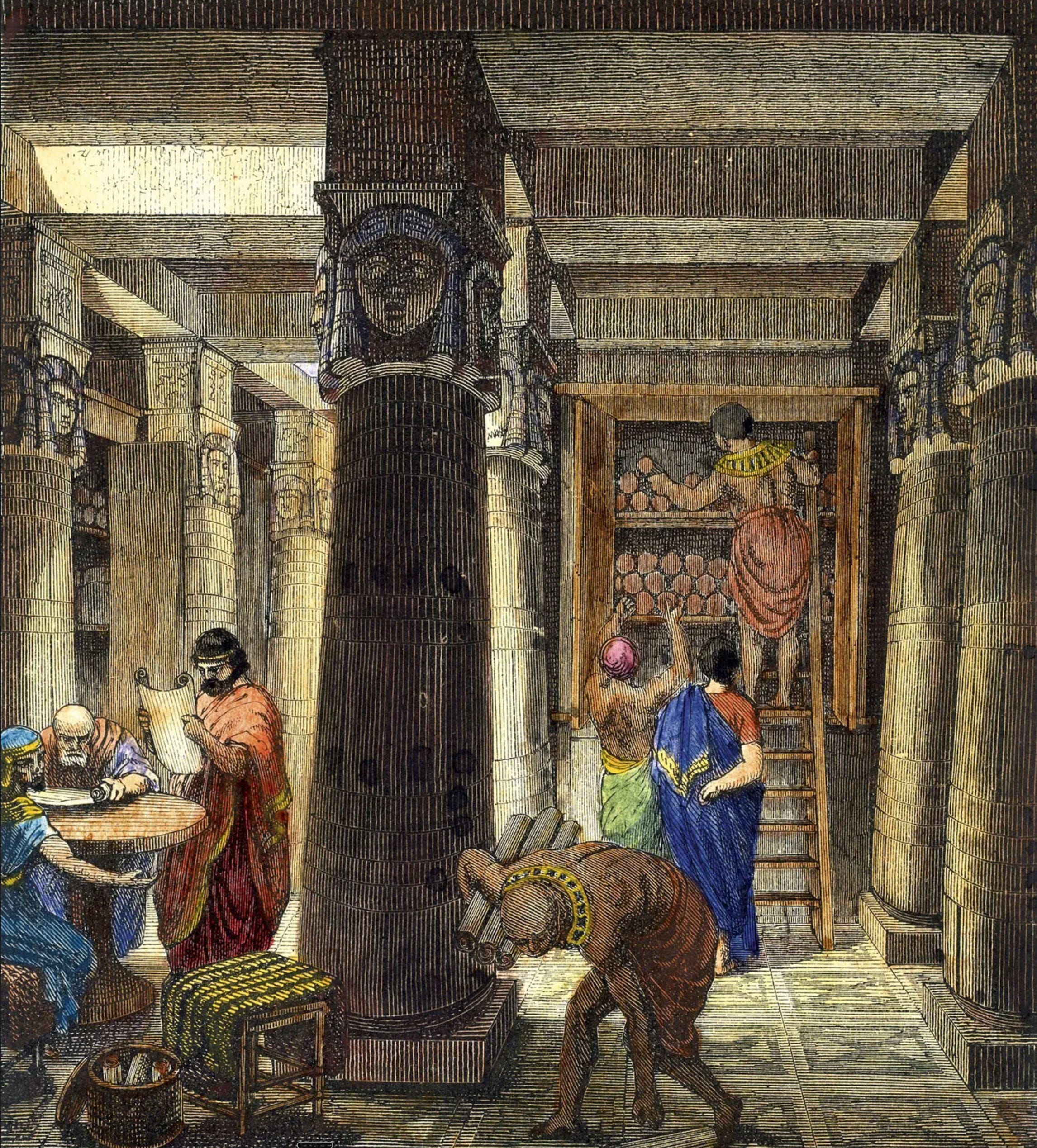
That is a small, slow-motion version of the Library of Alexandria. Nothing burned. The scrolls are all technically still there, on tape, on disc, in a drawer in someone’s garage. What is gone is the ability to read them, which for practical purposes is the same thing as gone. It just happens quietly, one format transition at a time, spread out over decades instead of one bad afternoon in Egypt. Nobody registers it as loss, because nothing dramatic ever happens. The device you need just gets a little harder to find every year, until one day it is a museum piece, and by then the moment you would have wanted back is thirty years further from anyone’s reach than it ever needed to be.
In Silico, Not Just the Highlight Reel
Most of what we do save, we save selectively. We keep the wedding, not the argument in the car on the way to the wedding. We keep the graduation, not the ordinary Tuesday that actually made up most of a relationship. I understand the instinct. Nobody wants to relive the difficult parts on purpose, and curated memory has always been a kindness we do for ourselves.
But I think we are underinvesting in the unremarkable footage: the stuff that is not staged, the stuff that just happens to be running while a life is actually being lived. Not for anyone’s entertainment, and not to build an inventory for later monetization. I mean something closer to memorializing as much of a person’s real life as is reasonably possible, quietly and unobtrusively, without turning every family dinner into a production. Call it in silico memorialization, a phrase I keep coming back to: preserving people’s lives in digital form, ahead of a need you cannot yet name, rather than after you can. The specific detail worth keeping is rarely the one you would have predicted in advance. Nobody sets out to film “the last time we will all be in this kitchen together.” You only find out which recordings mattered after the fact, which is exactly the argument for keeping more of them than you think you need right now.
Built to Move, Not to Stay
This is also why I have put real effort into making sure the systems I build myself do not repeat the DEC-to-Silicon-Graphics problem for anyone else. Everything I put in the cloud now, I put there assuming the cloud is this decade’s format, not a permanent home. It needs to be able to leave cleanly whenever the next platform shows up, the same way my old research needed to leave a machine before that machine stopped being useful to anyone.
That thinking is a big part of why I built out ToastOurFriend, a place where you can create a circle around someone you want to celebrate (a friend, a mentor, a neighbor) and fill it with stories, photos, and voice memories while that person is still around to read them. I wrote more about the origin of that project, and why celebration should happen before someone is gone rather than after. The content in a circle belongs to the people in it, not to the platform. If ToastOurFriend is not the right home for it in five years, moving that circle somewhere else should be simple. I built it that way on purpose, because I have already lived through what happens when a format outlives its own hardware, and I would rather not do that to anyone’s memories a second time.

Where Things Go
There is a reason the puzzle in that old video has stuck with me all week, beyond the obvious cuteness of a two and a half year old rattling off capitals. A puzzle only works because every piece has exactly one place it belongs. My daughter knew, instantly and correctly, where each one went. That is a small, almost embarrassingly literal model for the actual argument here: the memories worth keeping need to keep landing in the right place, generation of media after generation of media, or they simply stop existing anywhere we can reach them.
Nobody does this migration for you automatically. The photo albums that got scanned onto a CD did not get themselves scanned again when CD drives started disappearing from laptops. Someone had to notice, ahead of the format’s expiration date, and move the content forward on purpose. That stopped being a technology problem a long time ago. It is a decision every family has to make, over and over, about what they are willing to carry forward and what they are willing to let the next quiet Alexandria fire take.
So here is the actual ask, buried under all the DEC machines and Betamax decks: go find the tape, the disc, the drive you have not opened in a decade, and move whatever is on it somewhere it can survive the next format change. Do it before you need a device you can only find at the Smithsonian. And if there is someone in your life worth celebrating while they can still see it, do not wait for the version of this essay that shows up at a memorial. Say it, film it, post it, now, while it can still land exactly where it is supposed to go.
Related reading: Study with Hannah· Toast Our Friend · ToastOurFriend.com
Related listening, with the daughters you just read about: Father-Daughter Face-Off, part one, with Lili · Father-Daughter Face-Off, part two, with Hannah: Medical Training Overseas · Homeownership, Healthcare, and AI, with Lili
Steven Muskal, Ph.D. is the CEO of Eidogen-Sertanty, Inc. - a drug discovery informatics company. He has spent four decades working at the intersection of computational biology, AI, and drug discovery. He writes about AI, health, and the intersection of biology and technology at stevenmuskal.com
For a couple mix videos - these are from the recent July 3 gathering. Green River (Dan, Ron, Tim, Andrew) - “let me remember things I love.” And Ventura Highway (Ron, Andrew, Dan, TimL)