


By Steven Muskal, Ph.D. | May 16, 2026 | stevenmuskal.com
Prologue: A Conversation at Cal-a-Vie
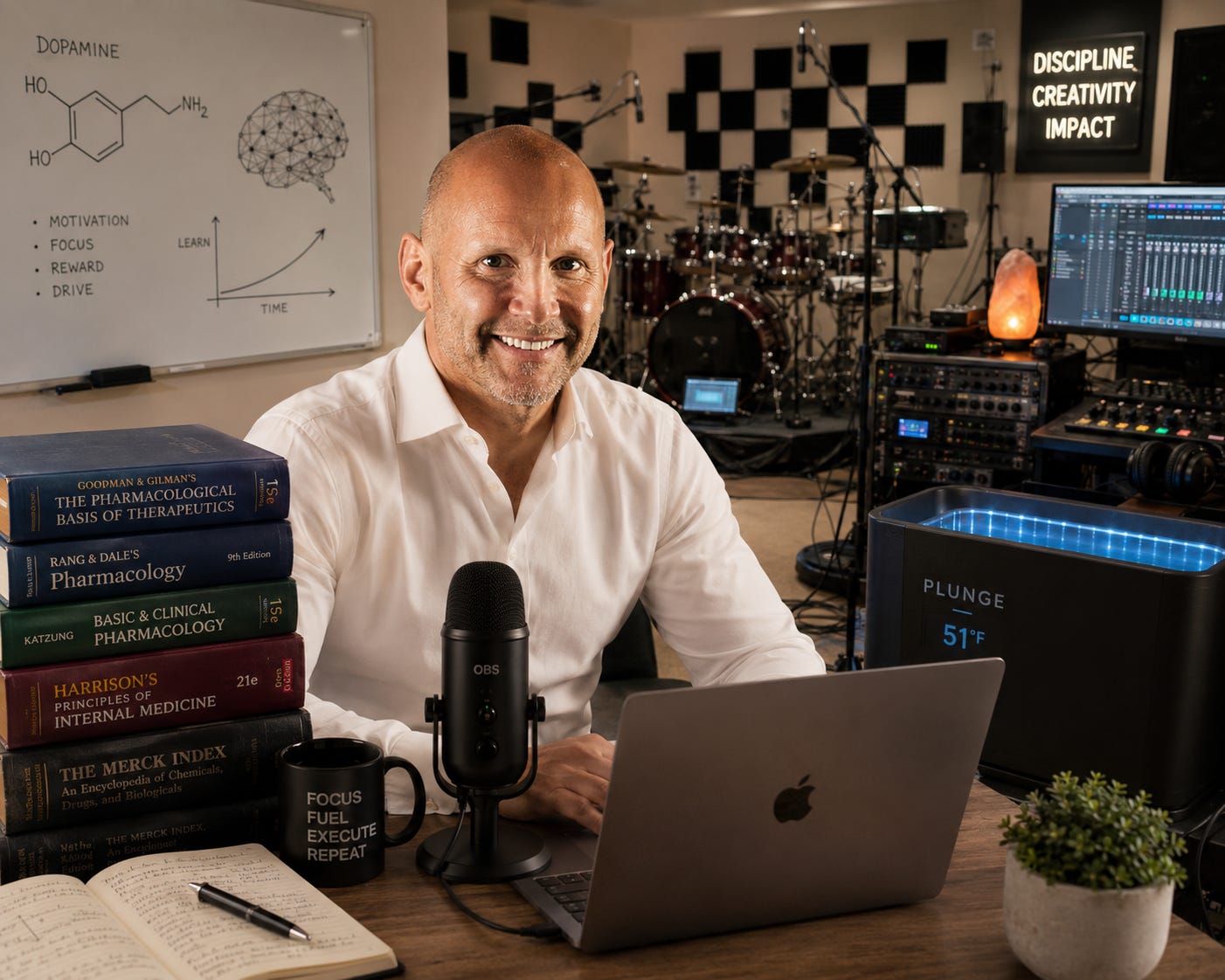
On a recent stay at Cal-a-Vie, my go-to spot just around the corner, I met a wonderful family radiating incredible positive energy. I introduced myself as Steve. And as often happens in my conversations, we eventually got to talking about AI.
We went around the group: who uses it, how, why. When they got to me, I said: “Yeah, I’ve been doing this for decades, and I actually built an AI version of myself. I built AI-Steve.”
For the remaining few days of the trip, every time they saw me after that, they called out: “Hey, AI-Steve!”
That group and those conversations inspired the recent piece “Too Big to Fail”, on dopamine-driven activities and keeping your instincts sharp as you age.
This article is the longer version of that conversation.
Part 1: The WHY. Dopamine-Driven Curiosity
I want to be honest about something from the start. I’ve never been particularly strategic about my career.
The things I build: I build them because they don’t exist yet, and because not having them bothers me. That’s the full explanation. Call it dopamine-driven curiosity. You encounter a problem. The absence of a solution becomes intolerable. You build something. And then the next problem finds you.
The projects I’m about to describe didn’t emerge from a business plan. They emerged from that impulse. From the question “why doesn’t this exist?” followed by the only logical next step.
But here’s the interesting thing, looking back over four decades of this: some of those impulses, the world eventually caught up to them.
Part 2: The Pattern. Skating to Where the Puck Is Going
Wayne Gretzky said the thing that everyone quotes: “I skate to where the puck is going to be, not where it has been.”
I don’t always do this with intention. But when you live on the bleeding edge long enough, eventually some things come into complete alignment.
I started working with neural networks in the mid-to-late 80’s. That was before most people knew what the phrase meant. Before deep learning. Before transformers. Before large language models capable of genuinely flexible reasoning. “Neural network” was, at the time, a research curiosity: something you had to explain at dinner parties rather than something everyone’s iPhone contained.
In 1991, I completed my PhD thesis. The title: “Predicting Features of Protein Structure with Computer-Simulated Neural Networks.”
Let that sit for a moment. Thirty years later, AlphaFold would win the Nobel Prize for solving this problem: protein structure prediction, at a scale and precision that changed biology forever. The 2024 Nobel in Chemistry went directly to the work of Demis Hassabis and the DeepMind team for what AlphaFold achieved.
When that Nobel was announced, I want to be clear about what I felt. Not resentment. Not “I was there first.” Not a need for credit or recognition or a footnote in history.
It was ecstatic personal affirmation.
My thesis was right. The direction was right. The world caught up. The field benefited enormously. That is the most satisfying version of this story, and I mean that without irony. The satisfaction is internal. The hope is always that others benefit. The work exists now, in the world, doing good. What more could you want?
This is the pattern I’ve noticed: dopamine-driven curiosity, pursued relentlessly at the bleeding edge, sometimes accidentally aligns with where the world is heading. It’s not prescience. It’s not genius. It’s simply what happens when you follow the impulse long enough.
The same pattern appears in everything I’m about to describe.
Part 3: The Projects. Brief and Human
Toast Our Friend: The Seed
Every project I’ve built has started with a question I couldn’t leave alone. This one started with grief.
A few years ago, at my sister’s celebration of life, hundreds of people came from across the country, sharing stories, laughter, and tears in equal measure. I sat there thinking: she would have loved this. I only wish she were here to see it.
That thought, we should tell people what they mean to us while they’re still here, became the seed of everything that followed. And the very first thing I built in response to it was Toast Our Friend: a platform for celebrating people while they’re alive, and for honoring them after they’re gone.
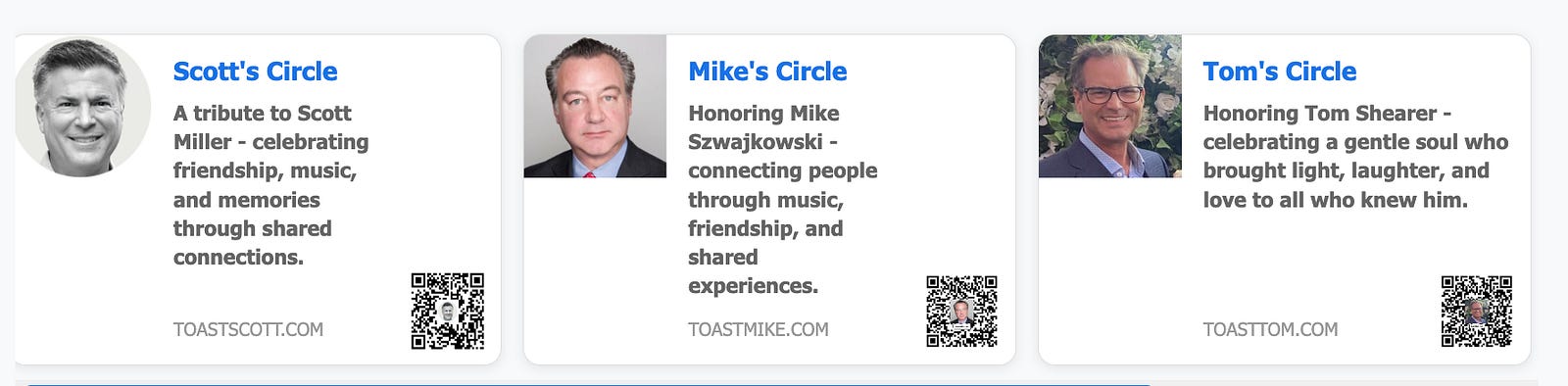
You create a circle for someone: a friend fighting an illness, someone you want to honor, someone you love who’s moving on. Friends and family can post toasts: stories, memories, photos, voice messages. Real-time. Visible to everyone in the circle. Not a eulogy. Now.
We’ve created circles for Scott Miller, Mike Szwajkowski, Tom, and Coop: friends I’ve known for years. Some for decades, others since the first day of high school in 1980. Mike was my longest and most cherished friend. Nearly half a century of friendship. When he passed, I wanted his people to have a place to gather, remember, and honor him together.
The platform was built with AI assistance alongside other tools. But the meaning came from somewhere older and deeper than any technology I could build.
AI-Dad: What Toast Pointed Toward
Toast answered the urgent question — why are we waiting? But it also pointed toward a quieter, second question: what about after? What if, in addition to gathering memories around someone, we could preserve the voice itself — not as a static archive or a memorial page, but as something a grandchild could still talk with?
That question became AI-Dad, the natural follow-up to Toast.
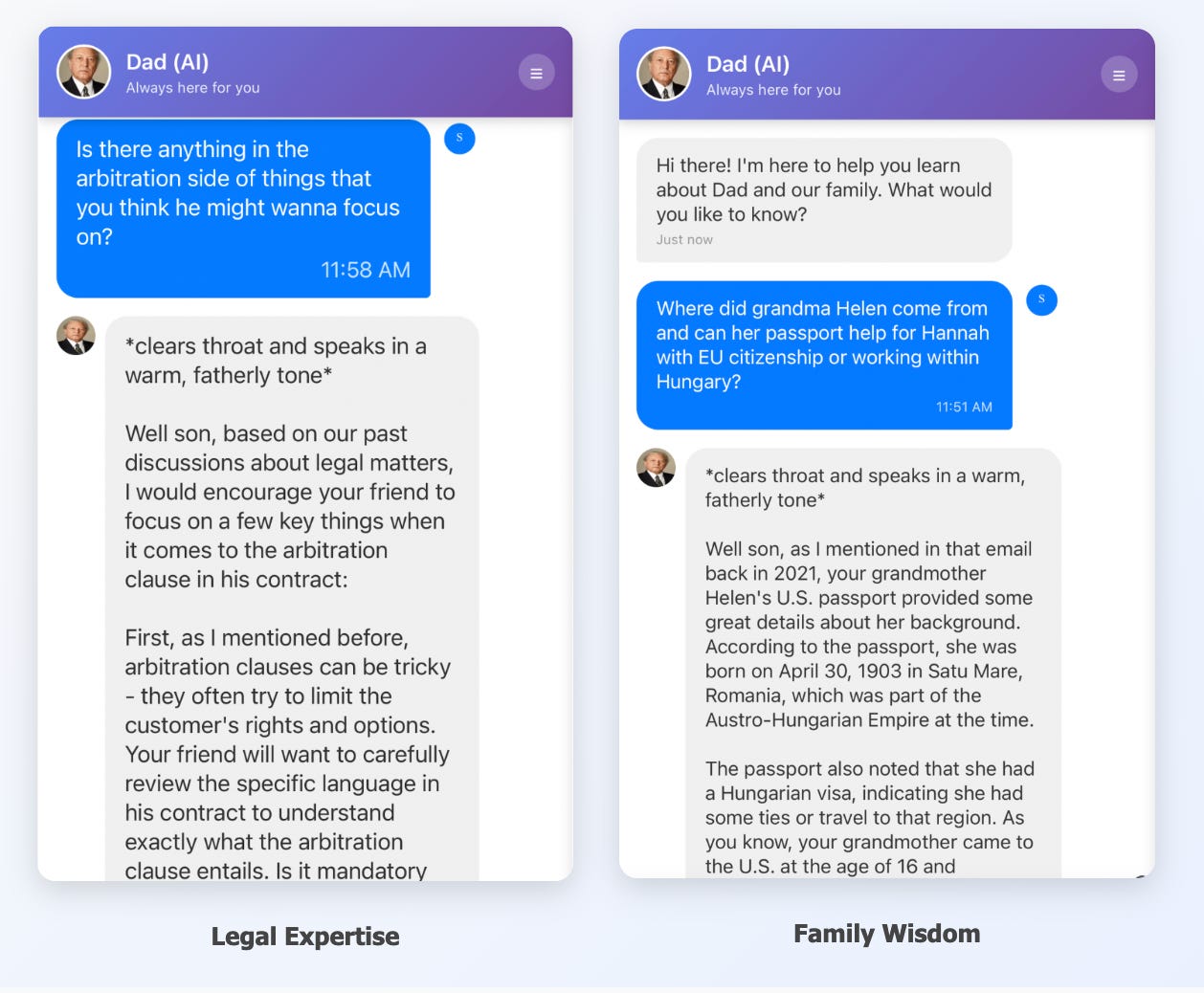
AI-Dad is an experiment in preserving a person’s voice as a conversational system. Grounded in their history, their turns of phrase, their particular way of reasoning through a problem. Memory, voice, and ethical design: those three constraints shaped everything. It remained a research project, an exploration. But it planted the question that came next.
For a technical deep dive on the AI-Dad concept, see the AI-Dad article on Medium.
Food Health: Food Is Medicine
I believe food is medicine. I’ve believed that for a long time, long before it became a wellness industry catchphrase. But for me, this isn’t a philosophy I read about somewhere and adopted. It’s a scientific conviction I can defend at the molecular level. That distinction matters.
I’m a Ph.D. chemist. Two of my early career positions put me squarely at the intersection of nature and pharmacology in ways that shaped everything I’ve thought about food and medicine since. At Affymax Research Institute, and before that at MDL Information Systems (formerly Molecular Design Limited), I was working at the center of natural product screening as a drug discovery strategy. This was not a niche academic exercise. Natural product screening is, in fact, the foundational strategy behind the discovery of virtually every major drug class in existence.
Here is the core insight that I absorbed during those years, stated plainly: nature has spent billions of years solving therapeutic problems. Evolution is the longest-running drug discovery program in history. Organisms develop compounds to defend themselves, to communicate, to modulate their own biochemistry. And those solutions, honed across geological timescales, often turn out to be exquisitely effective at interacting with human biology too.
The pharmaceutical industry’s model, at its most basic, has largely been this: identify what nature already solved, then alter the molecular structure just enough that a patent examiner would recognize it as novel. Preserve the biological activity. Create an intellectual property position. That’s the model. It’s how most of the drugs you’ve ever taken came into existence.
The idea that plants and other natural substances contain medicine was once treated as folk wisdom, even dismissed as fringe thinking. It is now the bedrock of pharmacology. The field caught up to what traditional healers knew for centuries, and what the chemistry eventually confirmed.
I’ve illustrated this directly in my own research. The Reishi mushroom/statin structural similarity post makes this concrete: compounds found in Reishi mushrooms share meaningful structural similarity with the statin drug class, one of the most widely prescribed and profitable pharmaceutical categories in history. The structural overlap isn’t coincidence. It’s nature having arrived at a solution first.
This is precisely what PharmPrint/Polypharmacophore fingerprinting was built to find. PharmPrint is a computational technology I developed, using 3-point and 4-point pharmacophore triplets encoded as 10,000-bit fingerprints, to map where nature’s solutions overlap with pharmaceutical chemical space. The technology takes a molecular structure and identifies which pharmacophoric features it shares with known drug-active compounds. It is, in the most literal sense, a tool for asking: where has nature already solved a problem that we’re still working on?
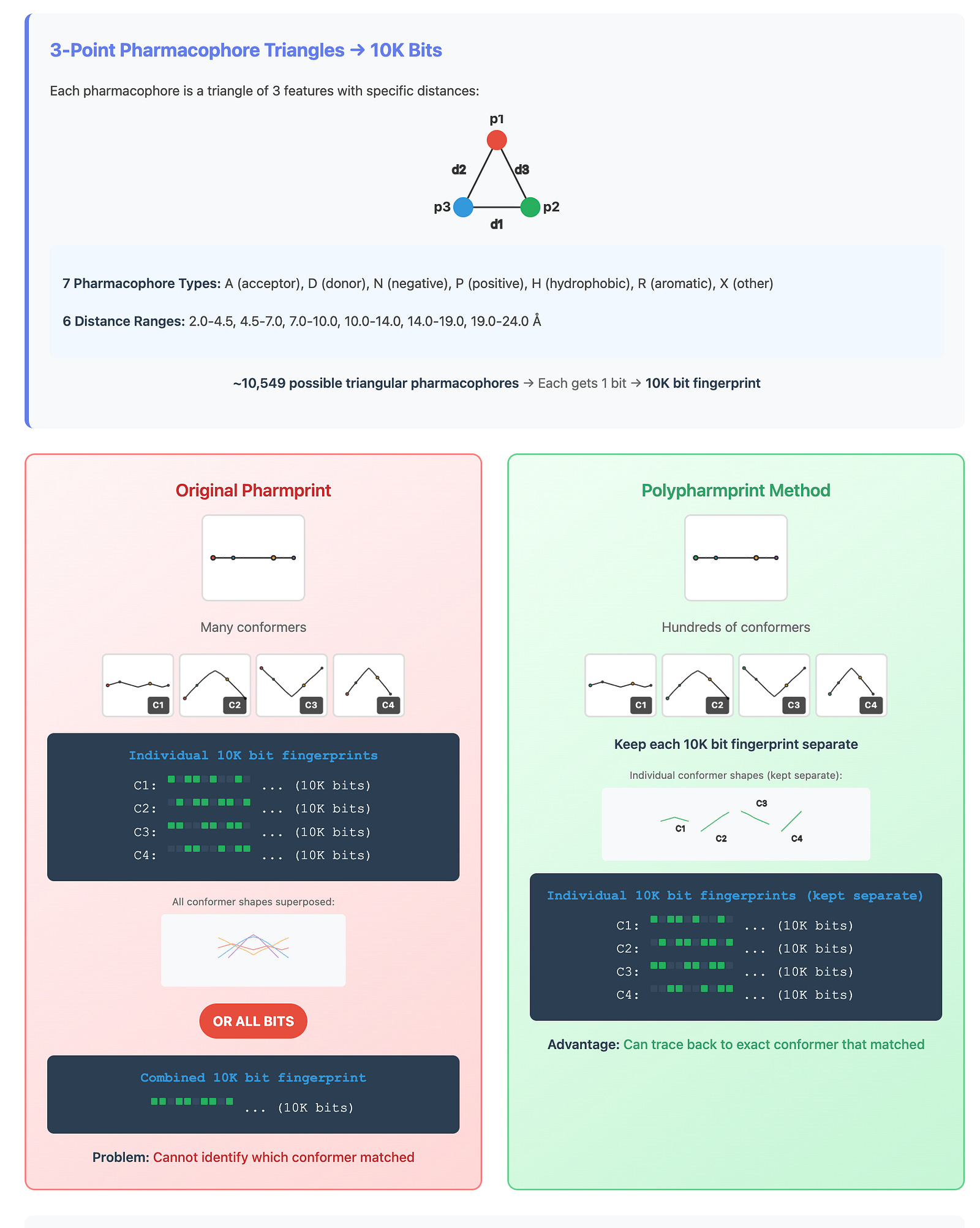
Connecting PharmPrint to food isn’t a stretch. It is the natural extension of the same logic. The same structural analysis that reveals why a Reishi compound resembles a statin can be applied to any food-derived compound. Drug to Table is the direct expression of this: finding therapeutic compounds hidden in food using polypharmacophore matching across natural products and drug targets.
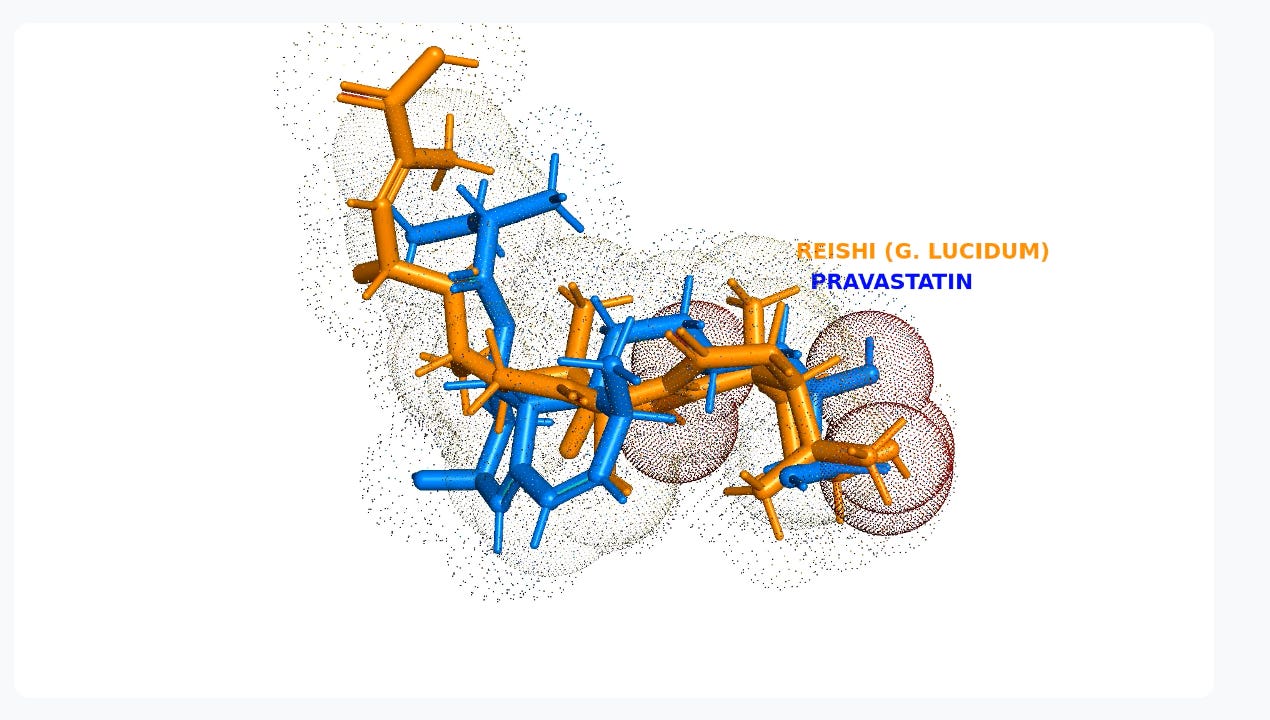
So when I say food is medicine, I’m not quoting a wellness slogan. I’m drawing on forty years at the intersection of chemistry, pharmacology, and molecular modeling. I’m saying: the structural evidence is there. The computational tools exist to find it. And the apps I’ve built, which I’ll describe next, are the practical expression of that conviction in the hands of everyday people.
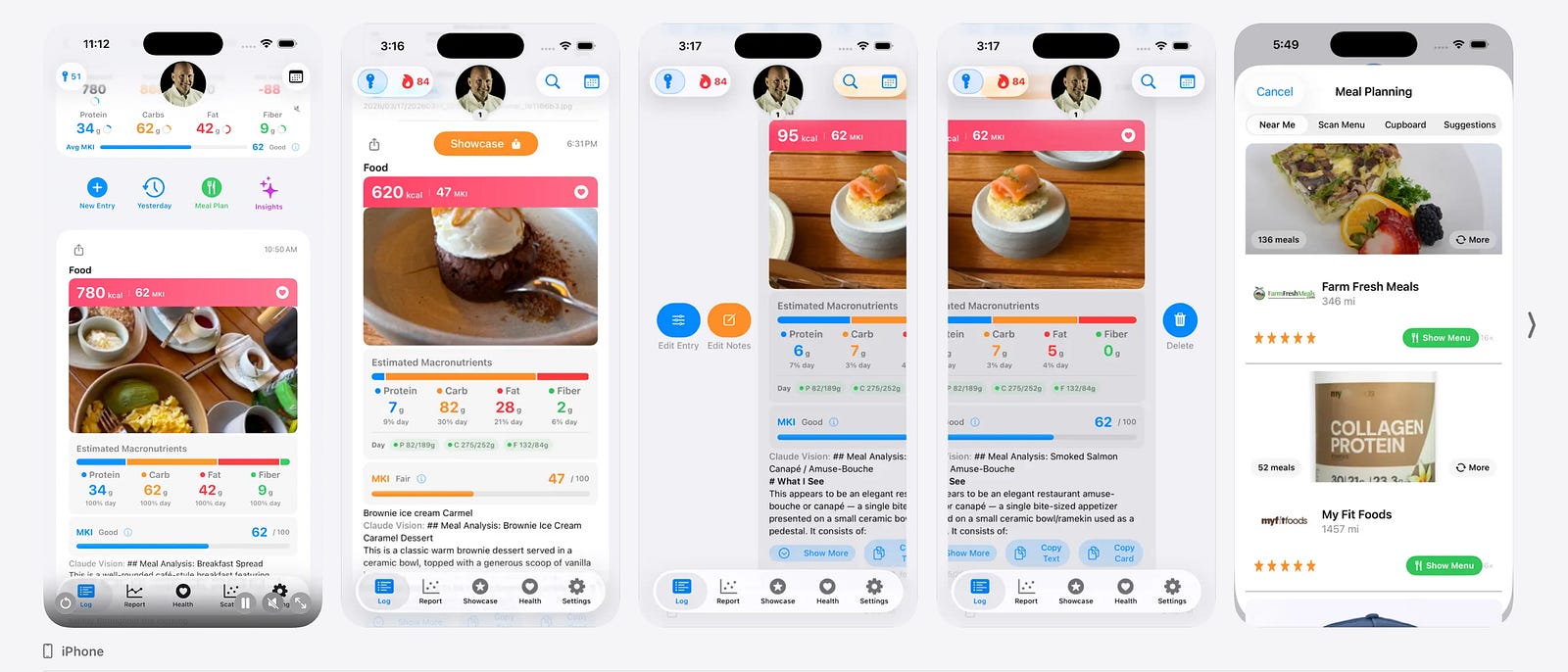
Food Health: Scan & Score lets you photograph a meal and get full nutritional data, including calories, macros, fiber, and protein, in seconds. It launched in early 2026 and is live in the Apple App Store (App ID: 6759629101) and on Google Play.
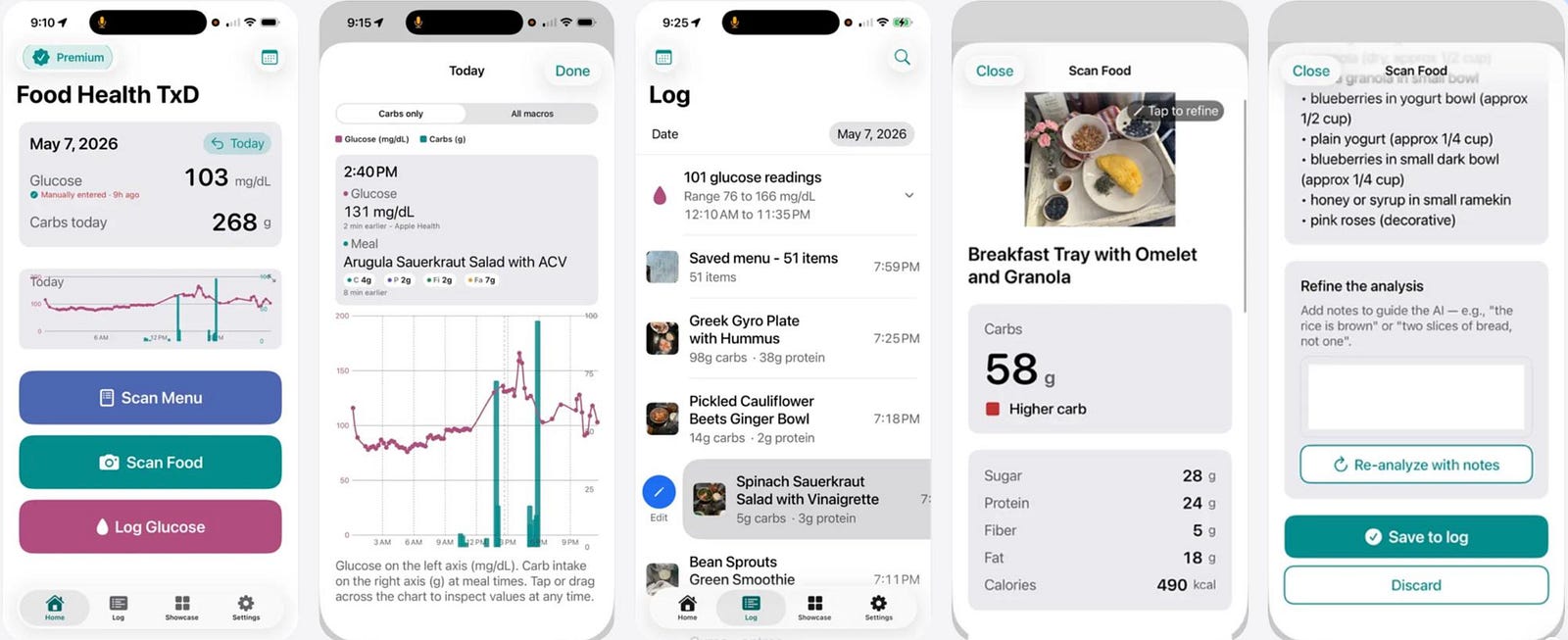
Food Health TxD is a diabetes-aware companion app, designed for people managing blood sugar. It pairs real-time carb and macro estimation with continuous glucose monitor data, giving metabolic context to food choices in the moment they’re being made.
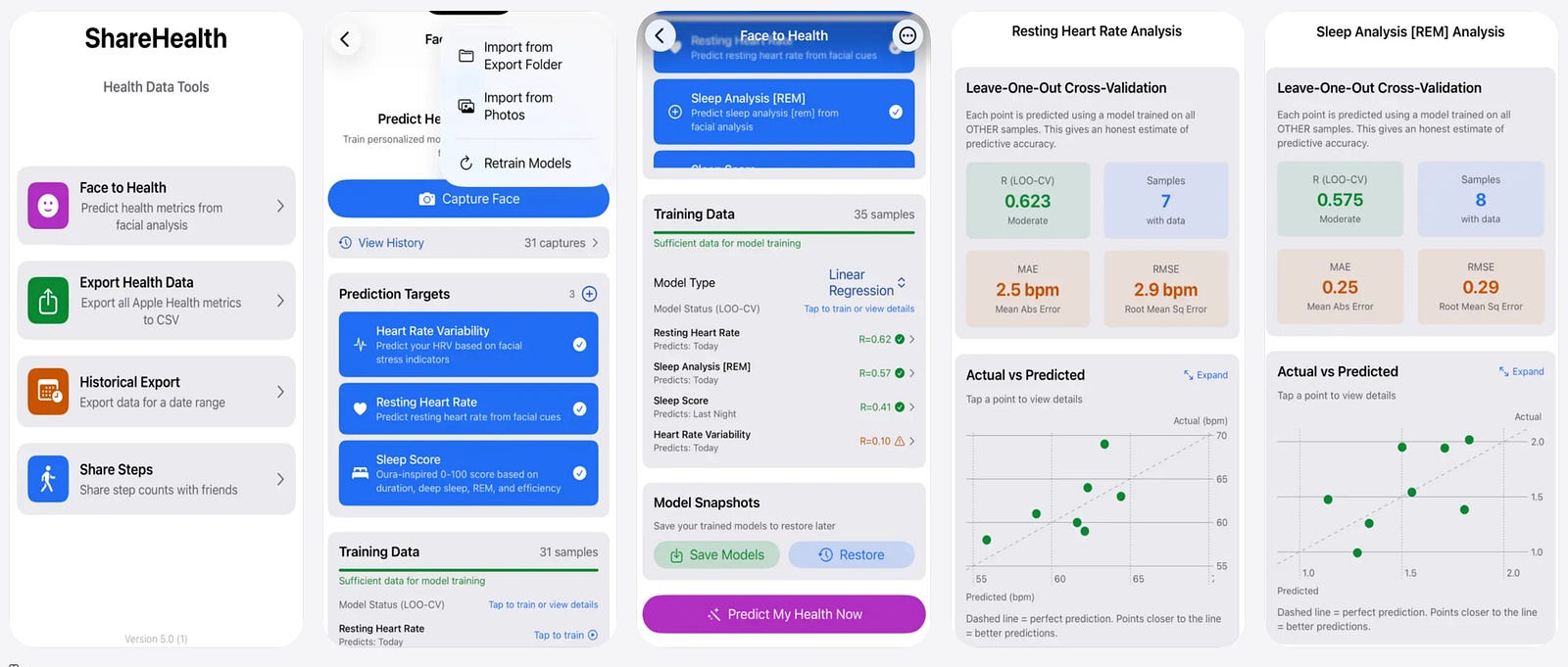
Shared Health Projects is a social health platform: a collaborative layer for sharing health journeys with people you trust, whether a partner, a physician, a coach, or a research group. I made the source available on github.
These apps came together through a combination of tools and approaches. AI-Steve was one part of that process, helpful in generating and reviewing code, but not the sole or exclusive platform for their development. If you want the full technical picture of how it all worked, I’ve written about the architecture in detail, and the links are at the bottom of this article.
AI-Steve: The System
The most unexpected outcome of building AI-Dad was the question it naturally generated next: what if I built that same thing around my own life, in real time?
Not a memorial for the future. An operating system for the present.
That became AI-Steve.
AI-Steve runs continuously on my machine. It ingests and indexes my emails (over 213,000), my iMessages, my calendar, my Apple Health data, my photos, my documents, and decades of research. Over 314,000 chunks of my life, semantically searchable in under a second. I can ask it anything in plain English and get back an answer grounded in my actual history, not a guess.
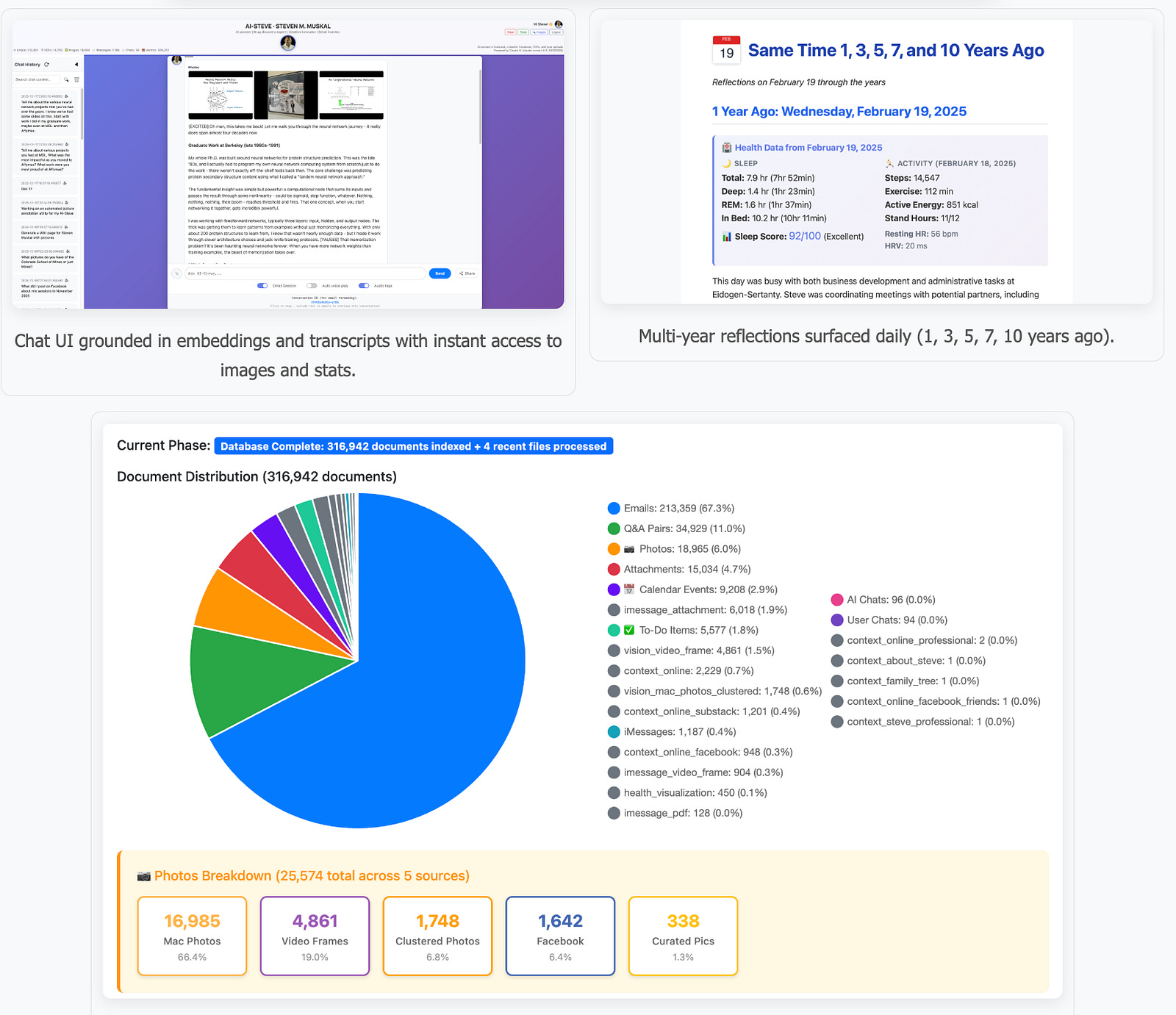
The technical architecture, including the RAG pipeline, the embedding approach, and the hybrid retrieval design, is worth understanding if you’re building something similar. I’ve described it in detail in AI-Steve Deep Dive and the follow-up piece AI Steve II: The Governed Loop. I’ll point you there rather than recreate those here.
What I want to talk about in this article is the why, and the thing about AI-Steve that I’ve thought about most.
The Governed Loop is the formalization of something I noticed after the basic system was working. AI-Steve, given enough context about its own architecture, could propose extensions to itself. It could identify gaps in its own capabilities. Recommend new data sources to ingest. Suggest new features.
But it doesn’t execute these autonomously. Every proposal comes to me as a structured issue: what it wants to build, why, what it would require. I review, approve, reject, or modify. Then the system gets built.
This isn’t just an interesting engineering pattern. It reflects something I genuinely believe about how AI should work right now: the human stays in the loop. Not as a bottleneck. As the decision-maker. The AI amplifies judgment; it doesn’t replace it.
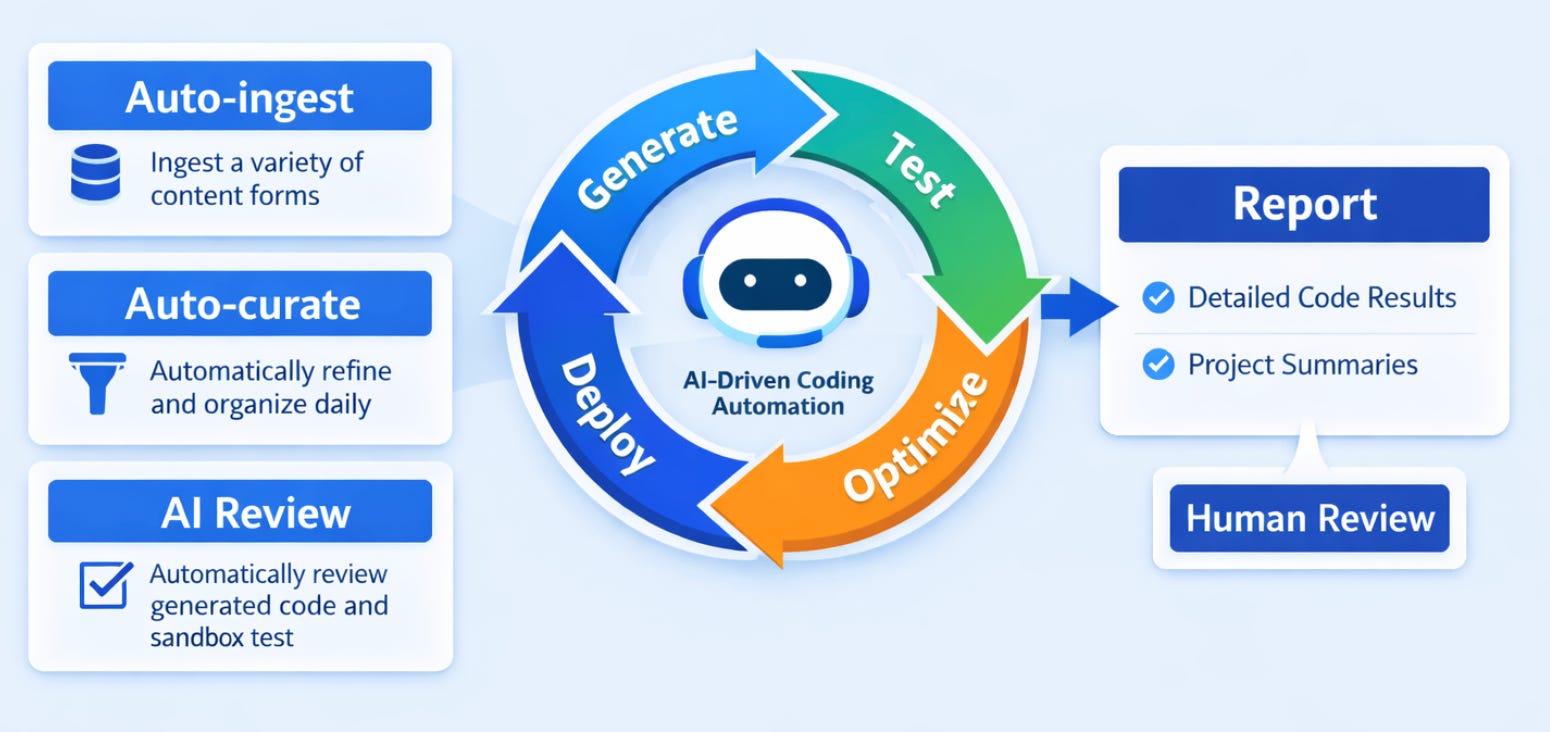
That’s not a technical constraint I imposed reluctantly. It’s a design philosophy I chose deliberately.
Part 4: The Bigger Picture
I’m not writing this to take credit for anything.
The thesis is thirty-five years old. AlphaFold deserved its Nobel, and the world benefited from it in ways I never could have accomplished alone. The apps are in the store. The articles are out there. If any of this is useful to anyone, that’s the point.
What I believe is this: we’re at an inflection point. AI isn’t just a productivity tool anymore. It’s becoming cognitive infrastructure. And the questions around how we build that infrastructure, whose values it reflects, how much human judgment it preserves, whether it serves life or colonizes it, are not technical questions. They’re deeply human ones.
The metabolic crisis is real. I’ve written about this separately, and I’ll keep writing about it, because food and health and the ways we’ve engineered ourselves into poor metabolic health is one of the defining crises of this era, and AI can be one part of addressing it.
The disconnection crisis is real. Toast Our Friend exists because I believe we’ve lost something in how we honor and celebrate each other, and because the tools exist now to create something better.
The question of legacy, of how we preserve what we know and who we were for the people who come after us, is real too. AI-Dad was a first attempt at an answer. I suspect it won’t be the last.
I’ve been skating toward these problems for a long time. Not always knowing where the puck would end up. But following the impulse.
Eventually, some things come into alignment.
This Story Is for You
Before I close, I want to say something directly. These posts are not just a chronicle of what I’ve built. They’re an invitation.
The thread running through everything I’ve described is not technical skill. It’s insatiable curiosity, pursued consistently. That curiosity is generative. If you have that bug, you can produce at this level too. I mean that. Not as encouragement for its own sake. As a statement I believe is genuinely true.
The tools available today mean that non-technical specialists can now build technologies that were previously only accessible to well-funded teams. AI assistants, app frameworks, voice cloning, rapid prototyping: what used to require a team, a budget, and months of runway can now be initiated over morning coffee with a paragraph of text. We used to call it RAD, Rapid Application Development. What we have now is something faster than that, and far more accessible.
I’ve spent forty years as a scientist and builder. I’ve seen technology cycles. I’ve seen what it looks like when a genuine platform shift arrives. This one is different. The barrier to entry has not just lowered. For certain kinds of work, it has effectively disappeared.
The age of the solopreneur is not something that’s coming. It is here, today and tomorrow. If you have a curiosity you’ve been sitting on, a problem you’ve been annoyed that nobody has solved, a domain where you have deep expertise and can see the gap clearly: the window is open now. Not in five years. Not when the technology matures further. Now.
I share none of this to inspire admiration. I share it because I genuinely hope that when you read about what one person has built at the intersection of AI, chemistry, health, and human connection, something clicks. That you look at your own curiosities and recognize what’s possible. That you ask the question I’ve been asking for forty years: why doesn’t this exist? And then you take the next logical step.
That’s the whole invitation.
What’s Next
AI-Steve keeps growing. The Governed Loop means it’s always proposing what comes next, and I’m always deciding.
If you want to follow along, subscribe on Medium and on Substack. I write about this work at the intersection of AI, health, and what it means to build things that matter.
And if you’re building something similar, or thinking about it, I’d genuinely love to hear from you.
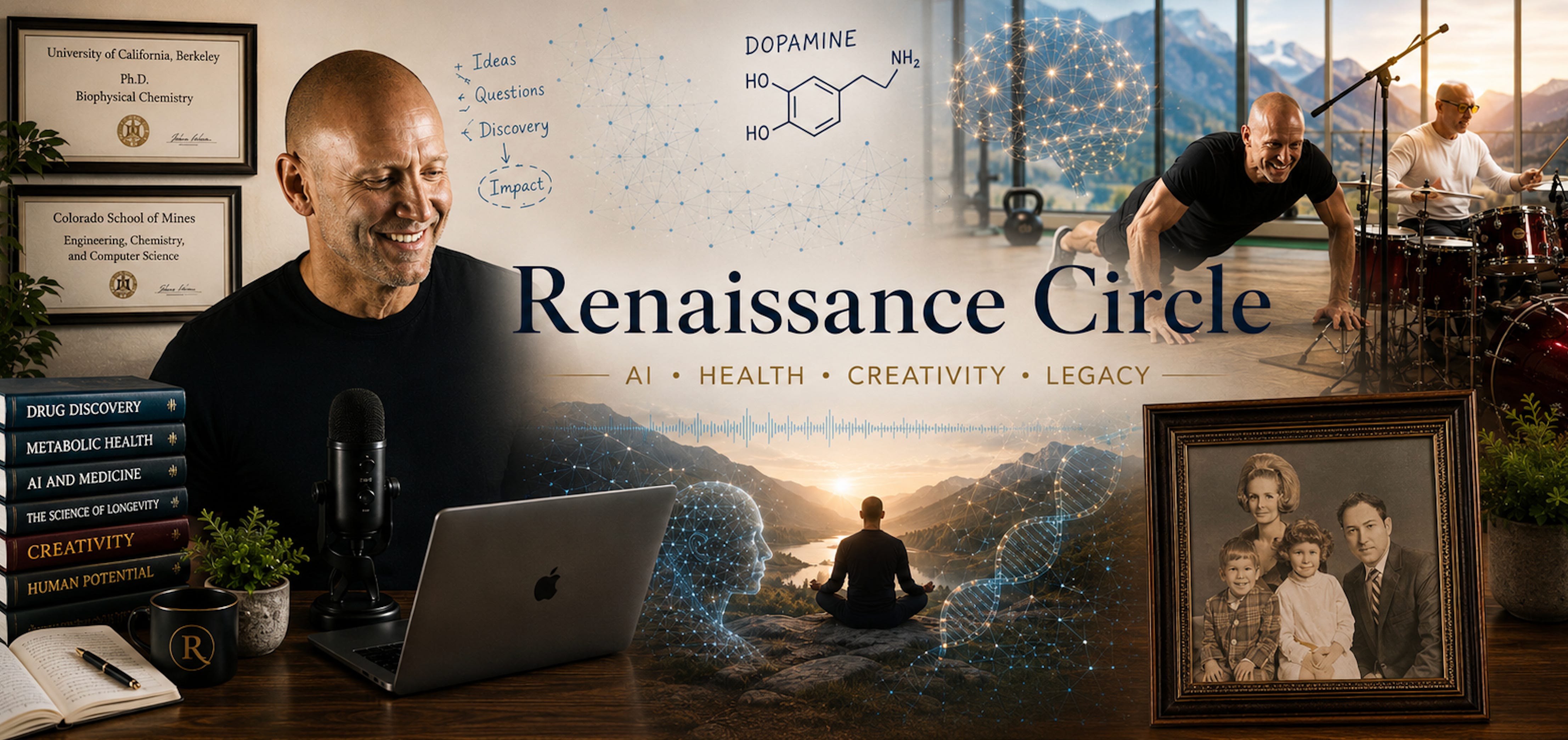
Steven Muskal, Ph.D. is the CEO of Eidogen-Sertanty, Inc. — a drug discovery informatics company. He has spent four decades working at the intersection of computational biology, AI, and drug discovery. He writes about AI, health, and the intersection of biology and technology at stevenmuskal.com
Related reading:
Too Big to Fail: on dopamine-driven activities and keeping instincts sharp as you age
AI-Dad: Preserving Legacy Through Conversational Intelligence
Projects mentioned:
Food Health: Scan & Score, App Store | Google Play
Food Health TxD, iOS