


I first met Tim Lewis in an observatory. People gradually headed out, and we kept talking. Tim takes remarkable photographs of the night sky (https://app.astrobin.com/u/tlewis), but what struck me just as much was how much he enjoyed explaining what we were looking at. He wasn’t trying to impress me with how much he knew. He was excited about it, and he wanted somebody else to share that excitement.
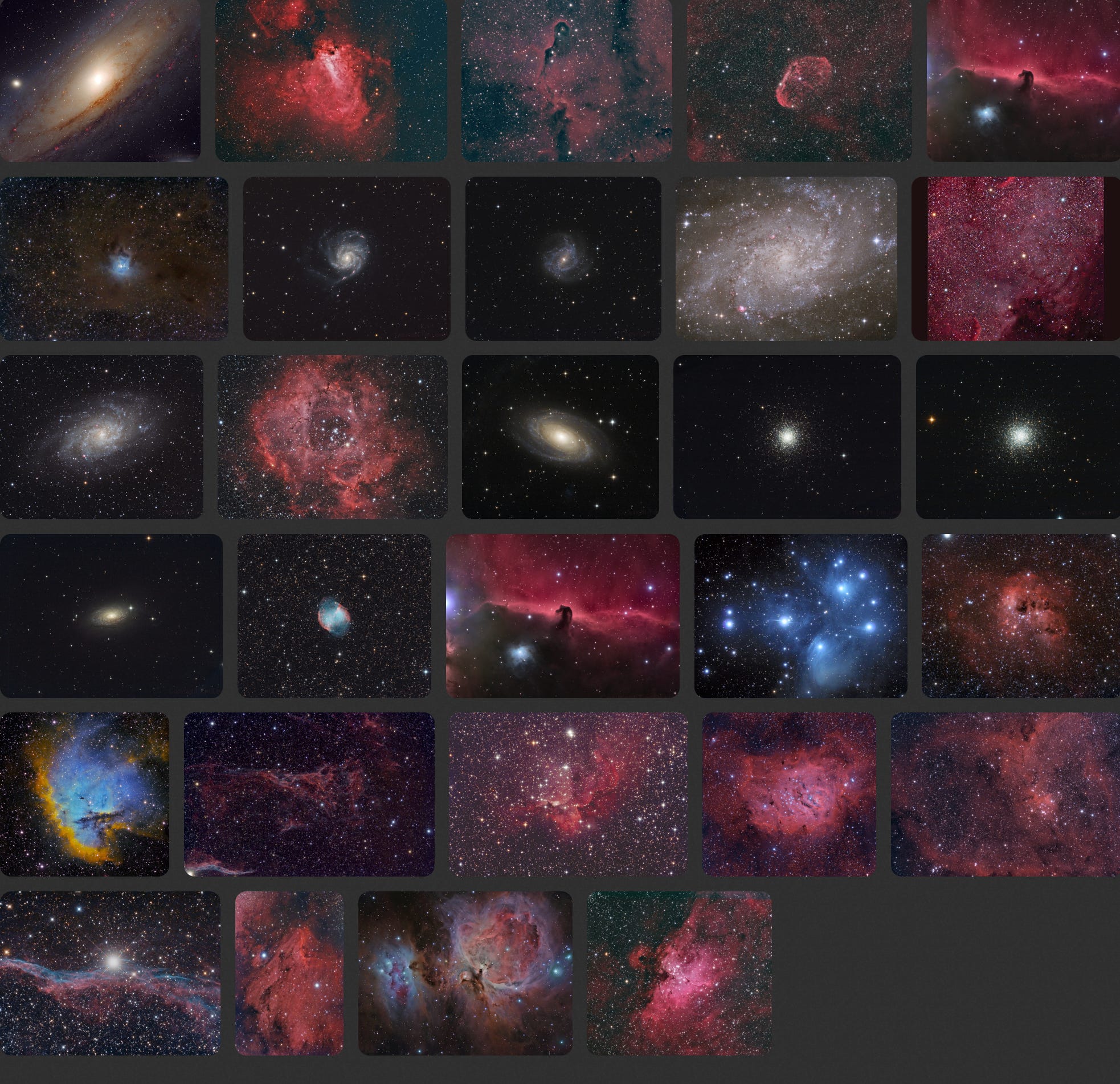
When we sat down for this Renaissance Circle conversation, I thought we would spend more time on astronomy. We certainly started there. But we also play music together, and neither of us is particularly good at staying inside the boundaries of one subject. We got into consciousness, AI, scientific research, philanthropy, and the incentives that keep people and companies doing things that don’t necessarily make much sense for everyone else.
There was a connection running through it. We have an extraordinary amount of knowledge and increasingly powerful ways to use it. I’m having more fun with that than I’ve had in years. But I keep coming back to what we’re actually going to do with it, and who gets to benefit.
The urge to figure it out
Tim grew up in Michigan, the youngest of five children. His description of childhood freedom was pretty simple: be home by dark and don’t get killed. By around eleven or twelve, he was bringing home library books about telescopes, drawing diagrams of lenses and eyepieces, and organizing star charts into a little book. He wanted to understand how the whole thing worked.
His first telescope was terrible. It was so unstable that getting something into the eyepiece didn’t mean you would get to keep looking at it. So he started modifying it. That eventually involved making braces for the tripod, drilling late at night without shoes, and putting a drill bit through his toe. He was sufficiently interested to try to fix the equipment rather than give up on what he wanted to see.
Then he got a good guitar at fourteen, and music took over. Astronomy remained an interest, but he didn’t seriously return to using a telescope until around 2000, after looking through a friend’s much better equipment. I liked that part of his story. A passion doesn’t have to run uninterrupted through your life to remain part of you. Sometimes you come back when the circumstances, or the tools, are better.

What stayed consistent was his approach to understanding things. Tim described building a picture in his mind, starting with a few large pieces and gradually filling in the connections. Context matters to him. And once he understands something, he wants to be able to explain it to someone else. That last step is where a lot of the enjoyment comes from.
I recognize that. There is something deeply satisfying about finally getting your head around a problem. But being able to bring somebody else into it is a different kind of reward.
Small does not have to mean insignificant
Looking at Tim’s photographs, my immediate reaction was how small we are. Humans spend an enormous amount of time behaving as though everything revolves around us. Then you look out into the universe and get a very different perspective.

Tim pushed back on the conclusion I was drawing. His point was that our problems can become insignificant when we zoom out far enough, but that doesn’t make us insignificant. We are here, looking at this universe and trying to understand it. He wants people leaving the observatory to feel something other than diminished by the scale of what they’ve seen.
We also got into his interest in meditation and consciousness, including the possibility that consciousness is more fundamental than we usually assume. That was an exploratory part of the conversation, not something we had established scientifically. Tim has spent years thinking about these questions through both scientific and contemplative interests.
I come at some of this differently. I’m comfortable not knowing. In drug discovery, you get plenty of practice with things not working, and with explanations that turn out to be incomplete. I don’t need a complete account of why we are here before I can work on something useful. That is probably the engineer in me. Given what we have, what can we build? What can we test? What would make things better for somebody?
That doesn’t take away the pleasure of asking the larger questions. I just don’t feel an obligation to manufacture an answer because the unknown makes me uncomfortable. There is plenty to do while we’re figuring things out.
You know when the band locks in
Music gave us another way into the same discussion. Tim often plays bass, and I’m on drums. When you’re playing together, you’re listening, watching, anticipating, and adjusting all the time. Sometimes you can feel a change coming before anyone makes it explicit. Someone shifts, the tension changes, and you move with it.
We talked about prediction and timing, but the experience itself is easier to recognize than to explain. When everybody lands together, you know it. It might only last a few seconds, but there’s no question that something happened. The whole room feels different.
That’s one reason I like a groove with some room in it. I’m not particularly interested in playing everything as fast as possible. At a very fast tempo, there isn’t much space, and small deviations can turn into a train wreck. Let it breathe a little, and people can listen and respond. That’s where a lot of the pleasure is for me.
There’s also a useful lesson there about being good at something. You can be a terrific player on your own and still need to learn how to play with other people. Your individual ability matters, but so does your awareness of what everybody else is doing. We could use more of that attitude outside the music room.
I don’t want to go back
When we got onto AI, I made a statement I’ve made before: I’ve written a lot of code in my life, and I don’t want to write another line of it. I want to describe what I want built, inspect what comes back, test it, and improve it. I also want the tools helping me evaluate the work, not just generate it.
That is very different from saying I don’t care how something works. I care a great deal. But typing the implementation is no longer the part I want to spend my time on. The interesting work is deciding what to ask, recognizing when the approach is wrong, and figuring out how to demonstrate that the result actually does what we intended.
The same goes for speaking rather than typing. I would much rather talk through what I’m trying to do than spend my time correcting what my fingers have put on a keyboard. Once you get used to working this way, going back becomes very unattractive. One of my genuine concerns is losing access to tools I now use throughout the day.
And no, the increased productivity has not left me sitting around wondering what to do with myself. I’m busier. There are more projects I can attempt, more old questions I can revisit, and more connections I can follow without first deciding whether I can afford the time. Things that would previously have stayed on a list are getting done.
We talked about education in the same way. I don’t think access to serious learning should depend so heavily on whether someone made it through a particular set of filters years earlier. People have questions. They have interests. They ought to be able to pursue them. These tools create another way in, although being able to ask for an explanation doesn’t remove the need to question it and check whether you’ve understood it.
I’ve spent years acquiring a foundation that I now use to direct this work. I don’t consider that education wasted because parts of the work have become easier. It lets me ask better questions. Why would I want the next person to spend years struggling with something simply because I had to?
One of my old papers needed another look
A concrete example came up in our discussion of revisiting old research. Years ago, at Affymax, I worked with a postdoc on predicting human intestinal absorption. For an orally administered drug, getting absorbed is an important part of the problem. We wanted to see how well we could predict that behavior from the compounds.
The biggest effort wasn’t the computation. It was finding and curating the data. We spent months assembling a set of only 86 compounds from the literature. That was what we had available to work with, and we built and evaluated the model using those examples.
Today, I could revisit the question with roughly 780 data points and much more computational flexibility. When I first reran the work, the results were disappointing. That forced me to look more carefully at what had made the original result look good.
When you build a predictive model, some examples are used to train it, while others are held back to evaluate it. With a small dataset, the way those examples get divided can make a substantial difference. By trying many different divisions of the data, I could see a much wider range of performance than we had examined originally. Our original division had been one of the favorable ones.
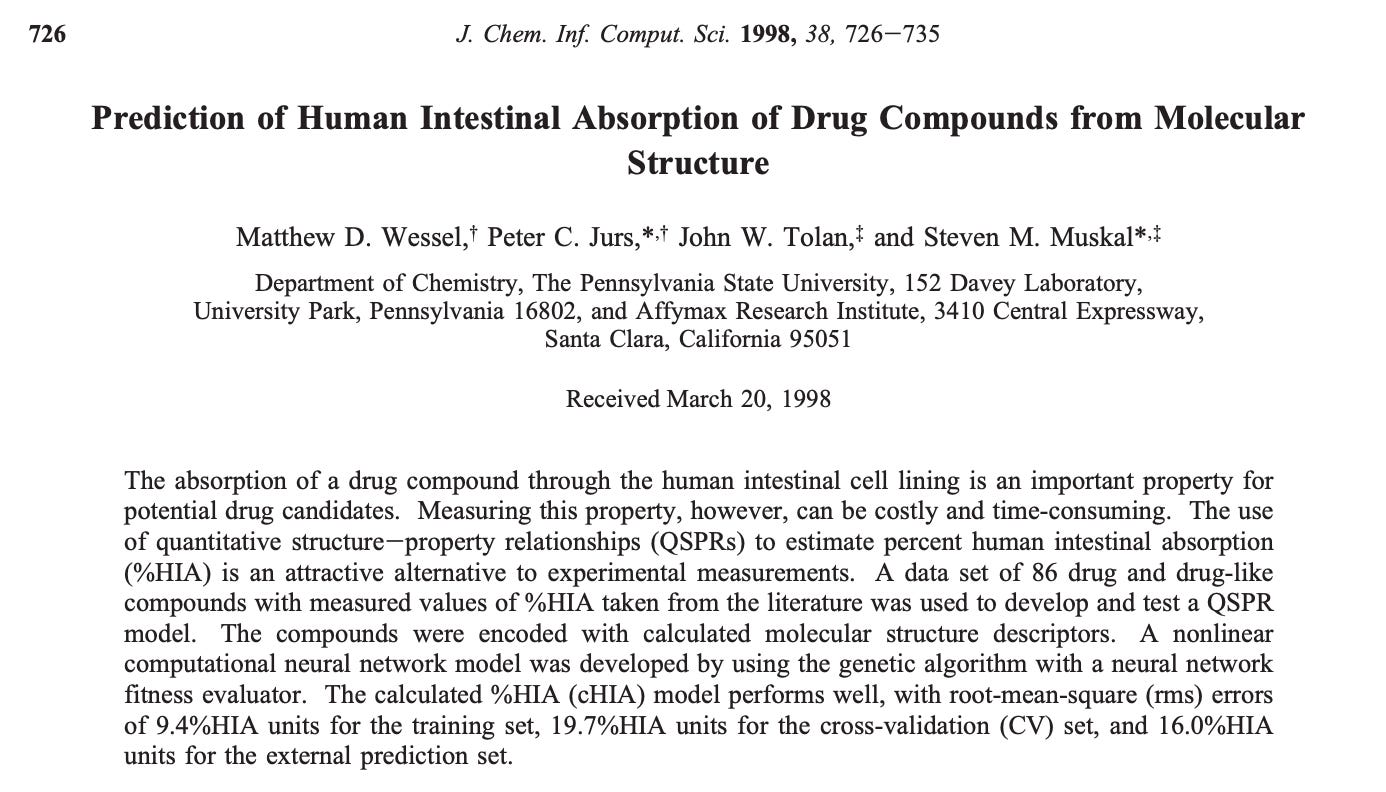
The original result reproduced, but the broader picture was not as strong as the original performance suggested. That is an important distinction, and it belongs in the new report. I don’t get to keep the most flattering interpretation simply because it came from my own paper.
The useful part is what comes next. With more data and better tools, we could improve the approach and explore extensions, including work on cyclic peptides. The original collaborator is involved again. So this is both a reassessment and an opportunity to do something we couldn’t readily do at the time.
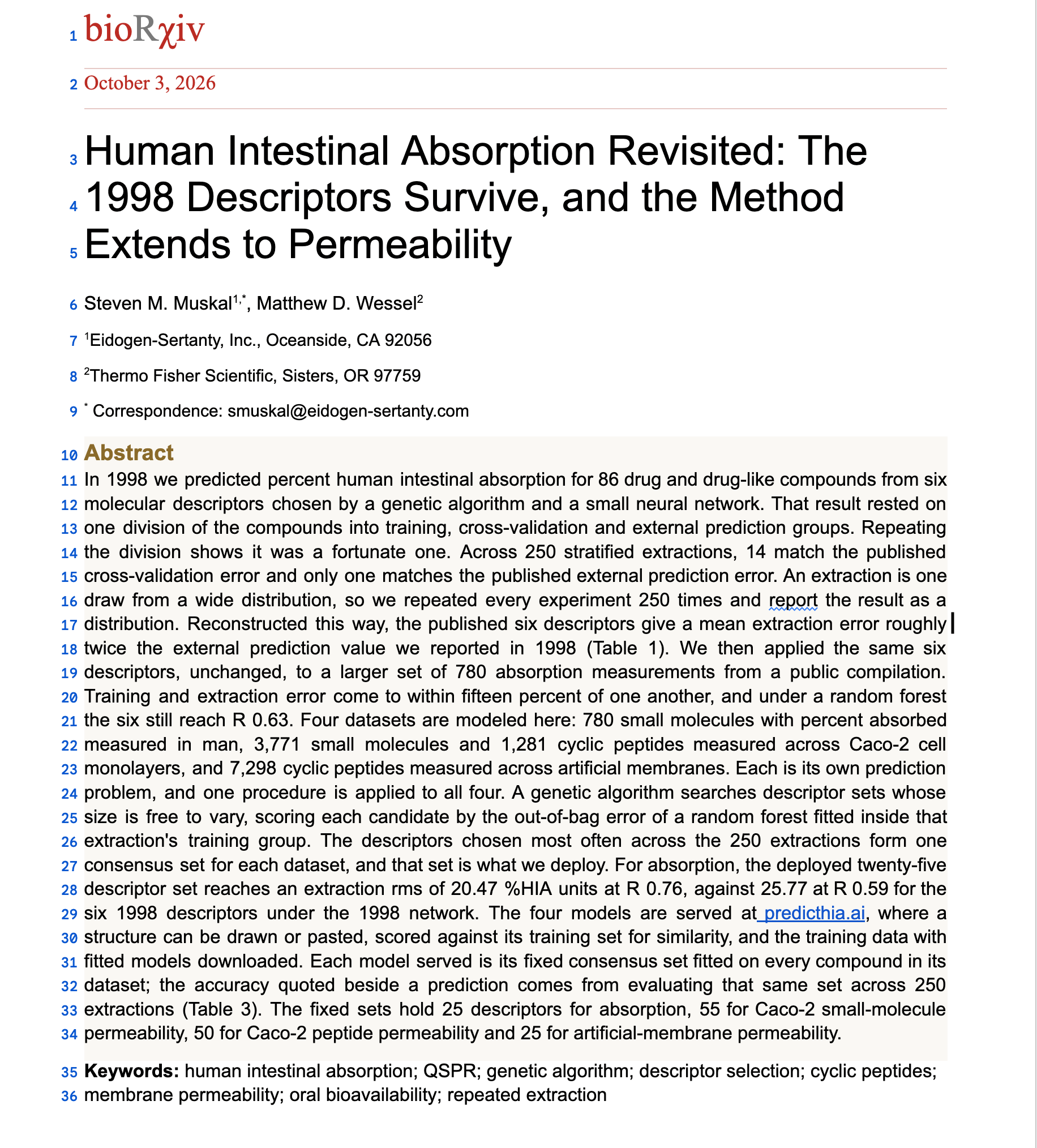
Without today’s tools, I probably would not have gone back to that work. It would have stayed in the category of things I did a quarter century ago. Instead, it is generating new questions, a more honest assessment of the old result, and something other people may be able to use. That seems like a good application of AI to me.
Tim also asked a question I liked: had I asked the AI whether there were implications or applications of the work that I hadn’t considered? I hadn’t approached it quite that way. I was focused on revisiting the original question. His suggestion was to also ask what else the result might be useful for, given everything that has been learned since. That’s another direction worth pursuing.
Put the model where people can use it
Another project I discussed was revisiting an older approach to toxicity prediction. We called it consortium voting. The basic idea was to look at several structurally similar compounds with known toxicity results and let those neighbors contribute to a prediction for a new compound.
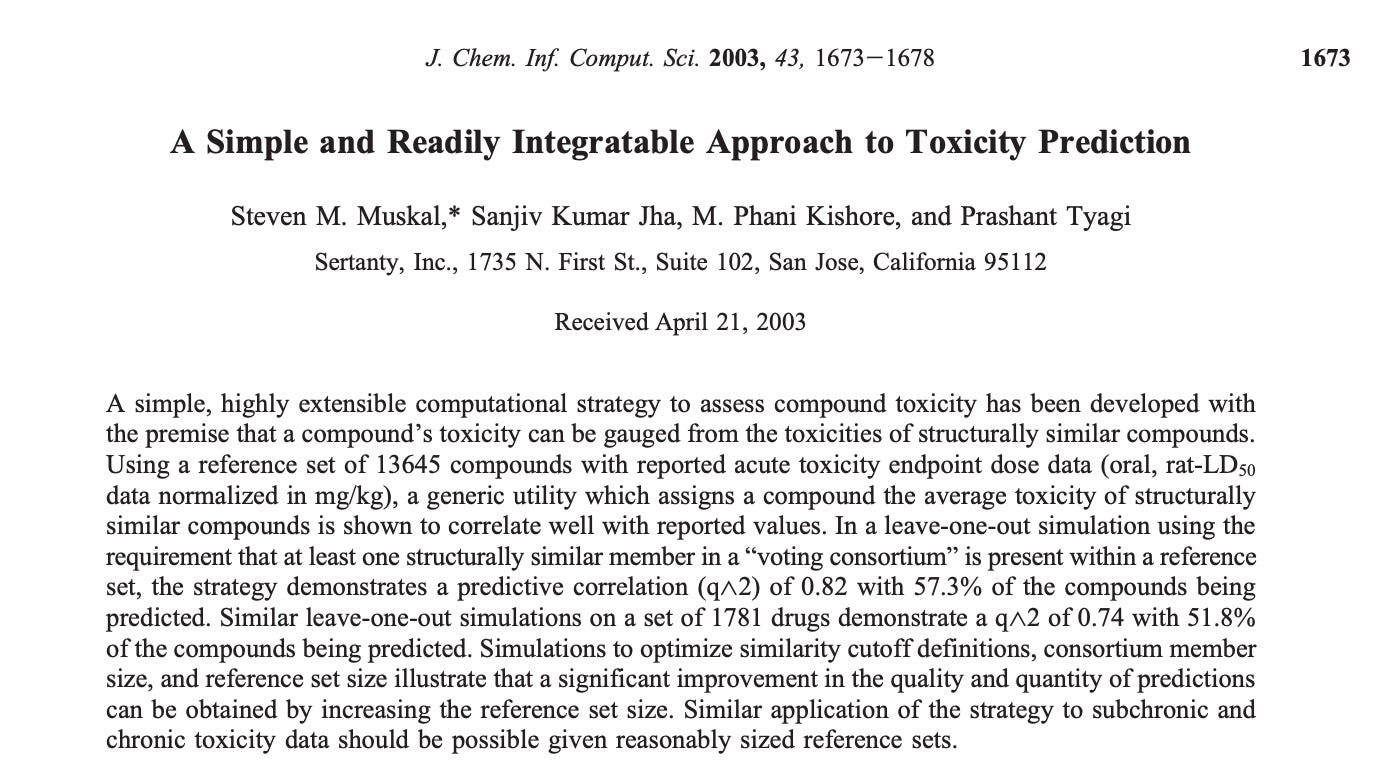
It is not an especially mystical idea. Its usefulness depends in part on whether you have relevant examples around the compound you’re trying to assess. Revisiting it with a larger dataset was another reminder of something I keep coming back to: the content matters enormously. A method needs something meaningful to work with.
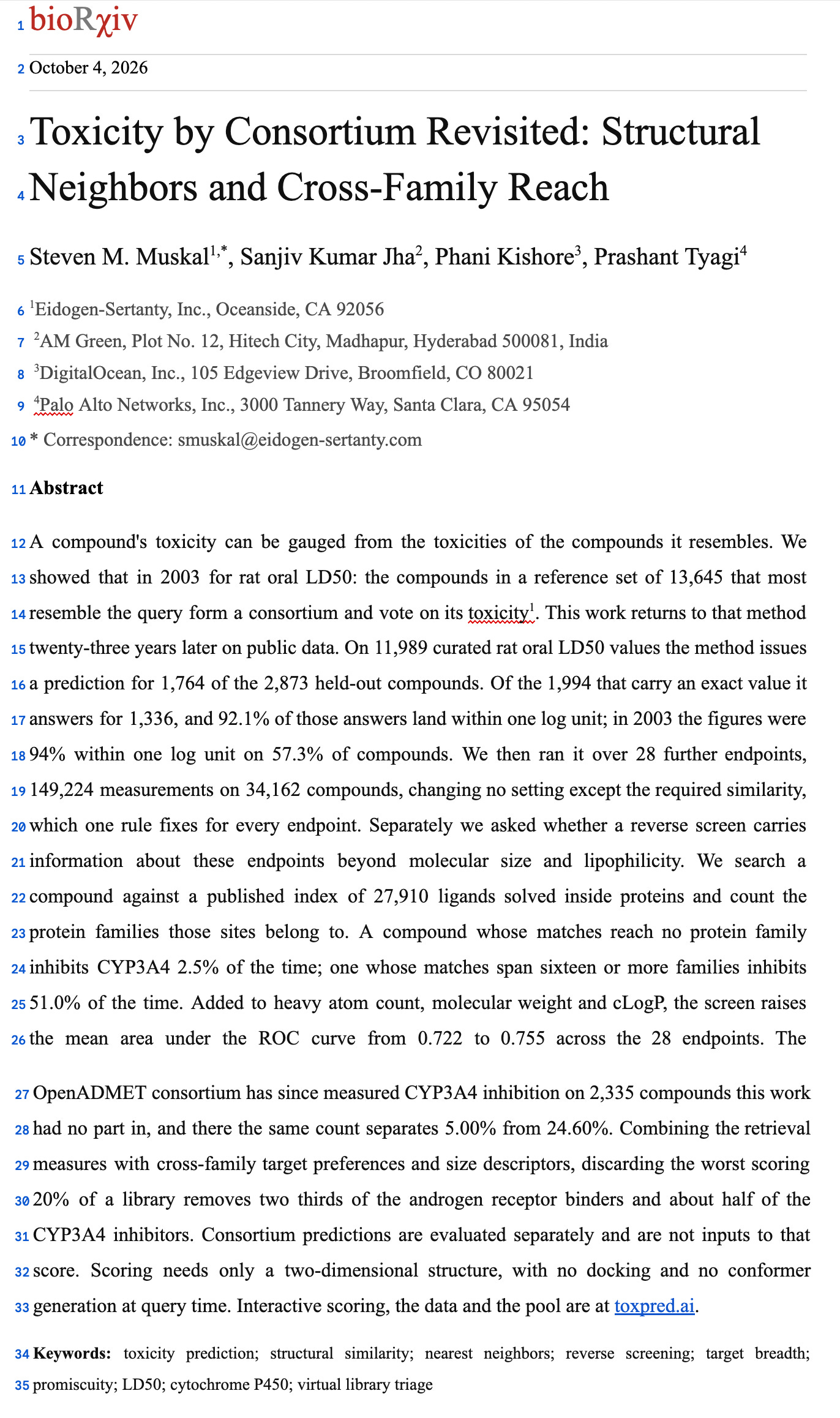
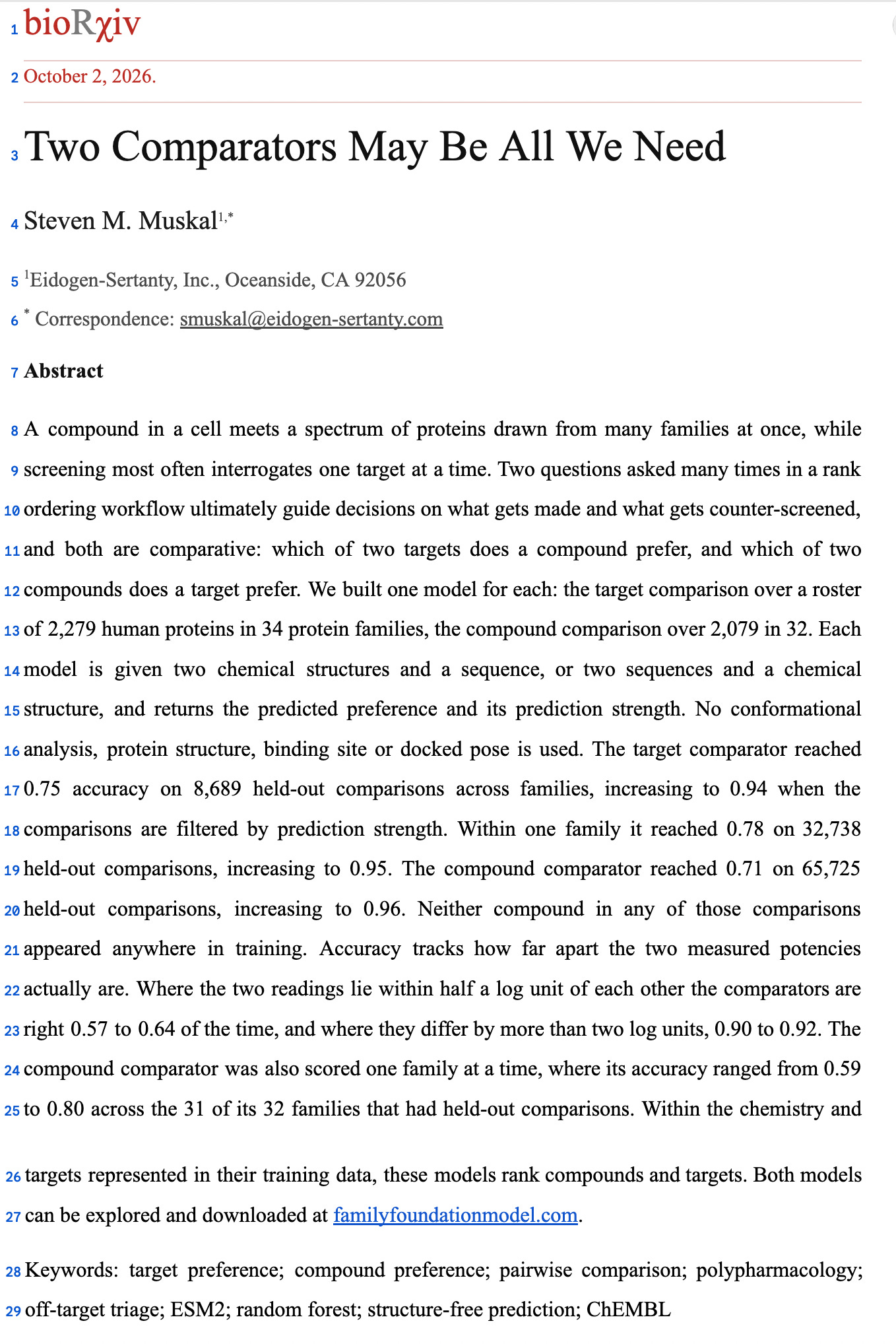
I’m also changing how I put this work out. Rather than publishing a paper and waiting for someone to ask whether they can get access to the technology, I’m building the website, making the model available, and then writing the paper around work people can already use. I want someone to be able to try it, inspect it, and decide whether it helps with their problem.
That connects to a much larger frustration I have with pharmaceutical research. There is an enormous amount of effort going on inside organizations that are reluctant to share basic data. I understand that companies need to protect investments and make money. I run a business. But I think we often draw the boundary around proprietary information much more tightly than we need to.
Toxicity is an obvious place to have this conversation. When something goes wrong and a project is stopped, there may still be valuable information in what was learned. Other people could use it. Sharing that information does not require everybody to abandon their businesses or agree on every commercial question.
You can still make money, folks. The point is to ask where working together would leave us all in a better position. Even bringing all the pharmaceutical companies together would not suddenly solve every disease. There is more than enough difficult work to go around. I’d rather see us spend less effort protecting avoidable gaps in knowledge and more effort closing them.
When giving starts to feel different
Later in the conversation, Tim described personal growth in terms of an expanding “sphere of care.” Who are you taking into account? Your immediate family? Your friends? People you haven’t met? His way of looking at it was that growth involves becoming more capable of caring about something beyond yourself.
That resonated with a change I’ve noticed in my own life, particularly around the period after my father passed away. More of what I want to do now is directed toward benefiting other people. I’m talking about time as much as money. Building something useful, making a connection, helping with an idea, or putting work into the world where somebody else can benefit from it.
The interesting part is that this does not feel like deprivation. I’m not sitting here thinking about all the things I could have done for myself instead. I get a great deal of satisfaction from it. I said to Tim that perhaps this is still an ego reward, just redirected. I’m certainly getting something out of it, even when I’m not expecting anything back from the person I’m helping.
Tim’s response was that giving is itself a gift to the person doing it. You get some relief from constantly servicing your own wants. His practical question was, “How can I help?” I like that because you don’t need to resolve a theory of consciousness to act on it.
I do wonder why that shift seems so difficult for some people who have already acquired far more than they could ever use. At some point, what does another increment of wealth actually change? You still have your abilities, your relationships, and your capacity to build things. Why not direct more of that toward something useful for everyone else?
Abundance for whom?
I’m enthusiastic about the possibility that AI could let us solve more problems and make more things available to more people. But Tim kept bringing us back to incentives, and he was right to do so. You can’t expect people or organizations to behave differently while continuing to reward exactly the behavior you say you want changed.
That includes the companies building and deploying these tools. In the conversation, I described my frustration with continuing Facebook advertising charges, replacing credit cards, and being unable to reach a person who could help resolve the problem. Here I am, enthusiastic about automation, while dealing with an automated system I can’t get through. If a company can automate taking your money, it ought to be able to help when you tell it something is wrong.
So I don’t see enthusiasm and pushback as contradictory. I want better tools. I also want accountability for how they’re used. Making a process faster does not automatically make the underlying process one we should want.
The same question applies to healthcare. Tim asked what would happen if a company’s performance were measured partly by how much it improved people’s lives, rather than treating that as something separate from the business. Not a nice sentence in a mission statement, but something that actually mattered to the people running the company. How many people did you help, and how much did you help them?
We didn’t come away with a complete mechanism for making that happen. I’m skeptical that large organizations will spontaneously change just because someone makes a good argument. But that doesn’t mean there is nothing to do. There are things we can share, tools we can make available, and choices we can make about where our time and money go.
That brings me back to what I enjoyed about meeting Tim in the first place. He had found something fascinating, spent the time to understand it, and wanted to bring somebody else into it. There was no shortage created by sharing his understanding. I left with more than I came in with.
For my part, I’m going to keep revisiting the old work, putting the tools out there, and seeing who can use them. I don’t need to know where all of this ends to know that’s worth doing.
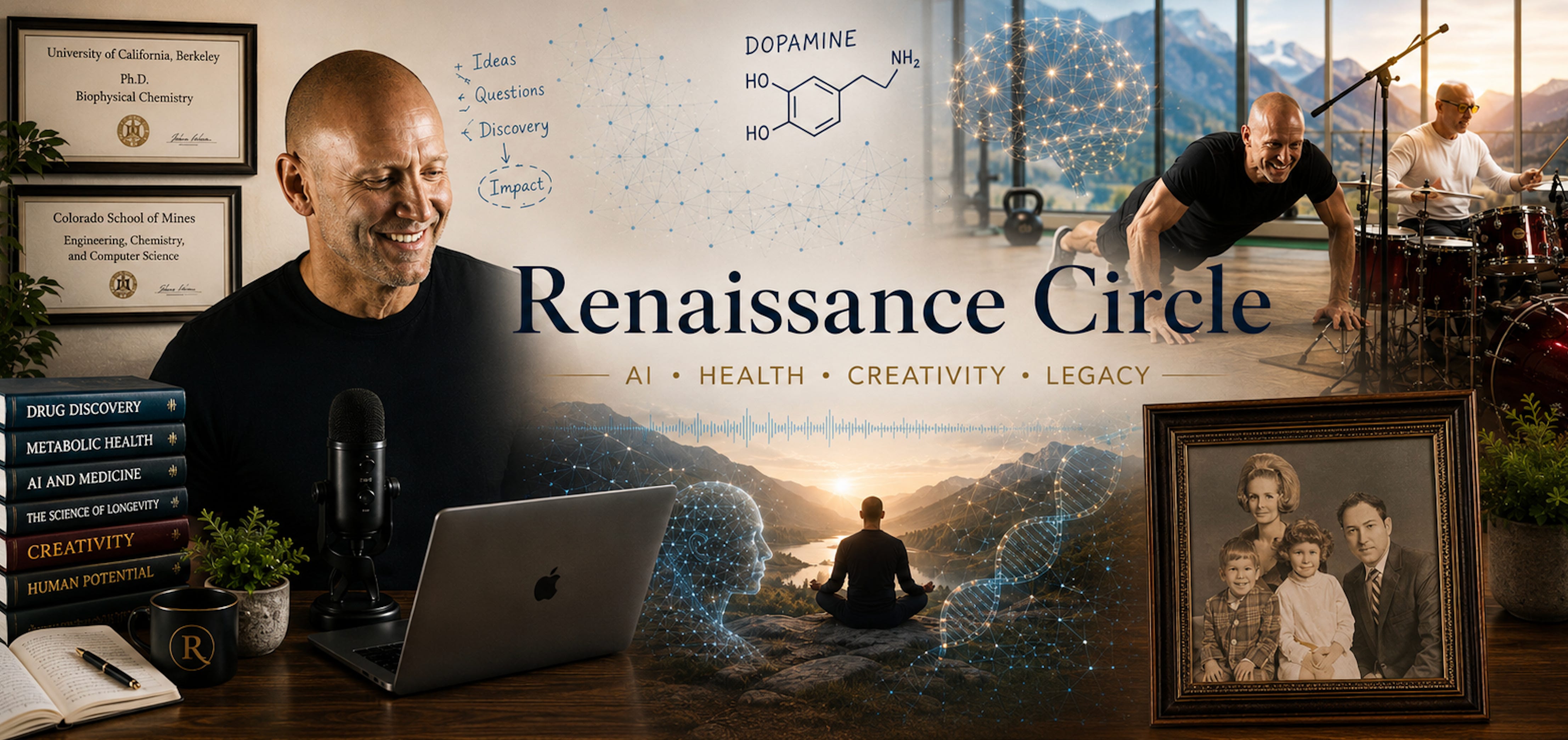
Steven Muskal, Ph.D. is the CEO of Eidogen-Sertanty, Inc. - a drug discovery informatics company. He has spent four decades working at the intersection of computational biology, AI, and drug discovery. He writes about AI, health, and the intersection of biology and technology at stevenmuskal.com
A couple mix clips from a recent mix with Maya, Tim, David, Don, and Dom last week Knocked out 26 songs without working together before. Single run throughs. From Non-blondes, to Billy Idol, and covers of covers...Way cool! Little compressed on the sound, but we'll get that right next time by making sure guitars aren't turned to 11.


